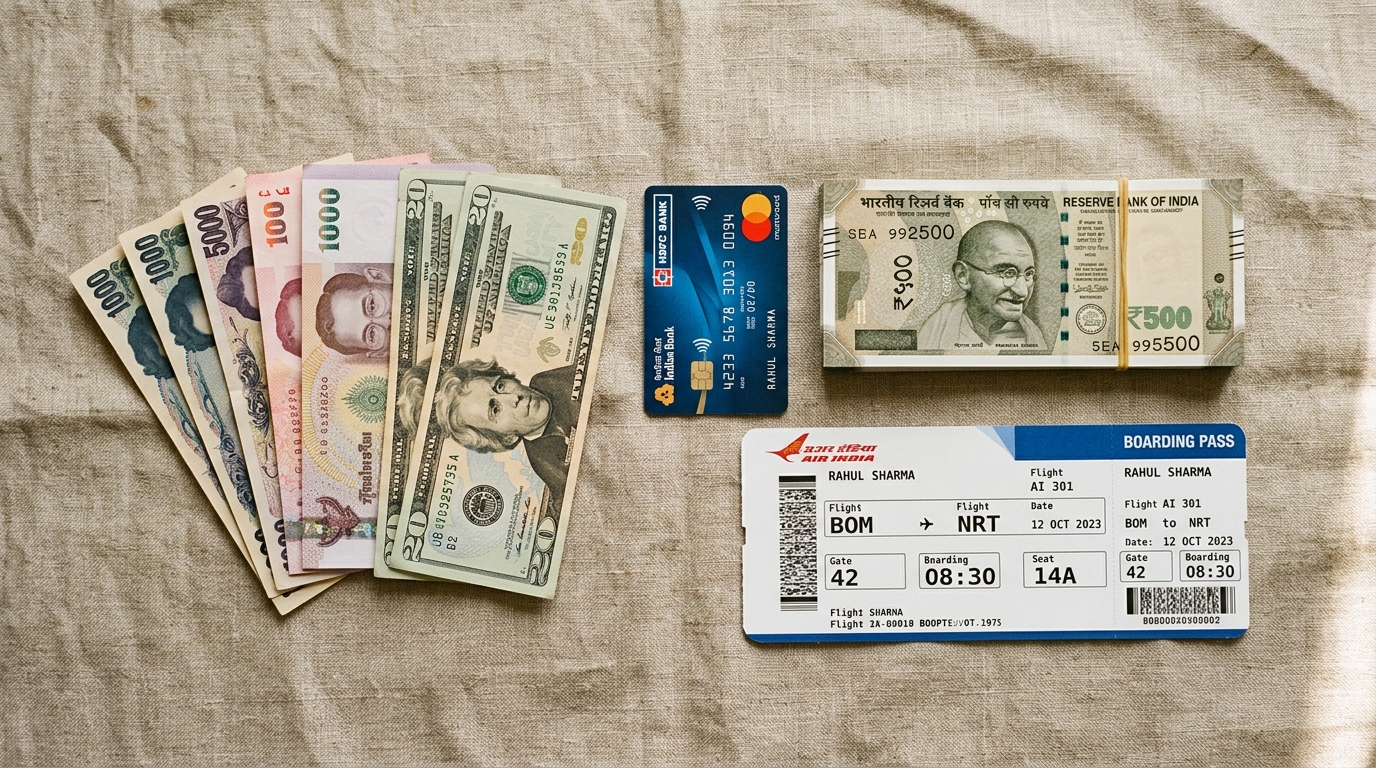
AI Itinerary Generator: Build a Personalized Trip in 10 Minutes
Most travel blogs tell you itinerary planning takes weeks of research—sifting through blogs, cross-referencing maps, calling hotels one by one. That's outdated. Modern AI itinerary generators now produce day-by-day plans tailored to your dates, budget, and interests in less time than a coffee break. For Indian travelers, this means no more generic "three days in Paris" templates; instead, you get a realistic plan accounting for visa windows, monsoon seasons, and actual flight prices from Delhi, Mumbai, or Bangalore.
1. How an AI Itinerary Generator Actually Works
An AI itinerary generator doesn't just spit out random attractions. It ingests your core inputs—destination, trip length, travel dates, budget ceiling, travel style, and visa status—then cross-references real-time flight data, accommodation pricing, activity reviews, and seasonal factors to build a coherent day-by-day framework that you can immediately execute or refine.
When you feed Flycher your preferences, the engine does four parallel tasks:
- Scans flight availability and fares from your nearest Indian departure hub (Delhi, Mumbai, Bangalore, Chennai, Hyderabad) for your exact dates.
- Pulls accommodation options (budget guesthouses, mid-range hotels, luxury stays) matched to your budget and location preferences.
- Maps attractions, activities, and restaurants by proximity and relevance—so your Day 2 visits aren't scattered across a city.
- Cross-checks visa lead times for your passport (Indian passports have distinct visa windows—Schengen, UK, US, Southeast Asia all differ).
Unlike generic online planners, a real AI generator for Indian travelers factors in timezone differences, arrival-day jet lag, and the rhythm of your flights. If you land in Bangkok at 2 AM, your itinerary won't pack a full day of activities on arrival. It'll suggest rest and acclimatization, then ramp up on Day 2.
The output isn't stone. You move activities, swap restaurants, update budgets—and the AI re-routes logistics in real time, recalculating travel times and meal costs as you adjust.
2. Step-by-Step Workflow: From Blank Slate to Ready-to-Book Plan
Building your itinerary on an AI platform takes roughly 10 minutes if you already know your destination and dates. Here's the real sequence:
Step 1: Input Core Trip Details (2 minutes)
- Destination and alternative cities (e.g., "Tokyo, Kyoto, or Osaka").
- Travel dates and trip length (e.g., "15–22 April, 8 days").
- Departure city (select from DEL, BOM, BLR, MAA, HYD, or others).
- Approximate total budget in INR (e.g., ₹80,000–₹1,20,000 for two people).
Step 2: Set Travel Preferences (2 minutes)
- Travel style: backpacker, comfort, luxury, adventure-focused, culture-focused.
- Pace: relaxed (one city, fewer activities per day) vs. packed (multiple cities, fast-paced).
- Interests: beaches, museums, food, hiking, temples, nightlife, shopping, photography.
- Accommodation type: homestay, boutique hotel, chain, budget hotel, resort.
Step 3: Auto-Generate First Draft (1 minute) The AI builds a day-by-day skeleton:
| Day | City | Activity Theme | Duration |
|---|---|---|---|
| 1 | Bangkok | Arrival, acclimatization | Evening only |
| 2 | Bangkok | Grand Palace, temples, street food | Full day |
| 3 | Bangkok | Markets, canals, local neighborhood walks | Full day |
| 4 | Chiang Mai | Flight day + evening arrival | Evening only |
| 5 | Chiang Mai | Trekking, elephant sanctuary | Full day |
| 6 | Chiang Mai | Cooking class, night bazaar | Full day |
| 7 | Bangkok | Flight return + evening buffer | Evening only |
| 8 | Delhi (home) | Arrival | — |
Step 4: Populate with Real Recommendations (3 minutes) The generator fills in:
- Specific temples, museums, markets by name and opening hours.
- Restaurants with price ranges (Budget: ₹300–₹600; Mid: ₹600–₹1,200; Upscale: ₹1,200+).
- Activity booking links (with Indian-rupee pricing or conversion rates).
- Realistic travel times between attractions (accounting for traffic, monsoon road conditions, etc.).
- Visa or permit requirements for each site.
Step 5: Adjust and Export (2 minutes)
- Swap activities or restaurants using the itinerary editor.
- Update the budget: the system recalculates flight, stay, food, and activity costs instantly.
- Export as PDF, share with travel mates, or sync to a calendar.
- Use Trip budget calculator to break down costs by category.
The magic is iteration without friction. Most travelers generate a plan, tweak two activities, adjust the hotel budget upward by ₹5,000, and are done. No email chains. No manual recalculation.
3. Why Indian Travelers Need India-Specific AI Planning
A generic "worldwide" AI planner falls short because it doesn't account for the specifics of Indian travel—passport rules, visa lead times, flight routing, and currency behavior.
Here's what an India-aware generator considers:
- Visa windows: An Indian passport requires advance visa applications for Schengen, UK, USA, and Australia. Your AI planner flags if your trip dates don't allow enough lead time (typically 4–8 weeks). If you book a Europe trip 3 weeks before departure, the system alerts you before you finalize and warns whether visa-on-arrival or e-visa options exist.
- Flight routing from Indian hubs: Flights from Delhi to Southeast Asia are cheaper direct; flights from Bangalore often route via Hyderabad or Chennai if you book last-minute. A smart generator knows Delhi-to-Bangkok is ₹12,000–₹20,000 return (budget airlines); Mumbai-to-London is ₹25,000–₹40,000. It optimizes your departure city.
- Seasonal reality for India-specific routes: Monsoon (June–September) disrupts hill stations, beaches, and trekking in India and Southeast Asia. The generator flags "avoid Kerala in August" but highlights "perfect time for Himalayas in May." For international routes, it knows May–June is peak season (expensive) for Europe; October–November is sweet-spot pricing.
- Currency behavior: INR to GBP, EUR, AUD fluctuates weekly. A static budget becomes misleading fast. Integrated tools like Forex & bargain check let you lock expected exchange rates and see real-time shifts in your trip cost.
- Restaurant and activity pricing for Indian spenders: Indian travelers often seek value, balancing comfort with budget. An AI-aware planner shows "mid-range meal ₹500–₹800" not just "moderate" or "$$", so you make informed choices.
| Aspect | Generic Planner | India-Aware AI Generator |
|---|---|---|
| Visa lead time flagging | No | Yes; alerts 6 weeks before travel |
| Flight routing from Indian cities | Generic (treats all routes equally) | Optimizes DEL, BOM, BLR, MAA, HYD by fare and frequency |
| Monsoon/seasonal alerts | Basic ("rainy season") | Specific ("June–August: avoid Kerala; perfect for Kashmir") |
| INR cost breakdown | Converted to USD (confusing) | Native INR; updates with forex daily |
| Activity pricing in INR | None | ₹300–₹2,000 per activity, with negotiation tips |
| Indian traveler pain points | Generic ("book early") | "Book 4 weeks ahead from these Indian cities for best fares" |
4. Real Example: Generating a Thailand Itinerary in 10 Minutes
Let's walk through a live example. Suppose you're a 28-year-old from Bangalore, traveling solo, 10 days, budget ₹60,000–₹70,000 (flight + stay + food + activities), mid-range comfort, loves temples and street food, March 15–24 (peak season).
Input:
- Destination: Thailand (Bangkok + Chiang Mai).
- Dates: March 15–24 (10 days).
- Budget: ₹60,000–₹70,000 total.
- Departure city: Bangalore.
- Style: Solo traveler, mid-range comfort, cultural + food-focused.
Auto-Generated Budget Breakdown (within seconds):
| Category | Cost in INR |
|---|---|
| Flight (BLR↔Bangkok return, mid-range airline) | ₹18,000–₹24,000 |
| Accommodation (7 nights: mix of budget hotel + 1 mid-range) | ₹15,000–₹21,000 |
| Food (₹600–₹1,000/day, mix of street + restaurant) | ₹7,000–₹10,000 |
| Activities & entry fees (temples, tour, massage) | ₹8,000–₹12,000 |
| Local transport (taxis, tuk-tuks, buses within cities) | ₹3,000–₹5,000 |
| Total Estimated | ₹51,000–₹72,000 |
The generator immediately flags: "You're within budget, but if you upgrade one night to a 3-star hotel, you'll overshoot by ₹4,000. Adjust or recalculate?"
Day-by-Day Skeleton (generated in ~1 minute):
| Day | City | Morning | Afternoon | Evening | Notes |
|---|---|---|---|---|---|
| 1 | Bangkok | Arrive (early AM) | Rest, explore neighborhood | Street food, early bed | 6-hour flight |
| 2 | Bangkok | Grand Palace, Temple of Emerald Buddha | Lunch at Chinatown; massage | Riverside walk, rooftop bar | Full day, ₹2,500 activities |
| 3 | Bangkok | Floating markets (Damnoen Saduak) | Market lunch | Return to city, explore Sukhumvit | Day trip, ₹1,200 + transport |
| 4 | Bangkok | Wat Pho, reclining Buddha | Traditional lunch | Muay Thai show or cooking class | Evening show ₹800–₹1,500 |
| 5 | Chiang Mai | Flight to Chiang Mai (1 hour) | Old City temples; Sunday market (if timing) | Night bazaar, local restaurant | Flight ₹2,500; market free |
| 6 | Chiang Mai | Elephant sanctuary (full day, ethical operator) | Afternoon temple visit | Night bazaar food walk | Activity ₹3,000–₹4,000 |
| 7 | Chiang Mai | Hiking or local village tour | Lunch with local family (homestay contact) | Relaxation, night market | Optional activity ₹1,000–₹2,000 |
| 8 | Chiang Mai | Early flight back to Bangkok | Afternoon free; shopping or rest | Packing, early dinner | Return flight ₹2,500 |
| 9 | Bangkok | Morning departure (overnight or early flight) | — | In transit | — |
After 3 minutes, you refine:
- "Can I skip the floating-market day trip and add another night in Chiang Mai instead?" → System re-routes: removes transport, adds ₹1,800 for accommodation, flags new free activities (temple walks, local markets).
- "Is ₹3,000 for the elephant sanctuary non-negotiable?" → System shows alternatives (₹1,500 ethical sanctuaries, ₹800 temple visits), recalculates.
- "What's the visa situation?" → System flags: "Indian passport, 30-day tourist visa on arrival (free) or pre-apply for 60-day tourist visa (₹1,500). You don't need to pre-apply; arrival visa is hassle-free." Use Visa wizard for Indians for step-by-step.
At 10 minutes, you export a PDF with:
- Day-by-day itinerary with addresses, opening hours, entry fees in INR.
- Restaurant recommendations (with price ranges and how to order in English/Thai).
- Booking links for flights, hotels, activities (with Indian rupee conversion).
- Local SIM card options and emergency numbers.
- A "packing checklist for March in Thailand."
5. Customization: From Template to Your Actual Trip
The skeleton itinerary is a starting point, not a prison. AI generators that serve Indian travelers must allow frictionless tweaking without recalculating everything from scratch.
Common adjustments and how they work:
Swap an activity (within same city): You swap "Cooking Class" (Day 4, Bangkok) for "Muay Thai Training" (same time slot, ₹1,000–₹1,500). The system updates your itinerary, shifts meal timing, and recalculates the daily cost (no compound error).
Add or remove a city: You want to add 2 days in Phuket after Chiang Mai. The AI inserts Phuket, adjusts flight logistics (Chiang Mai → Phuket is cheaper than Bangkok → Phuket), recalculates accommodation and activity budgets for beach focus, and flags "you'll now arrive back in Delhi on Day 12 instead of Day 9—budget airline seat upgrades will cost +₹2,000."
Upgrade or downgrade accommodation: You swap a ₹2,000/night budget hotel for a ₹4,500/night mid-range boutique. The system updates your total budget, shows "you now have ₹10,000 headroom remaining," and suggests upgrading activities or dining.
Adjust travel pace: You change from "packed" to "relaxed." The AI removes 1–2 activities per day, extends free time, reduces rushing between locations, and recalculates daily stress (useful if you're traveling with kids or aging parents). This often reduces cost because you skip optional paid activities.
Lock dates but change destination: You have ₹65,000 and 8 days in April. You're torn between "Turkey" and "Bali." Generate your free AI itinerary → for both, compare budgets side-by-side:
| Destination | Flight (DEL) | Visa | Accommodation | Food/Activities | Total |
|---|---|---|---|---|---|
| Bali (Ubud + beaches) | ₹18,000 | Free (on arrival) | ₹12,000 | ₹20,000 | ₹50,000 |
| Turkey (Istanbul + Cappadocia) | ₹28,000 | ₹4,500 e-visa | ₹18,000 | ₹18,000 | ₹68,500 |
In this example, Bali fits comfortably; Turkey requires careful spending or a ₹10,000 budget increase.
6. Exporting and Booking: From Plan to Reality
The final step—exporting your itinerary and moving to bookings—determines whether planning remains theoretical or becomes action.
A robust AI generator for Indian travelers provides:
- PDF export with embedded booking links: Each hotel, flight, activity, and restaurant has a direct booking link. For flights, the system pulls live fares from Skyscanner or Kayak (optimized for Indian departure cities). For hotels, it includes links to Airbnb, OYO, Booking.com with INR pricing. For activities, it links to Klook, Viator, or local operators that accept Indian payment methods (RuPay cards, Google Pay, PhonePe).
- Expense tracker built in: Export includes a daily expense log. As you travel, log what you actually spent vs. what was planned. This real-time comparison shows where you overspent (restaurants) and where you saved (skipped paid tour, did free temple walk instead). Next trip, you adjust automatically.
- Offline access: Export your itinerary as a PDF and save key addresses/maps offline (for areas with poor connectivity).
- Shared planning: Download a link-shareable version so travel mates can review, comment, and vote on activities before booking.
- Calendar sync: Export events to Google Calendar or Apple Calendar. Now your flight time, hotel check-ins, and activity start times pop up as calendar reminders—vital for solo travelers who might otherwise miss a 7 AM elephant sanctuary pickup.
Use Trip reality check before finalizing to catch common mistakes: missing passport validity, overlooked visa windows, overbooked days, unrealistic transitions between cities.
Frequently Asked Questions
How much does an AI itinerary generator cost?
Most AI itinerary generators for Indian travelers are free to use for basic planning—you input your preferences, generate a skeleton itinerary, and export it. Premium features (like real-time flight tracking, hotel price-drop alerts, or concierge support) may charge ₹500–₹2,000 per plan. Flycher's core AI itinerary generator is free; premium add-ons are optional.
Can I generate an itinerary if I don't know my exact dates yet?
Yes. Most generators accept flexible date ranges (e.g., "sometime in April, 7–10 days") and show how costs and availability shift across weeks. You can lock dates later once you've seen pricing and confirmed dates with travel mates.
What if I want to mix multiple cities or countries in one trip?
Good AI generators handle multi-country itineraries seamlessly. You input all cities and the system optimizes routing (e.g., Delhi → Bangkok → Chiang Mai → Phuket → Delhi is cheaper than Delhi → Phuket → Chiang Mai → Bangkok → Delhi). It calculates inter-country flights, flags visa requirements for each destination, and shows total transit time so you don't waste days traveling.
Will the itinerary work if I'm traveling with kids or elderly relatives?
Yes. When you input "pace: relaxed" and "traveling with children or elderly," the AI reduces activities per day, flags long travel days (noting which are tiring), avoids extreme activities, and suggests rest periods. It also recalculates meal costs if you need quieter restaurants instead of crowded street-food markets.
How accurate are the budget estimates for India-based travel?
AI estimates are typically accurate to ±15% because real flight prices, hotel rates, and food costs fluctuate daily by market, currency, and season. The generator provides ranges (not fixed numbers) and flags high-risk items (e.g., "visa fees may increase"; "flight prices have risen 8% this week"). Always cross-check flight prices 2–3 weeks before booking and use Trip budget calculator to stress-test your actual spends.
Ready to Stop Planning and Start Traveling?
You don't need weeks of research or spreadsheets anymore. An AI itinerary generator built for Indian travelers collapses the planning phase into 10 focused minutes, handles all the logistics (visa windows, flight routing, budget breakdowns), and exports a day-by-day plan you can adjust on the fly.
Stop manually stitching together blog posts and hotel reviews. Build your personalized trip in 10 minutes—customized for your dates, budget, travel style, and Indian passport rules. Generate your free AI itinerary →