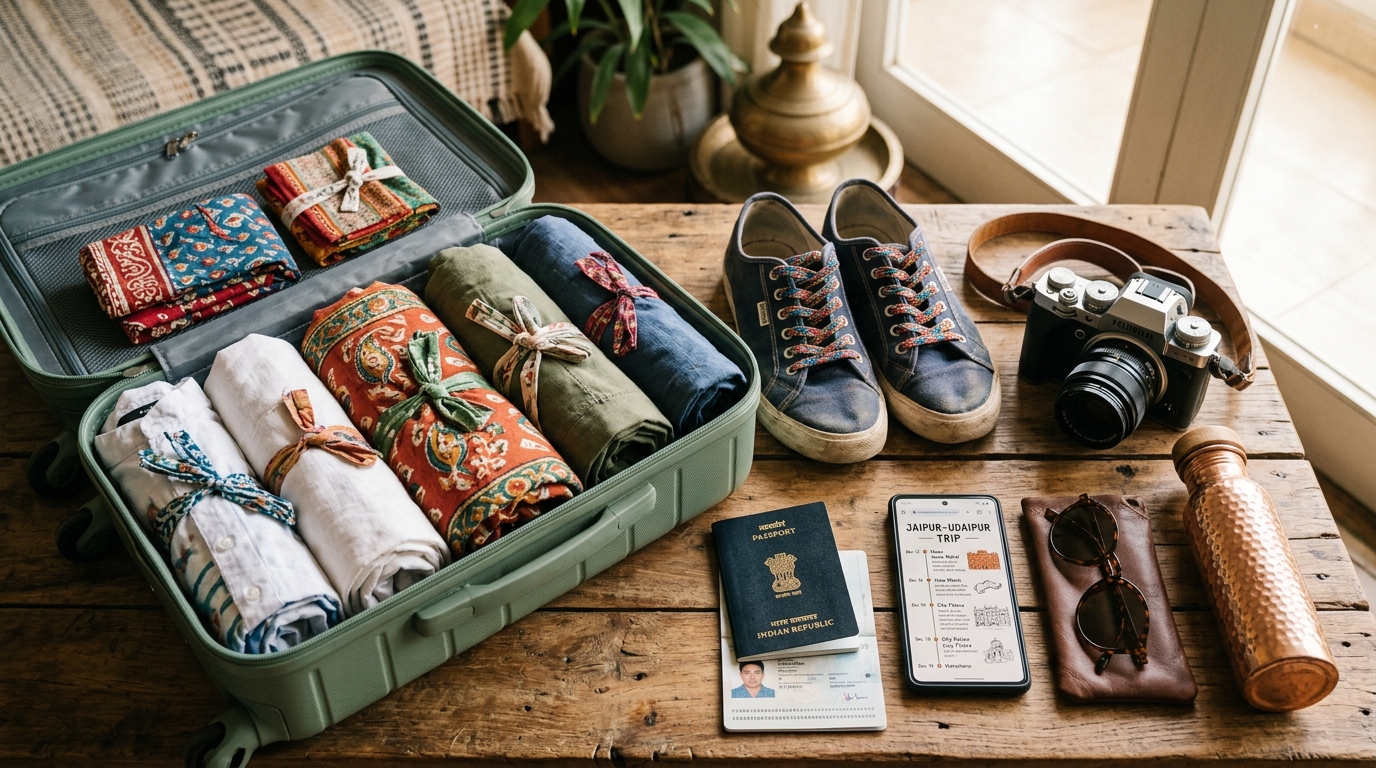
Europe Packing for Indians: Climate & Luggage Strategy
Most Indian travel blogs hand you a generic "take layers and a jacket" checklist. But Europe's seasonal swings differ vastly from what you know—and customs rules catch unaware travelers off guard. This guide breaks down what you actually need to pack, region by region, with luggage limits that won't cost you extra at check-in or trigger duty questions.
1. Understand European Seasons vs. Indian Climate
Your body reads Indian winter as "light sweater weather." European winter—especially in Central and Northern Europe—is a shock: 0°C to 5°C doesn't feel like mild; it feels like your bones are cold. The air is also dry, not humid, which means fabrics behave differently and your skin dries fast.
European seasons do not map to Indian monsoon or Diwali timing. Plan around calendar months, not festivals.
| Region | Peak Summer | Peak Winter | Rainy Season | Best for Indians |
|---|---|---|---|---|
| Southern Europe (Spain, Italy, Greece) | Jun–Aug (28–35°C) | Dec–Feb (5–12°C) | Nov–Mar (light) | Apr–May, Sep–Oct |
| Western Europe (France, UK, Netherlands) | Jun–Aug (20–25°C) | Dec–Feb (0–8°C) | Oct–Apr (frequent) | May, Sep |
| Central Europe (Germany, Austria, Czech) | Jun–Aug (18–24°C) | Dec–Feb (-5 to 5°C) | Mar–Nov (moderate) | May–Jun, Sep |
| Nordic (Denmark, Sweden, Norway) | Jun–Aug (15–22°C) | Nov–Mar (-10 to 0°C) | Year-round risk | Jun–Aug only |
| Eastern Europe (Poland, Hungary, Romania) | Jun–Aug (20–26°C) | Dec–Feb (-5 to 5°C) | May–Aug (some rain) | May, Sep–Oct |
If you're flying in April or October, you need both short sleeves AND a proper winter coat. If you're going Nordic in June, you pack as if it's early Delhi winter—cold mornings, mild afternoons, no predictable rain. This is the baseline surprise: European "summer" = Indian air-conditioned office temperature.
2. Regional Packing Breakdowns
Southern Europe (Spain, Italy, Greece, Croatia)
April–May and September–October are sweet spots. Daytime temps hit 20–25°C; mornings and evenings drop to 12–15°C.
Pack this way:
- 4–5 light long-sleeve shirts (linen or cotton blends, wrinkle-free)
- 2–3 lightweight trousers or chinos
- 2–3 t-shirts
- 1 cardigan or thin sweater
- 1 lightweight rain jacket (packable; these regions see light spring/autumn rain)
- Comfortable walking shoes (leather sneakers or loafers—European cities are all cobblestone)
- Sandals for beach or casual evenings
- Sunscreen (SPF 50; UV is strong even at mild temps)
- A scarf (doubles as a sun cover and a warmth layer)
Summer (Jun–Aug): Drop the cardigan, add one more t-shirt and swimwear. You'll sweat more than in India because humidity is lower—dehydration sneaks up.
Winter (Dec–Feb): Add a proper winter coat (wool or down-filled), thermal inner layer, closed-toe boots, and a beanie. You'll see 5–10°C, which feels colder than it is because the air is dry.
Western Europe (France, UK, Netherlands, Belgium)
This region is unpredictable. Pack for "I don't know what I'll get." Even July can have rainy days.
Pack this way:
- 5–6 mixed tops (long and short sleeve)
- 2–3 pairs of trousers (jeans work, but European travelers favour chinos or smart trousers)
- 1 warm sweater
- 1 waterproof jacket (non-negotiable; rain hits 3–4 days a week)
- Layers. Always layers.
- Comfortable walking shoes AND a second pair for rainy days
- Umbrella (compact; folds to backpack size)
- A crossbody bag (pickpocketing is real in Paris, Amsterdam, London; locals don't use backpacks in city centres)
Summer in UK: Think Delhi monsoon coolness without the rain. 18–22°C, breezy, occasional sun. You'll be cold if you don't layer.
Winter (Dec–Feb): Proper coat, gloves, thermal layers. Expect 0–5°C, wet, and grey skies for weeks. Mental prep needed.
Central Europe (Germany, Austria, Czech Republic, Hungary)
Spring and autumn are best (May, Sep–Oct). Summers are warm and manageable; winters are proper cold.
Pack this way:
- 4–5 mixed tops
- 2–3 quality trousers (locals dress "smart casual" outdoors)
- 1–2 warm sweaters
- 1 wind-resistant jacket
- Closed-toe walking shoes (cobblestones + cold = slippery)
- A warm scarf
- Gloves (in winter months)
- Indoor slippers for Airbnb stays (Europeans don't wear outdoor shoes indoors; thin hotel slippers are provided, but bringing your own Crocs avoids friction)
Autumn (Sep–Oct): Best packing season. Sunny, 15–20°C. No rain guaranteed, but carry a light rain jacket anyway.
Winter (Dec–Feb): -5 to 5°C. Add thermal underwear, a serious coat (down-filled), and waterproof boots. Christmas markets are worth the cold, but you'll need to dress for it.
Nordic Countries (Denmark, Sweden, Norway, Finland)
Only visit Jun–Aug unless you have a specific reason (Northern Lights in winter—but that's a different trip). Pack extremely light.
Pack this way:
- 3–4 mixed t-shirts and long-sleeve shirts
- 2 pairs of lightweight trousers
- 1 light sweater or fleece
- 1 waterproof windbreaker (rain + wind are constant)
- Comfortable walking shoes
- Sunglasses (midnight sun will mess with your eyes)
- Socks (6–7 pairs; foot care matters in the cold)
June–August: 15–22°C, but cold mornings. Pack as if it's early March in Delhi—sweater, jeans, light jacket. The sun doesn't set, which is disorienting; bring an eye mask for sleep.
Winter (Nov–Mar): Don't unless you're chasing Northern Lights. If you do, hire local guides; packing requires specialist gear (thermal base layers, -20°C rated coat, insulated boots, gloves, balaclava).
Eastern Europe (Poland, Hungary, Romania, Bulgaria)
May and September–October are ideal. Spring comes late; winter is harsh.
Pack this way:
- 4–5 mixed tops
- 2–3 smart trousers
- 1–2 warm sweaters
- 1 wind-resistant or waterproof jacket
- Walking shoes (cities are compact; expect 15–20 km on foot daily)
- A hat or beanie (spring and autumn mornings are surprisingly cold)
May and September: 15–22°C. Pack one warm layer, one light layer, one rain jacket. You'll adjust as you go.
Summer (Jun–Aug): 22–28°C, but afternoons can be humid. No AC in many hotels; pack lightweight, breathable clothes.
Winter (Dec–Feb): -5 to 5°C, sometimes dipping to -10°C. Add thermal layers and a proper winter coat.
3. Luggage Limits & Customs Rules for Indian Travelers
Indian carriers (Air India, IndiGo, Vistara, SpiceJet) allow:
- Checked baggage: 20–23 kg (economy) / 30 kg (business). Most allow ONE checked bag; a second costs ₹5,000–₹15,000.
- Cabin baggage: 7–8 kg + a personal item (backpack, crossbody bag).
European airlines are stricter. Ryanair charges €35–€50 per extra checked bag; Lufthansa and Air France are more lenient but still charge for overweight bags.
Pro tip: Arrive with 1 checked bag under 20 kg and a 7 kg cabin bag. Use the Trip budget calculator to estimate whether buying stuff in Europe will require extra baggage on the return flight—if yes, book a second checked bag at booking time, not at the airport.
Customs & Duty-Free Rules
Important for Indians returning home:
- Bring back no more than ₹50,000 in foreign currency. Anything beyond requires declaration.
- Alcohol & tobacco: If you're over 21, you can bring back 2 liters of liquor and 200 cigarettes duty-free. Anything more triggers duty (India charges ₹100–₹500 per extra bottle).
- Branded goods: No duty on personal items if they're yours. But if you're bringing back 5 expensive handbags to sell, customs will stop you. Use common sense.
- Electronics: Anything over ₹1 lakh (laptop, camera, phone) must be declared on departure from India (form D) and again on return. Missing paperwork = surprise duty.
- Spices, food, plants: All prohibited. Don't pack them. Indian customs is ruthless here.
Pack your return luggage with this in mind. Don't assume you'll have room for shopping; if you do, budget for a second checked bag (₹10,000–₹15,000) or ship items home via DHL (₹5,000–₹12,000 for 5 kg from major European cities).
Use the Forex & bargain check tool to calculate INR equivalents before buying expensive items.
4. Packing Checklist by Trip Length
7–10 Days
1 checked bag (18 kg), 1 carry-on (7 kg). Mix and match tops; wear outfits twice.
Must-pack:
- Underwear for 5–6 days (wash in hostel/Airbnb sink, dry overnight)
- 2 bras (if applicable)
- 1 pair of jeans
- 1 pair of smart trousers
- 3–4 tops (mix long and short sleeve based on season)
- 1 warm layer (cardigan or sweater)
- 1 jacket (wind-resistant or waterproof)
- 1 pair of walking shoes
- 1 pair of casual shoes or sandals
- Toiletries (travel-size)
- Phone charger + EU adapter
- Medications
- Pasport, visa, insurance docs
10–14 Days
1 checked bag (20 kg), 1 carry-on. Plan for laundry once mid-trip.
Add to the above:
- 1 extra pair of underwear
- 1 extra top
- Light rain jacket (if not covered above)
- Sunscreen
14+ Days (2–3 Weeks)
1 checked bag (20 kg) + optional second checked bag (20 kg, book at booking time; ₹8,000–₹12,000). Use laundry services or hand-wash.
Add:
- An extra pair of trousers
- 2–3 extra tops
- 1 scarf or extra layer (doubles as a pillow cover)
- Full-size toiletries
- A lightweight sarong or beach wrap (if visiting Mediterranean)
Pro move: For trips over 3 weeks, use a laundromat every 7–10 days. Costs €3–€8 per load. Saves luggage space.
5. Smart Packing Hacks for Indian Travelers
Pack wrinkle-free fabrics. European hotels charge €8–€15 for ironing. Buy quick-dry polyester blends or linen. Yes, linen wrinkles, but Europeans expect it. Indians over-iron; don't.
Bring one outfit that's "Indian formal." If you visit religious sites (temples in Berlin, mosques in France), or if you want to dress up for a nice dinner, pack 1 pair of smart trousers and 1 nice top. You'll feel confident and won't stand out in museums.
Don't pack "backup" clothes. One set of outdoor shoes and one set of casual shoes. No "just in case" items. Every item must earn its space.
Compression bags are worth ₹200–₹500. Squeezes 4 sweaters into the space of 1. Buy locally before flying or order on Amazon and have it waiting at your hotel.
Bring Ziploc bags (1 kg flour bags from a market). Use them for:
- Wet clothes (so they don't soak your dry clothes)
- Separating clean and dirty laundry
- Storing cosmetics (leak-proof)
- Packing shoes (they're bulky)
Merino wool socks. ₹300–₹600 for a pair. They don't stink even after 5 days of wear, and they regulate temperature. For 2-week trips, 3 pairs > 10 pairs of regular socks.
Portable phone charger (20,000 mAh, ₹1,500–₹2,500). European cities force a lot of walking. Your phone will die. Buy before you leave India; getting one in Europe costs €30–€50.
Lightweight, foldable daypack. Use it during the day (walking, museums), leave your checked bag at the hotel. Keeps you agile and prevents pickpocketing (visible luggage = visible target).
6. Currency, Documents & Final Checks
Before you pack, run through the Visa wizard for Indians to confirm visa requirements. Then:
- Print 2 copies of your visa approval (email + screenshot). Physical copies stay with your documents while you carry digital copies on your phone.
- Notify your bank. Tell them you're traveling to Europe and the dates. Prevents your card from being blocked mid-trip.
- Travel insurance: Mandatory. ₹2,000–₹5,000 for 2 weeks. Check the Trip reality check tool for coverage gaps.
- Medications: Bring 1.5x the amount you'll use (in original bottles with labels). Customs in India has no issues with personal medications in reasonable quantities.
- Phone SIM: Buy a local Vodafone or Orange SIM in major European cities (€5–€15 for data) or use your Indian roaming plan (₹1,000–₹2,000 per week for European coverage). It's cheaper and faster.
Use the Survival phrasebook to learn "Do you have a laundromat?" and "Where's the nearest ATM?" in local languages. Beats Google Translate every time.
Frequently Asked Questions
How much should I budget for clothes and packing for a European trip?
You don't need to buy new clothes for Europe. Pack what fits in your luggage and rewear items. If you want to buy clothes there, budget ₹500–₹2,000 per item (vintage shops are cheaper; major brands cost 30% more than India). Use the Trip budget calculator to factor in laundry (€3–€8 per load) or a second checked bag for shopping.
Can I wear Indian clothes (salwar, saree) in Europe? Will I stand out?
Yes, you can, and yes, you will—but it's fine. Indians in major cities are common. Wear Indian clothes if you're visiting temples, mosques, or cultural events. For touristy areas and restaurants, Western clothes blend in. Pack ONE Indian outfit (salwar or simple kurta + jeans) if it makes you feel at home. Don't overpack for this.
What's the biggest packing mistake Indian travelers make?
Packing too many shoes and jackets. Indian travelers assume they need multiple options for every scenario. European travel is repetitive—same shoes, same jacket, worn 10 days in a row. Your feet get used to it, and no one notices. Pack 1–2 pairs of shoes, period.
Do I need thermal underwear even in spring or autumn?
In Southern Europe (Spain, Italy, Greece) in April–May or September–October: No. In Central or Northern Europe during the same months: Maybe. If you're sensitive to cold, bring 2 thermal base layers (₹300–₹800 per set, buy in India). They're hard to find in European shops, and when available, cost €15–€30 per piece.
Will my luggage be overweight when returning home after shopping?
Possibly. If you plan to buy more than 3–5 items in Europe, book a second checked bag at the time of booking (costs ₹8,000–₹12,000 added to your flight). Buying baggage at the airport costs more (₹12,000–₹20,000) and causes delays. Calculate expected purchases and decide before booking your flight.
You've got the packing blueprint. Now build the rest of your trip. Use the Free AI itinerary generator to map day-by-day activities that match the climates and luggage constraints we've covered. Flycher's AI accounts for walking distances, weather forecasts, and realistic pace—so you pack only what you'll actually wear, and travel smart.