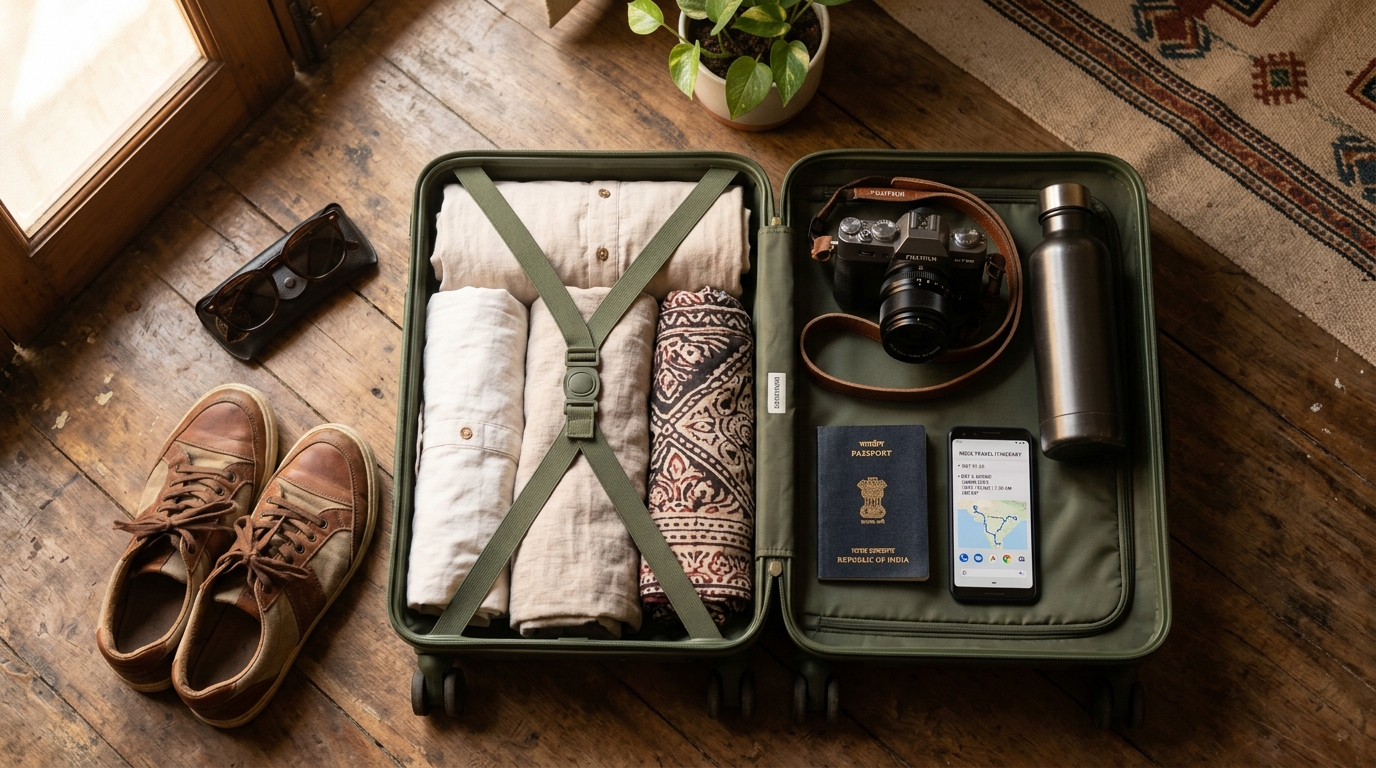
Europe Packing for Winter: Layers, Boots & Thermal Kit
Most Indian travelers pack for a European winter the way they'd pack for a Delhi winter—a heavy overcoat, a scarf, done. That approach leaves you either shivering in inadequate gear or dragging a 15kg suitcase through snowy streets. The real difference isn't volume; it's strategic layering and choosing insulated pieces that compress into half the space while keeping you warm at –5°C and below.
1. The Base Layer Rule: Merino, Not Cotton
Your skin is your first defense against the cold. Cotton absorbs sweat and retains moisture—exactly what you don't want when you're walking through a Munich snowstorm or standing in a Venice canal-side piazza in subzero wind chill. Merino wool base layers wick moisture, regulate temperature even when damp, and don't smell after three days of continuous wear.
What you need:
- 2–3 merino wool thermal tops (₹3,000–₹5,000 each; brands like Decathlon or Amazon Basics merino fit Indian body frames better than European brands)
- 2 pairs merino thermal leggings (₹2,500–₹4,000 per pair)
- 1 merino wool full-length underwear set as backup (₹4,000)
Skip heavy cotton thermals. Skip synthetic long-sleeves that bunch under jackets. A single merino layer under your regular shirt and trousers works for –2°C to 5°C (Copenhagen in March, Prague in late February). Add a second merino base layer for –5°C and below (Swiss Alps, Austrian highlands, Northern Germany in December).
| Temperature Range | What to Wear | Merino Layers Needed |
|---|---|---|
| 5°C to 10°C | Merino top + sweater + light jacket | 1 merino top |
| 0°C to 5°C | Merino top + merino legging + trousers + insulated jacket | 1 full set |
| –5°C to 0°C | Merino top + merino legging + thick trousers + insulated parka + thermal socks | 2 merino tops |
| Below –5°C | Full merino + thermal socks + insulated parka + wool sweater layered | 2 full merino sets |
Buy merino in India before you leave. European airport shops and souvenir stores mark up thermal wear by 40–60%. A Decathlon store in Bangalore sells the same merino long-sleeve for ₹2,800 that costs €22 (₹1,900) in Germany but takes 10 days to ship and arrives after you've already frozen.
2. Insulated Jacket: Choose Compression Over Bulk
An Indian winter coat won't survive a European winter. Most Indian overcoats are wool or fleece—designed for mild dry cold, not damp cold that penetrates. Down-fill or synthetic insulation jackets trap warm air and compress to the size of a pillow when packed.
Here's what works:
Down-fill jackets (₹8,000–₹15,000):
- Lighter, more compressible, warmer weight-for-weight
- Worse in wet snow (down clumps when wet)
- Risk: cheap down jackets sold in Indian markets use low-quality fill and fail within a season
Synthetic insulation jackets (₹6,000–₹12,000, brands like Decathlon Quechua or Forclaz):
- Perform even when damp
- Slightly heavier and less packable than down
- More reliable in actual European winter conditions (Prague slush, London drizzle, Swiss wet snow)
My recommendation for Indian travelers: buy a mid-range synthetic puffer jacket (₹8,000–₹10,000) from Decathlon India before departure. It costs ₹4,000–₹6,000 more in Europe. Pair it with a waterproof outer shell (rain jacket) you already own.
Do not buy a jacket in Europe and pack it home—shipping adds ₹3,000–₹5,000 and the hassle isn't worth it.
3. Footwear: Waterproof Boots Over Everything
Your feet decide whether a European winter is survivable or miserable. European streets from December to February are alternately snow, slush, wet salt, ice, and muddy melt. Waterproof insulated boots are non-negotiable.
Requirements:
- Insulation rating of at least 200g Thinsulate or equivalent (keeps toes warm at –5°C for 4–6 hours of standing/walking)
- Full waterproof membrane (not just water-resistant)
- Grip sole (continental winters demand traction; slipping on black ice in Vienna is embarrassing and dangerous)
- Ankle support (cobblestone streets + snow = twisted ankles)
Boot options for Indian travelers:
| Brand | Price (INR) | Insulation | Best For | Buy Where |
|---|---|---|---|---|
| Decathlon Quechua | ₹4,500–₹6,500 | 200–300g | Budget, reliable, Indian fit | Decathlon India |
| Woodland | ₹7,000–₹9,000 | 150–200g | Indian comfort, widely available | Online, malls |
| Columbia (imported) | ₹12,000–₹16,000 | 200–400g | Mountain regions, durability | Amazon India |
| Merrell (online deals) | ₹9,000–₹13,000 | 200–250g | Lightweight trekking style | Amazon, special sales |
Break in your boots for 2–3 weeks before departure. New boots + European cobblestones + wet snow = blisters.
Pack one pair of insulated waterproof boots as your main winter shoe and bring your regular Indian sneakers as a backup for indoors or warmer days. Two pairs of boots is unnecessary weight.
Thermal socks: buy 3–4 pairs of merino wool hiking socks (₹600–₹1,000 per pair) in India. European souvenir shops sell novelty wool socks for €8–€12 (₹700–₹1,000) that aren't designed for actual insulation.
4. Mid-Layer Insulation: Sweaters & Fleece
Your merino base layer + insulated jacket setup covers most cold-weather situations. A mid-layer adds flexibility for variable days and layering when you're outdoors for 6+ hours.
Buy these before you leave India:
- 1 heavyweight wool sweater (₹3,000–₹5,000) in neutral color—wear it under your parka or alone indoors
- 1 lightweight fleece jacket (₹2,000–₹3,500) that compresses small and adds warmth without bulk
- 1 lightweight wool cardigan (₹2,500–₹4,000) for layering indoors and in cafes
Skip heavy knit cardigans and bulky scarves. They take up 30% of your suitcase and are replaced by a fleece + merino combo that takes 10% of the space.
European wool shops sell beautiful sweaters but at ₹15,000–₹25,000. Buy in India, save ₹8,000–₹15,000, and use that money for museum entries.
5. Accessories: Head, Hands, Neck—Every Extremity Counts
Hands, feet, ears, and nose lose heat first. European winter temperatures drop below 0°C—exposed skin on your face, hands, and head accelerates heat loss dramatically.
Pack these in a separate small bag:
- 1 merino wool beanie or thermal hat (₹1,500–₹2,500)—protects ears and prevents 20% of body heat loss from your head
- 2 pairs of insulated gloves (₹2,000–₹3,500 per pair; one leather-lined for style, one fleece for function)
- 1 merino wool neck gaiter or balaclava (₹1,500–₹2,500)—covers mouth and nose in extreme cold, prevents frostbite-risk on exposed skin
- Thermal hand warmers (₹500–₹800 for a pack of 10)—keep in jacket pockets for standing in the cold (Christmas markets in Vienna, observing Northern Lights in Swedish Lapland)
Skip fashion scarves, cotton gloves, and thin hats. They're decorative, not functional. A merino neck gaiter does the job of a scarf, gloves, and half a jacket in terms of heat retention.
Cost breakdown for accessories: ₹8,000–₹12,500 total—invested once, used for your entire winter trip and future cold-weather travel.
6. Packing Strategy: What Fits, What Doesn't
Most Indian travelers pack a 60L backpack or 25kg checked suitcase for 2–3 weeks in Europe. Winter gear increases volume by 30–40% if you choose bulky items and by only 10–15% if you use compression and smart layering.
Smart packing for winter:
- Buy compression bags (₹800–₹1,500 for a set) before you leave. They reduce merino and fleece volume by 50%.
- Wear your bulkiest items on the flight—boots, parka, sweater. This frees 4–5 liters of suitcase space.
- Eliminate duplicates—one pair of trousers for 4–5 days is fine (European laundromats cost ₹400–₹600 per load; hotels charge ₹1,000–₹2,000 to wash a single pair). Wash 2–3 merino tops and rotate daily.
- One jacket, not three—the insulated parka + waterproof shell layer covers all winter conditions. A sweater for indoors replaces a "third jacket."
Suitcase weight check:
- Merino base layers (3 tops + 2 leggings): 1.2 kg
- Insulated parka: 1.8 kg
- Boots: 1.2 kg
- Sweater + fleece + cardigan: 2.0 kg
- Hat, gloves, neck gaiter: 0.4 kg
- Socks (4 pairs): 0.3 kg
- Total winter gear: ~8.9 kg (fit in a 15-liter packing cube)
Use our trip budget calculator to factor in the cost of thermal gear and plan which items to buy in India vs. Europe. Factor in ₹2,000–₹3,000 for laundry over a 3-week winter trip.
Use our trip reality check to cross-check your packing list against your actual itinerary—if you're in Barcelona and Madrid in January (mild), you need less insulation than if you're visiting the Alps and Stockholm.
Frequently Asked Questions
How much warmer is merino wool than regular thermal underwear?
Merino wool retains up to 80% of its insulating power even when wet, while cotton thermals lose most insulation when damp. In a European winter with slush, rain, and snow, merino stays functional. Regular cotton thermals become cold and clammy after 2–3 hours outdoors and take 12+ hours to dry. If you're doing active sightseeing (walking 15,000+ steps daily), merino is worth the ₹3,000–₹5,000 per piece investment.
Can I just buy winter gear in Europe instead of packing it from India?
You can, but it's 30–50% more expensive. A merino wool thermal top costs ₹2,800 in India and €18–€22 (₹1,500–₹1,900) in a European Decathlon, but most European stores mark winter wear up by 40% in December–January. If you arrive in late January or February, stock is picked over and sizes are limited. Buy in India, save money, and guarantee your correct size and fit.
Is a down jacket or synthetic insulation better for India-to-Europe winter travel?
Synthetic insulation is better for Indian travelers. European winters are damp (slush, wet snow, rain-turned-ice), and down clumps and loses insulation when wet. Synthetic insulation from brands like Decathlon Quechua performs well in wet conditions and costs ₹2,000–₹3,000 less than quality down. Down is lighter but only better if you're hiking in dry mountain conditions (like the Swiss Alps in clear weather).
How many pairs of thermal socks do I need for a 3-week winter trip?
Three to four pairs of merino wool hiking socks. Merino doesn't retain odor, so you can wear the same pair 2–3 times before washing. European laundromats wash a full load for ₹400–₹600, and socks dry in 1.5 hours. Packing four pairs gives you rotation while one batch is drying. Avoid packing eight pairs—it's unnecessary weight and takes up suitcase space.
Should I pack a waterproof outer shell or buy a rain jacket in Europe?
Pack or bring your existing lightweight rain jacket from India. Waterproof shells weigh less than 500g and fold into a pocket. European prices for a basic rain jacket start at €35–€50 (₹3,000–₹4,300), and quality versions are double that. Your existing rain jacket already works—layering it over your insulated parka handles slush and snow-melt perfectly. Only buy in Europe if your current rain jacket is damaged or you forget it.
Ready to Pack Smart and Travel Warm
European winter isn't survival—it's about packing strategically. Merino wool, a synthetic insulated jacket, waterproof boots, and smart layering keep you warm without dragging an overstuffed suitcase through train stations. Buy thermal gear in India, skip the tourist-trap airport shops, and invest that saved money in experiences: winter markets, hot chocolate in Vienna, ice skating in Prague.
Start your winter Europe itinerary now. Check temperatures for your specific destinations, map walking distances, and get personalized packing recommendations based on your exact dates. Generate your free AI itinerary →