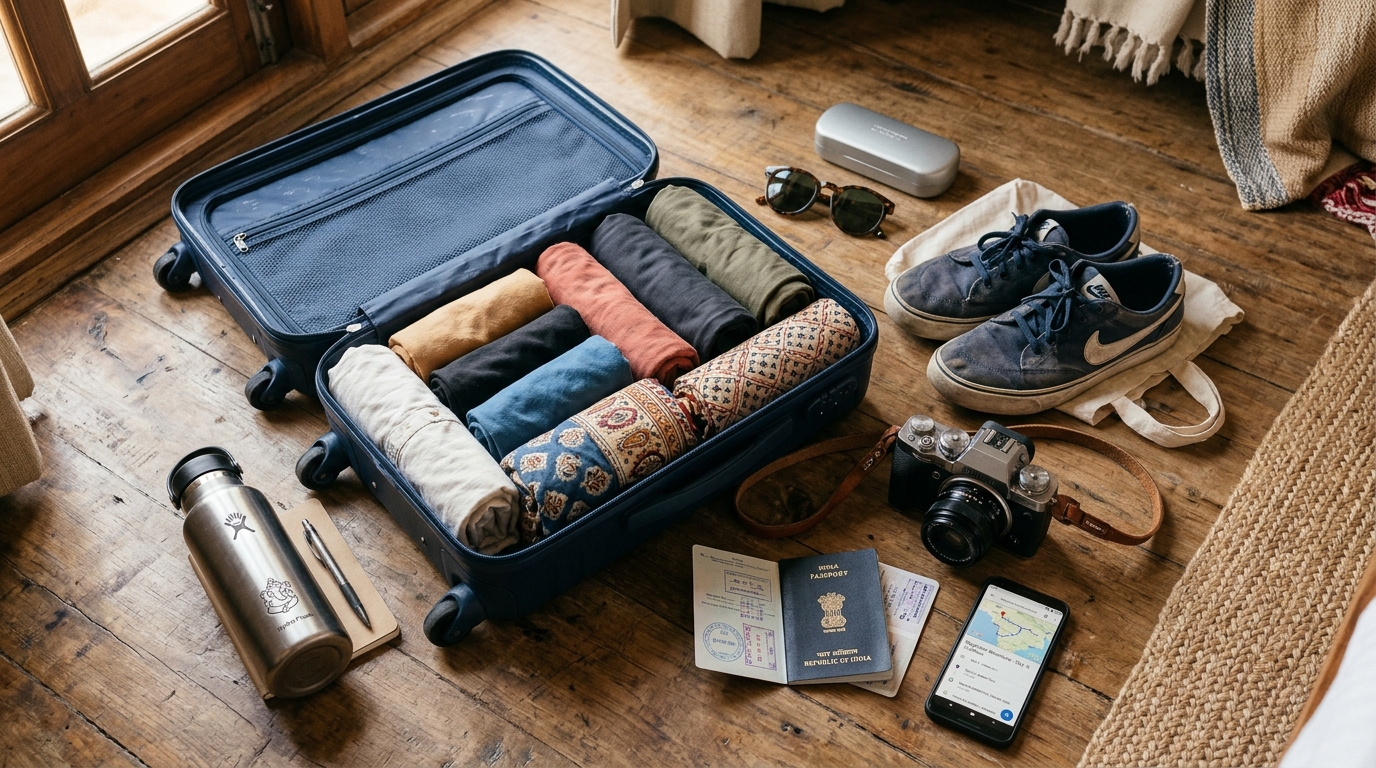
Europe Packing List for Indians: Climate Zone Kit
Most travel blogs hand you the same list for Paris, Portugal, and Poland. None of them account for the fact that you've never packed for 3°C rain or Alpine wind, or that your cotton wardrobe won't survive a Mediterranean summer. The real secret is packing by climate zone, not by country—and knowing exactly what Indian brands and weights work in each.
1. The Three European Climate Zones (And Why Your Current Logic Breaks)
Europe isn't one climate. It's three completely different packing problems stacked on top of each other. Most Indians overshoot on volume and undershoot on the right type of insulation because tropical monsoons and European winters are not the same beast.
Alpine Zone (Switzerland, Austria, Bavaria, Scottish Highlands): October–April = -5°C to 5°C, high humidity, snow, wind. June–September = 8°C to 18°C, dry, but sudden storms.
Mediterranean Zone (Spain, Italy, Greece, southern France): May–September = 25°C to 35°C, low humidity, intense sun. October–April = 10°C to 18°C, brief rain, mild.
Atlantic/Continental Zone (UK, Ireland, northern France, Germany, Poland): Year-round = 5°C to 15°C, high rainfall, unpredictable wind. No true "dry" season.
Here's where most Indians get it wrong: you pack a "warm jacket" for both Alpine and Mediterranean zones. In the Alps, you need layered insulation because temperature swings 15°C in a day. In the Mediterranean, you need zero insulation but SPF obsession. In the Atlantic zone, you need waterproof, breathable protection—not warmth.
| Climate Zone | Best Months | Temperature Range | Humidity | Rain Risk | Packing Priority |
|---|---|---|---|---|---|
| Alpine | Jun–Sep (visit), Dec–Feb (ski) | -5°C to 18°C | Moderate to high | Sudden storms, snow | Layering + windproof |
| Mediterranean | May–Sep | 25°C–35°C | Low | Rare (Oct–Apr brief) | Sun protection + light layers |
| Atlantic/Continental | May–Sep best; Oct–Apr wet | 5°C–15°C | High | Frequent | Waterproof + breathable |
Your packing weight must match: Alpine = 12–15 kg (layering takes space, not weight). Mediterranean = 8–10 kg (fabric density low). Atlantic = 10–12 kg (dense, water-resistant fabrics).
2. Alpine Zone: Layering Science for Indians Who've Never Seen Snow
You grew up in heat. Your body doesn't know how to regulate in 0°C. The fix: three mandatory layers, not a single thick coat.
Layer 1 (Base): Merino wool or synthetic thermal top + leggings. NOT cotton—it absorbs sweat and freezes. Indian brands: Decathlon India (their thermal range is ₹800–1500) or online import from Uniqlo (HeatTech, ₹1200–1800). Pack 2 sets; rotate daily.
Layer 2 (Mid): Fleece or lightweight down. A 800-fill-power down gilet compresses to the size of a fist and weighs 300g. Brands: Decathlon's Quechua or imported Arc'teryx (pricy: ₹8,000–15,000). This is not negotiable for Alpine; it's your actual insulation.
Layer 3 (Outer): Windproof + water-resistant shell jacket. This is where Indians fail—they buy a "rain jacket" expecting it to keep wind out. You need a hard shell (Gore-Tex equivalent), not a soft shell. Budget: ₹3,000–6,000 for Decathlon; ₹12,000+ for brand names. Pack one; rotate with a light packable puffer if you're staying 7+ days.
The truth: you'll spend 70% of Alpine time in base + mid layer alone. The shell comes out for 30 minutes at a time. Don't overweight yourself with three jackets—one hard shell, one down gilet, one set of base layers.
Feet matter more than torso. Alpine zones have snow. Cotton socks freeze. Pack:
- 3 pairs of merino or synthetic thermal socks (₹300–600 per pair)
- Insulated, waterproof hiking boots (₹4,000–7,000; Decathlon Forclaz or imported Salomon)
- Gaiters if hiking (₹1,200–2,000; keep snow out of boots)
Hands and face lose heat fastest. Add:
- One pair of merino liner gloves (₹400–800, fit under regular gloves)
- One pair of insulated mittens or lobster gloves (₹1,200–2,500)
- Merino or synthetic beanie (₹600–1,200)
- One neck buff or balaclava (₹600–1,000)
Sunscreen SPF 50+ is mandatory—alpine sun reflects off snow and burns you in 15 minutes. Pack 75ml tube and a lip balm with SPF.
Use your Free AI itinerary generator to get exact Alpine routes with elevation gain; higher = colder, so pack accordingly.
3. Mediterranean Zone: Sun Defense, Not Warmth
The Mediterranean con: you think "warm" means you pack light. You end up sunburned, dehydrated, and sleeping in jeans because 16°C nights are colder than your expectations.
Day wear (May–September): Lightweight, loose cotton or linen—NOT tight. Loose fabric allows air circulation; tight fabric holds heat. Pack:
- 5–6 cotton/linen tops (₹400–800 each; Indian brands: Fab India, Biba, or basic white tees)
- 2 pairs of lightweight trousers or capris (₹600–1,200; linen ideal)
- 1–2 dresses (if comfortable; easier to ventilate than separate top/bottom)
- Shorts (1 pair; cotton, not denim)
The critical layer: A lightweight, long-sleeve cover-up or shirt. Worn loose over a tank top, it drops your effective temperature by 5°C and protects your shoulders and back from UV. Mediterranean sun at noon = 35°C direct rays. This shirt is ₹600–1,200 and worth its weight.
Footwear: Sandals for daily wear (₹800–1,500; leather or synthetic, not rubber—rubber doesn't breathe). ONE pair of closed walking shoes for ruins and uneven terrain (₹2,000–4,000). Leave the heavy hiking boots home.
Night wear (October–April, or May–Sep evenings): Surprise: Mediterranean nights drop to 12–16°C. Pack ONE lightweight cardigan or sweater (₹1,200–2,000; merino or cotton blend, not wool—too thick). Jeans get cold fast; bring lightweight trousers or a scarf to wrap.
Sun gear is non-negotiable:
- SPF 50+ sunscreen (100ml; ₹400–800)
- SPF 50+ lip balm (₹200–400)
- Sunglasses with UV protection (₹1,500–5,000)
- Hat with brim (wide-brim sun hat, ₹800–2,000; packs flat)
- Lightweight scarf or buff (multi-use: sun, neck, head, sarong; ₹600–1,200)
Dehydration masquerades as hunger. Pack an empty water bottle (500ml, ₹400–800) and refill at fountains. Mediterranean cities have free water fountains; use them.
| Clothing Item | Med Summer (May–Sep) | Med Winter (Oct–Apr) | Weight/Size |
|---|---|---|---|
| Cotton/linen tops | 5–6 | 4–5 + 1 long-sleeve | 300g total |
| Trousers | 2 lightweight | 2 (1 jeans, 1 casual) | 400g total |
| Cardigan/sweater | 0 | 1 | 200g |
| Footwear | Sandals + shoes | Shoes + closed shoes | 600g |
4. Atlantic/Continental Zone: The Wet Layer Problem
UK, Ireland, northern France, Germany, Poland: it rains here like it rains in Mumbai, except sideways and colder. Your monsoon rain jacket won't work because the rain is horizontal and the temperature is 8°C. You need breathable waterproof, not cheap plastic that turns into a sauna.
The paradox: You need rain protection that breathes. Cheap plastic rain jackets (₹800–1,500) trap moisture inside, making you wetter than if you'd just gotten rained on. Good rain jackets cost ₹4,000–8,000 but are worth it.
What to pack:
- ONE quality waterproof jacket (not a rain poncho, not plastic; Gore-Tex or equivalent, ₹4,000–8,000)
- ONE fleece mid-layer (₹1,500–2,500; keeps you warm even when damp)
- 2–3 merino or synthetic base layers (₹800–1,500 each; dry quickly if they get wet)
- Waterproof bag or cover (for your backpack; ₹600–1,500)
- Quick-dry trousers, not jeans (₹1,500–2,500; synthetic blend)
Footwear is critical here: Rain gutters and puddles are everywhere. Pack:
- Waterproof walking shoes (₹3,000–6,000; Decathlon Salomon or Merrell)
- One pair of regular trainers (for indoors, dry backup)
- Never pack open-toe sandals for Atlantic zones—you'll regret it
Hands and face:
- Waterproof gloves (₹1,500–2,500; leather or synthetic, NOT cotton)
- Beanie that sheds water (wool felted, ₹800–1,500)
- Buff or gaiter (multi-use, ₹600–1,000)
The Atlantic zone lets you layer lighter than Alpine because you're rarely below 5°C. Think monsoon Mumbai (15°C) + perpetual drizzle, not Alpine cold.
Use your Trip budget calculator to factor in laundry costs; Atlantic zones require wash-and-dry cycles every 3–4 days if you're hiking.
5. Accessories That Work Across All Zones (The Universal Layer)
Certain items earn their space by being useful everywhere. These are your mobility multipliers.
Scarves (₹600–1,500 for merino or cotton blends): In Alpine zones, they're neck warmth and face protection. In Mediterranean, they're sun shields and evening wraps. In Atlantic zones, they keep wind out of your jacket collar. Pack ONE merino scarf; weight is 100g, value is infinite.
Lightweight buff or neck gaiter (₹600–1,200): Same logic. Use it as a neck collar, face mask on windy Alpine days, sun protection in Mediterranean, or rain cover in Atlantic. One per person.
Compression socks (₹800–1,500): Not just for flights. Wear them on long walking days—they reduce foot swelling and thrombosis risk. Critical if you have a 12+ hour flight from India.
Quick-dry microfiber towels (₹800–1,200): Hotel towels are heavy. A microfiber towel packs to nothing and dries in 2 hours. Useful in all zones.
Lightweight rain cover or packing cubes (₹600–1,500): Separates wet gear from dry. Packs efficiently. Non-negotiable for Atlantic zones.
Phone/camera protection: Europe is humid in summer, wet in winter. Pack a dry bag (₹400–800) and lens cloth (₹300–600).
Your Visa wizard for Indians will tell you if you need a converter—most European outlets are 220V, 50Hz. Pack a universal adapter (₹400–800) and lightweight fast charger (₹1,200–2,000).
6. The Packing Checklist by Zone (Print This)
For Alpine (June–September day hikes):
- Merino thermal set × 2 (₹1,600–3,200)
- Down gilet (₹2,500–8,000)
- Hard-shell jacket (₹3,000–6,000)
- Merino socks × 3 (₹900–1,800)
- Insulated hiking boots (₹4,000–7,000)
- Mittens + liner gloves (₹1,600–3,300)
- Beanie (₹600–1,200)
- Gaiters (₹1,200–2,000, optional if day hikes only)
- SPF 50+ (₹400–800)
- Total weight: 12–15 kg
For Mediterranean (May–September beach/ruins):
- Cotton/linen tops × 5 (₹2,000–4,000)
- Lightweight trousers × 2 (₹1,200–2,400)
- Long-sleeve cover-up shirt (₹600–1,200)
- Lightweight cardigan for evenings (₹1,200–2,000)
- Sandals (₹800–1,500)
- Walking shoes (₹2,000–4,000)
- Hat (₹800–2,000)
- SPF 50+ + lip balm (₹600–1,200)
- Sunglasses (₹1,500–5,000)
- Scarf/buff (₹600–1,200)
- Total weight: 8–10 kg
For Atlantic (Any month, cities + countryside):
- Merino base layers × 3 (₹2,400–4,500)
- Fleece (₹1,500–2,500)
- Quality rain jacket (₹4,000–8,000)
- Quick-dry trousers × 2 (₹3,000–5,000)
- Waterproof hiking shoes (₹3,000–6,000)
- Trainers (₹2,000–3,000)
- Waterproof gloves (₹1,500–2,500)
- Beanie + buff (₹1,600–2,500)
- Lightweight sweater (₹1,200–2,000)
- Rain cover for bag (₹600–1,500)
- Total weight: 10–12 kg
Frequently Asked Questions
How do I pack for two zones (e.g., Swiss Alps + Italian coast)?
Combine 70% of the Alpine list with 50% of the Mediterranean list. Prioritize: down gilet + hard shell from Alpine, lightweight cover-up + SPF from Mediterranean. Sacrifice space by leaving behind heavy Alpine footwear if you're spending 5+ days in the Mediterranean. Your Free AI itinerary generator can split packing by leg—use it to allocate weight per destination.
Is Decathlon gear good enough for Alps, or should I import Arc'teryx?
Decathlon's Quechua line (down gilets, rain jackets, thermal base layers) is genuinely sufficient for summer Alpine hiking (June–September). It costs ₹3,000–6,000 vs. Arc'teryx's ₹12,000–20,000. The difference: Arc'teryx shaves 50g per item and gains durability for repeated use. If this is your first Alpine trip, Decathlon works. If you're going back annually, invest in Arc'teryx or Salomon.
Do I really need merino wool, or will synthetics work?
Synthetics are fine if you wash every 2–3 days. Merino is better because it regulates temperature and doesn't smell for 5 days straight—critical if you're hiking the same trail twice. Cost difference: merino ₹1,200–1,800 per top vs. synthetic ₹600–1,000. In Mediterranean or Atlantic zones where you're not hiking daily, synthetics save money. In Alpine multi-day treks, merino earns itself.
What's the deal with European sizing, and should I pack clothes from India or buy locally?
Indian XL ≠ European M. European sizes are tighter, especially in chest and length. For a single trip, buy basics (socks, thermal sets, underwear) from Indian brands before leaving—Decathlon India has standard sizing and low prices. Buy outerwear (jackets, boots) in Europe; footwear especially must fit on-site. European shoe size = Indian size − 1.5 (roughly). Factor ₹2,000–5,000 for on-site clothing buys into your Trip budget calculator.
Should I pack different shoes for each zone, or will one pair of good walking shoes work everywhere?
One pair of good waterproof walking shoes (Salomon, Merrell, Decathlon Forclaz: ₹3,000–6,000) works for Mediterranean ruins, Atlantic cities, and easy Alpine trails. It won't work for technical Alpine climbing or rock scrambling—you'll need specialized boots (₹6,000–10,000). For a mixed trip (Alpine day hikes + Mediterranean beach + Atlantic cities), pack one pair of waterproof walking shoes + one pair of lightweight sandals or trainers. Swap between. Total: ₹5,000–8,000, vs. three separate pairs (₹10,000+).
The Takeaway: Pack the Climate, Not the Country
Europe is three worlds layered on top of each other. Your packing logic for Alpine snow, Mediterranean sun, and Atlantic rain must be completely different. Start by deciding which zone(s) you're visiting, then strip your suitcase to the essentials for that zone—nothing more.
The real travel hack isn't buying more gear; it's buying the right fabric for the climate you're in. Merino over cotton in cold zones. Linen over polyester in heat. Breathable synthetics over plastic in rain. Once you nail that, weight drops, comfort rises, and you pack half of what generic guides tell you to.
Ready to plan a multi-zone European trip without overpacking? Generate your free AI itinerary →