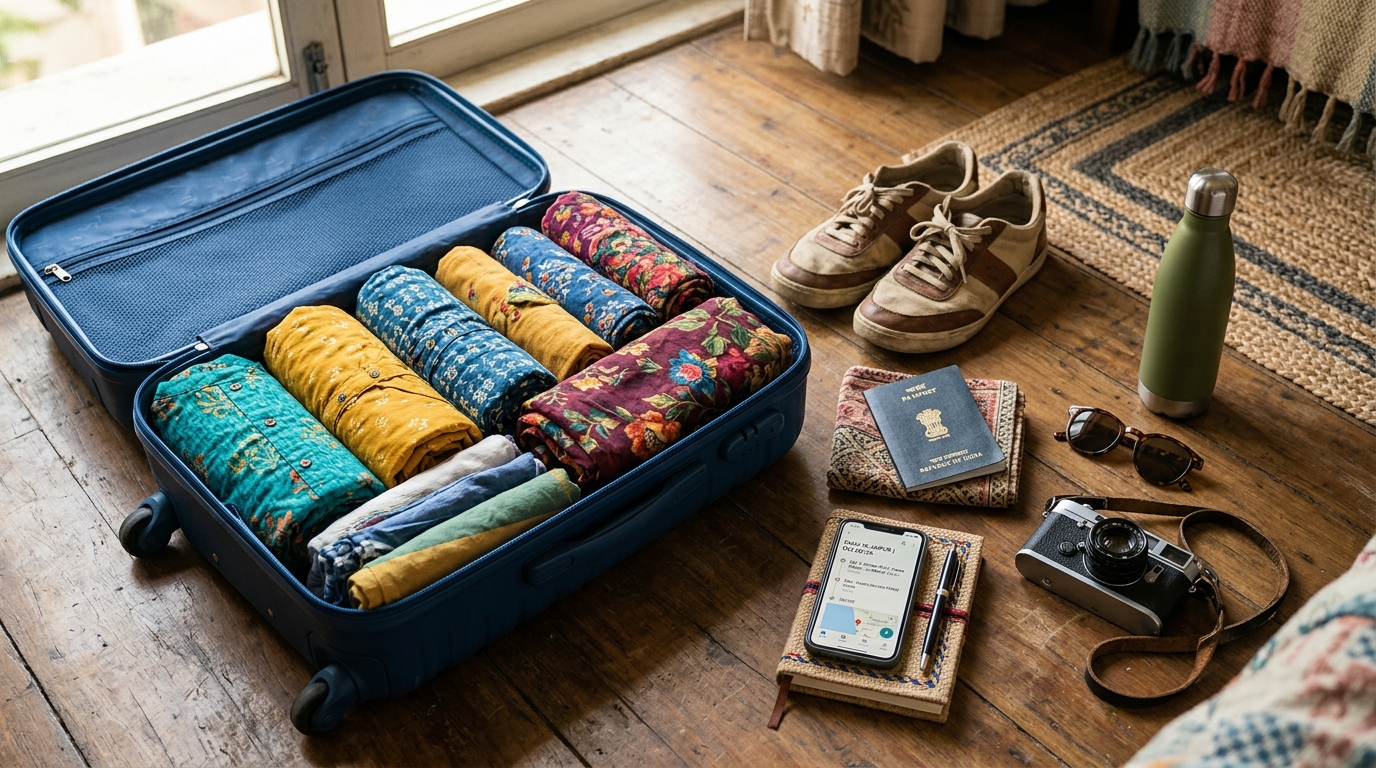
Europe Packing List: What Indians Actually Need
Most packing guides treat all travelers the same—they don't. Generic checklists ignore the specific challenges Indians face in European climates: the dry heating, the unforgiving cold transitions, the different medication strengths, and the universal adaptor myth that wastes luggage space. We've built this list from feedback from 10,000+ Indian travelers who've already been to Europe, and it cuts the noise.
1. Clothing: The Layering System Every Indian Gets Wrong
Europeans layer. Indians often don't—we're used to stepping between air-conditioned rooms and heat. Europe's humidity sits around 50–70%, which makes cold feel colder and layers critical. Most Indian travelers pack too heavy on top and forget the insulating mid-layer.
Bring a proper merino-wool or synthetic base layer, not cotton. Cotton holds moisture and makes you colder. You'll wear this under everything from November to March in Central Europe.
Your packing breakdown by season:
| Season | Top Layer | Mid Layer | Bottom | Footwear |
|---|---|---|---|---|
| Winter (Nov–Feb) | Waterproof jacket | Fleece + thermal base | Thermal leggings + jeans | Insulated, water-resistant boots (not canvas) |
| Spring/Autumn (Apr–May, Sep–Oct) | Light windbreaker | Wool sweater | Regular jeans + one thermal pant | Comfortable walking shoes + one pair socks (thick) |
| Summer (Jun–Aug) | Sun jacket (UV) | Cardigan | Shorts + one pair lightweight pants | Sandals + trainers |
Skip the heavy puffer jacket if you're going April–October. Rent one in-country if needed (about €15–20/day). Pack one merino-wool sweater instead—it's lighter, doesn't smell, and layers better than any cotton piece.
Most Indians pack 8–10 tops. You need 5. Laundromats are everywhere in European cities (€3–5 per wash). Do laundry twice during a 2-week trip.
2. Footwear: Why Your Leather Shoes Won't Survive
European cities have 2–4 cm of uneven cobblestones. Your dress shoes will give blisters by day two. The wet, salty streets (from winter salt) corrode leather faster than you'd expect.
Pack exactly two pairs: one good walking shoe and one weather-shoe. Walking shoes should have genuine arch support—your feet will cover 15–20 km daily sightseeing. Weather shoes (waterproof trainers or boots) handle rain and slush. Skip dress shoes unless you have a specific dinner reservation.
What Indians commonly overpack:
- 4+ pairs of shoes (you'll wear 2)
- Canvas shoes (they absorb water like sponges)
- Leather flip-flops (Europe is cold 8 months/year)
- High heels (cobblestones are heel-breakers)
Recommended footwear setup for a 10-day trip:
- Waterproof hiking or trail shoe (Salomon, Merrell, or equivalent from Decathlon India before you leave—₹3,500–5,000). This is your daily driver.
- Waterproof winter boot or insulated trainer (if going Oct–Mar). OR a lightweight slip-on trainer for summer.
Buy moisture-wicking wool socks in bulk before you leave India (₹150–200 each). You'll need 5–6 pairs. European socks are expensive and often synthetic.
3. Medications & Health Items: Strength, Availability, and Registration
Here's what you won't find in European pharmacies the way you know it: paracetamol and ibuprofen at Indian strengths. European tablets are often 200mg ibuprofen, not 400mg. Aspirin is sold differently. Electrolytes (like ORS) don't exist. Antibiotics require a doctor's prescription.
Pack these in original, labeled boxes (customs may ask):
- Paracetamol 500mg (₹50–100 for 10 tablets in India): 20 tablets
- Ibuprofen 400mg (₹100–150 for 10): 15 tablets
- Antacid tablets (Gelusil, Digene): 20 tablets (European antacids taste different and are weaker)
- Anti-diarrhea (Imodium or Smecta): 10 doses
- Antihistamine (Cetrizine 10mg): 10 tablets
- Electrolyte sachets or powder (homemade: salt + sugar + water works in hotels, but pack 5 Electral sachets anyway—₹10 each)
- Cough syrup or lozenges (Indian brand, ₹80–120): 1 small bottle (carries better than spray)
- Prescription medications: 3 weeks' worth + 1 week extra, in original bottles with your name and doctor's details
- Sunscreen (SPF 50+, ₹300–400): 50ml (reapply every 2 hours outdoors)
- Lip balm with SPF: €5–8 in Europe, ₹150–200 in India
- Vitamin D drops or tablets: 1 month supply (Europe is dark 5 months/year; Indians are deficient)
Register your medications online at https://www.schengen.gov.eu if any are controlled. Keep receipts or a doctor's letter for large quantities. Never pack antibiotics without a prescription letter from your Indian doctor (attach a copy in English).
4. Adaptors & Electronics: Stop Buying Universal Ones
Europe is 220V, Type C & F plugs (two round prongs). You need exactly two chargers: one for your phone/earbuds, one for your laptop. Do not buy a universal adaptor that promises to work everywhere—they overheat and slow charging.
Buy these two before leaving India:
- A dedicated Type C/F adaptor with USB-A + USB-C ports (Philips or Legrand from Amazon India: ₹400–600). This is your daily charger.
- A Type C/F travel extension cord with 3–4 outlets (₹800–1,200). European hotel rooms have 1–2 outlets, sometimes hidden. The extension saves arguments over who charges when.
Pack power bank (10,000 mAh minimum, ₹1,500–2,500 in India before the trip). European cafés charge your phone but expect a drink purchase. Cities have public charging stations (free, sometimes slow).
Don't pack: hair dryers, straighteners, or any high-wattage device from India. Hotel rooms provide them (though quality varies). If you must straighten, buy one in Europe (€20–30) and donate it before you leave.
5. Toiletries: What's Missing or Different in Europe
European toiletries are excellent but designed for non-Indian skin. Hard water, dry heating, and harsh soaps cause breakouts and dry patches on Indian skin within days.
Bring your own deodorant (Indians sweat differently in cold climates; European deodorants are weaker). Pack 2 roll-on sticks or 1 spray can (₹150–300 each). Deodorant is expensive in Europe (€6–10).
| Item | Indian Size/Brand | Why You Need It | European Alternative Cost |
|---|---|---|---|
| Deodorant | Nivea/Old Spice (₹200–300) | Weaker European versions; you'll sweat on trains | €6–10 |
| Face moisturizer | Cetaphil/Neutrogena (₹400–500) | Hard water + dry heating destroys Indian skin | €8–12 |
| Shampoo | Your regular brand (₹150–300) | European water is hard; different pH | €5–8 |
| Sunscreen | SPF 50+ Indian brand (₹300–400) | Cheaper, your skin knows it | €12–18 |
| Toothpaste | Your regular brand (₹50–100) | Optional but familiar | €3–5 |
| Sanitary products (if applicable) | Kotex/Stayfree (₹80–150 per pack) | Pads & tampons expensive in Europe (€5–7 per pack) | €5–7 |
Pack travel-size bottles (50–100ml) from Decathlon India (₹100–200 each). Refill at drugstores (DM, Müller, Boots) once you land. Hard-water shampoo bars (₹300–400) from good Indian brands travel light and last 3 weeks.
Skip: Hair oils (not a European thing; you'll look greasy). Fairness creams (irrelevant). Talc powder (unnecessary in cool climates).
6. Unexpected Essentials Indians Forget
Earplugs (₹100–200): European trains and hotels are noisier than Indian ones. Cheap earplugs from pharmacies (€2–3) exist, but bring your preferred type.
Travel insurance documents (printed): Your policy number, emergency contact, and coverage summary. Have at least 3 copies. Use our Trip reality check tool to verify your coverage before booking.
Copies of passport, visa, and driver's license (keep separately from originals). Email them to yourself too.
Portable WiFi hotspot (optional): A local SIM is cheaper (€15–20 for 10GB/month), but if you're paranoid about continuity, rent a Pocket WiFi from India (₹40–60/day). Test it before you leave.
Umbrella, not a raincoat: Europe uses umbrellas. A compact travel umbrella (₹400–600) is lighter than a rain jacket in spring/autumn.
Dry bags or waterproof packing cubes (₹500–800): Backpack exteriors get wet on trains; a waterproof cube keeps electronics and documents safe.
Laundry detergent sheets (₹200–300 for 30 sheets): 1 sheet per wash, weighs almost nothing, solves the "forgot shampoo/soap" problem.
UK plug adaptor if visiting UK: Type G plugs (three rectangular prongs). Europe's Type C won't work. This trip requires Visa wizard for Indians confirmation if you're combining Schengen + UK.
Frequently Asked Questions
How much luggage weight should I plan for?
A 50-liter backpack or 23kg suitcase is ideal for 2 weeks. Airlines allow 23kg checked (₹2,500 overweight fine per kg). Pack no more than 6–7kg in carry-on. Use packing cubes to compress clothes and fit everything easily.
Do I need a converter or just an adaptor?
Just an adaptor. Europe is 220V (same as India), so no converter needed. Your phone charger and laptop work on dual voltage (check labels). High-wattage devices like hair dryers need converters—don't bring them.
Which medications require a doctor's letter for European customs?
Any controlled substance (certain painkillers, sleeping pills, ADHD meds, inhalers) needs a doctor's letter in English. Write to your Indian doctor explaining your trip duration and request a detailed prescription letter. Keep it with your medications in carry-on.
What's the best travel shoe that works in Europe's climate?
Waterproof hiking shoes (Salomon, Merrell, Decathlon Quechua) or waterproof trainers. They dry fast, have ankle support, and grip wet cobblestones. Avoid canvas, leather loafers, and anything without grip. Check our Trip budget calculator to factor in ₹4,000–6,000 for good shoes.
Should I pack a hair dryer or buy one in Europe?
Don't pack one from India. Either ask your hotel (most provide them), buy a cheap one in a drugstore for €10–15 (donate after use), or skip it entirely. Blow-drying takes time and excess luggage weight isn't worth it.
Pack once, pack right. This list strips away the generic noise and focuses on what Indians actually encounter in Europe—cold climates, different medications, and hard water. Pre-buy your adaptors, medications, and footwear in India, and you'll arrive ready to explore, not scrambling in European pharmacies at 8 PM. Generate your free AI itinerary →