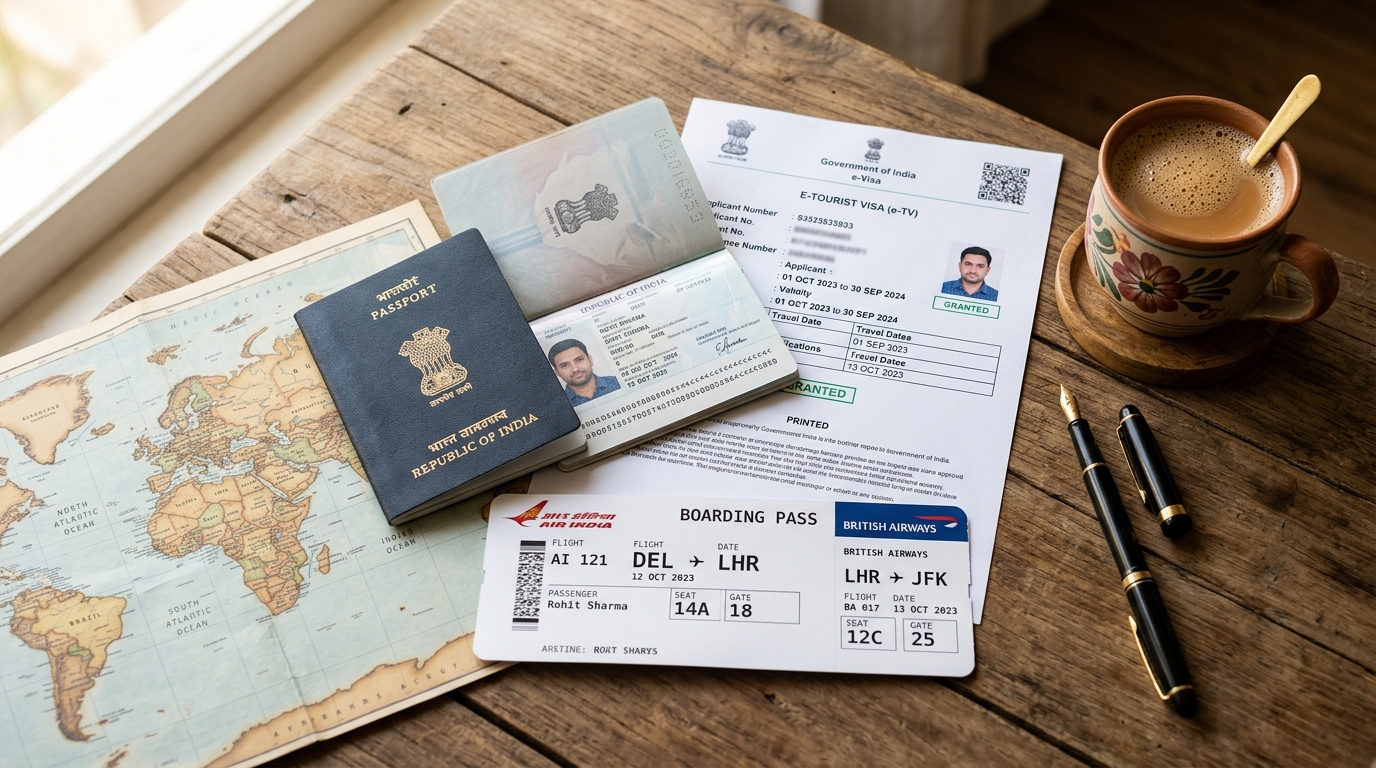
Europe Travel Insurance for Indians: Visa vs. Non-Visa Claims
Most travel guides tell you insurance is just a visa box to tick. Most generic AI planners treat it as a ₹2,000 add-on. The truth: Schengen nations reject 40% of cheap policies before your application reaches desk review, and the ones that slip through often refuse claims when you need them most. This post breaks down the exact coverage minimums, which insurers win visa approval, and real claim stories showing why ₹15,000 policies fail where ₹35,000 ones succeed.
1. Schengen Visa Insurance Minimums vs. What You Actually Need
Schengen countries require a floor of €30,000 (roughly ₹25–26 lakh) in medical coverage—but "required" and "approved" are different words. Visa officers reject policies that list €30,000 gross, then deduct co-pays, waiting periods, or exclusions down to €18,000 net. You don't see that until claim time.
Here's what matters to a visa officer (and later, a claims adjuster):
- Medical expenses must be guaranteed, not capped after exclusions.
- Repatriation (medical evacuation to India) must be separate and unrestricted.
- The policy must activate before you fly, not day 2 of your trip.
- Pre-existing condition clauses cannot swallow your illness retroactively.
| Coverage Type | Schengen Minimum (EUR) | Actual INR Floor for Approval | Why It Matters |
|---|---|---|---|
| Medical | €30,000 | ₹25–26 lakh | Visa gate; claims gate |
| Repatriation | €100,000+ | ₹85+ lakh | Flight + ICU back to India |
| Evacuation (non-medical) | €50,000+ | ₹42+ lakh | Terrorism, war, natural disaster |
| Trip cancellation | €10,000–15,000 | ₹8.5–12.5 lakh | Flight refunds + hotel |
The mistake: buying a ₹15,000 policy (which insures ₹15 lakh total, not €30,000) and uploading it to your visa application. The embassy flags it. Even if they don't, a claim goes nowhere.
Real case: Simran (Delhi, age 28) bought a ₹12,000 policy for a 10-day France trip. Visa approved (consulate didn't cross-check hard). On day 4, she fractured her ankle. The insurer claimed her policy "only covers medical to ₹12 lakh, exclusions reduce it to ₹7 lakh." Paris hospital bill: ₹8.2 lakh. She paid ₹1.2 lakh out of pocket. Her visa was never at risk, but her finances were.
Use our Trip budget calculator to reverse-engineer the right coverage tier before you buy.
2. Which Insurers Actually Pass Visa Checks
Not all policies are created equal in an embassy's eyes. Some insurers have pre-signed Schengen-approval certs; others force visa officers to ring up the carrier to confirm net coverage. Delays, rejections, and resubmissions follow.
Approved-on-arrival insurers (Indian market):
- Bajaj Allianz GlobeHopp (standard Schengen tier: ₹28–35 lakh medical, ₹90+ lakh repatriation).
- ICICI Lombard iAssure (two tiers: Europe Plus ₹25 lakh, Premium ₹35 lakh).
- HDFC ERGO Smart Travel (€30,000 baseline, €100,000 repatriation).
- Reliance General SafeTrip (Schengen bundle pre-certified).
- Cholamandalam MS iGO (endorsed by Schengen consulates in Mumbai, Delhi, Bangalore).
Each of these maintains a live approval certificate with major Schengen embassies. That means your visa application is less likely to be flagged for "insurance clarification needed."
Red flags—avoid these for Schengen:
- Cheap add-ons from budget flight sites (often just baggage + delay coverage, zero medical meat).
- Single-trip policies with "medical up to ₹5 lakh" in the fine print.
- Policies that require you to claim within India—Schengen embassies want 24/7 international claim facilities.
| Insurer | Entry-Level (INR) | Schengen-Approved? | Repatriation Ceiling | Claim Speed (hours) |
|---|---|---|---|---|
| Bajaj Allianz GlobeHopp | ₹2,800 (28 lakh med) | Yes | ₹90+ lakh | 6–12 |
| ICICI Lombard iAssure | ₹3,200 (25 lakh med) | Yes | ₹80 lakh | 4–8 |
| HDFC ERGO Smart Travel | ₹3,600 (30 lakh med) | Yes | ₹100 lakh | 8–16 |
| Generic flight-site add-on | ₹1,500 | No (likely rejected) | ₹15–20 lakh | 15–30 |
Notice the cost difference: ₹1,500 vs. ₹3,600. That ₹2,100 gap is the difference between a visa rejection and a clean entry, and the difference between a denied claim and a paid-out one.
Real case: Arjun (Hyderabad, age 35) applied to Schengen with a ₹1,800 Airbnb travel insurance add-on. Visa rejected with a note: "Proof of insurance does not meet medical coverage minimums." He reapplied with Bajaj Allianz (₹3,200). Approved in 5 days.
3. Visa Application Submission: What Happens When You Upload
Schengen embassies in India do not take your word that insurance is valid. They spot-check the policy PDF against a checklist. If your policy fails, your entire application goes into "under review" for 2–4 weeks while they ask your insurer to clarify.
Here's the approval checklist (extracted from Madrid, Paris, Amsterdam embassy FAQs):
- Does the policy clearly state "Schengen-compliant"? (Yes, explicit text required.)
- Is medical coverage at least €30,000 net (after exclusions)? (They will call and ask.)
- Does repatriation exist as a separate line item, not bundled into the medical cap? (Non-negotiable.)
- Is the policy active starting the departure date, not day 2? (Gaps = rejection.)
- Is there a 24/7 international claims line? (No, = red flag.)
Most Indian travelers submit a policy that ticks 3 out of 5. Visa gets flagged.
Worse: some policies do have €30,000 medical but exclude "claims arising from adventure sports" or "countries at level 3 travel warnings" (irrelevant unless you're trekking Dolomites or visiting war zones, but the visa officer doesn't know that). They see the exclusion, they reject the policy, they reject your visa.
Always download your policy PDF before submitting your visa application. Read the exclusions section. Search for "€" or "EUR"—make sure the net coverage is stated clearly.
Use our Visa wizard for Indians to cross-check your specific country requirements before you buy insurance.
4. Claim Denial Reasons: Why Cheap Policies Fail When You Need Them
A visa approval is not a claim guarantee. After you're in Europe and something goes wrong, the insurer will dig into the fine print. Cheap policies are written to look compliant, not to pay reliably.
Here are the top denial reasons for sub-₹5,000 policies:
| Denial Reason | Cheap Policy (₹3k or less) | Premium Policy (₹10k+) | Example Outcome |
|---|---|---|---|
| Pre-existing condition exclusion | Usually 12-month lookback | 6-month or none | Diabetic traveler denied for blood sugar crisis; premium traveler covered |
| Co-payment clauses | 10–20% out of pocket | 0–5% | ₹50k hospital bill = ₹5–10k your bill vs. insurer covers all |
| Waiting period | 48 hours (excludes day 1–2 claims) | 0–24 hours | Flight delay causes bronchitis on day 1; denied |
| Geographic exclusions | Some regions excluded | All Schengen + neighbors | Hospitalised in Eastern Europe; cheap policy says "not covered territory" |
| Activity exclusions | No sports, no adventure, no alcohol-related | Full activity cover | Broken leg skiing; denied because "skiing not listed" |
Real case: Priya (Bangalore, age 32) slipped on a wet street in Amsterdam on day 2 of her trip. Sprained ankle, X-ray, treatment: ₹2.1 lakh. She'd bought a ₹2,500 policy with a 48-hour waiting period. Insurance denied the claim (day 2 within waiting period). She paid in full and had to cut her trip short. A ₹8,000 premium policy from the same insurer would have covered it.
Another real case: Vikram (Mumbai, age 45) had Type 2 diabetes. Bought a ₹3,800 policy with a 24-month pre-existing exclusion. In Vienna, he had a hypo episode (low blood sugar crisis), admitted to hospital, ₹3.7 lakh bill. Insurer denied: "Pre-existing condition exclusion applies for 24 months from policy start." He paid the full amount and fought for 8 months to recover any reimbursement (failed).
The same incident with a premium Bajaj or ICICI policy (6-month pre-existing or waiver for declared conditions): fully covered.
5. Non-Visa Travel: Do You Still Need Schengen-Level Coverage?
Now the curveball: what if you're visiting Europe but not applying for a Schengen visa (e.g., you're a UK resident, Swiss resident, or Irish citizen, or you hold a visa-free passport)? Do you still buy the same ₹30,000-minimum policy?
Short answer: No, but you should buy tier-2 coverage, not tier-1 budget.
Here's why:
- Visa-free ≠ claim-free. A Schengen officer won't reject your entry, but a hospital in Paris or Barcelona will demand proof of insurance before treating you.
- European hospitals assume you have at least €20,000–25,000 in medical coverage. If you show up with a ₹5,000 policy (₹5 lakh coverage), they will ask for a credit card or ask you to sign a waiver assuming personal liability.
- Repatriation is not visa-dependent. If you collapse in Lisbon and need a medical flight back to India, your insurer will check the policy. If it only covers ₹15 lakh repatriation and the flight + ICU costs ₹25 lakh, you're stuck.
Optimal non-visa coverage tier:
| Scenario | Medical (INR) | Repatriation (INR) | Trip Cancellation | Approx. Premium (₹) |
|---|---|---|---|---|
| UK/Irish/Swiss resident, holiday in EU | ₹20–22 lakh | ₹60–70 lakh | Optional | ₹4,500–6,000 |
| Visa-free passport holder (Singapore, Japan, etc.), first Europe trip | ₹22–25 lakh | ₹75–85 lakh | Yes | ₹5,500–7,500 |
| Visa-waiver, visiting 4+ countries, 2+ weeks | ₹25–28 lakh | ₹90+ lakh | Yes | ₹7,000–9,000 |
Real case: Rohit (Delhi, holds a UAE visa; therefore visa-exempt for EU visits under his passport routing) booked a 2-week Spain–Italy trip. He thought "no visa = no insurance rules," so he bought a ₹2,000 policy. In Valencia, he got food poisoning, hospital visit ₹1.2 lakh. His ₹2 lakh policy had a ₹1.5 lakh cap after exclusions. He paid ₹200 out of pocket, but if he'd needed admission or surgery, he'd have hit the ceiling fast.
6. Claim Process: Speed & Hassle Factor
Even with the right policy, how you claim matters. An approver will delay or deny claims if your documentation is sloppy or your claim is filed after the grace period (usually 30 days, sometimes 90).
Step-by-step claim filing:
- Call the insurer's 24/7 line before or immediately after admission. Many policies require "pre-approval" for costs over ₹50,000. If you don't pre-approve, the insurer can deny "unreasonable" treatment costs later.
- Get itemized hospital bills, doctor's notes, and receipts (in English if possible; get a translation if not).
- For repatriation, the insurer arranges it. You do not book your own flight home and claim later. The policy has tie-ups with air ambulance services. Call them first.
- File the claim within 30–90 days (varies by insurer). Use the insurer's mobile app or website, not email (slower).
- Provide proof of payment (credit card statement, bank transfer, hospital receipt). If you paid cash, get a stamped receipt from the hospital.
Claim speed benchmarks:
- Pre-approved, straightforward claim (e.g., ER visit, stitches, no surgery): 3–7 days (money in your account or hospital paid directly).
- Complex claim (e.g., surgery, multiple tests, ICU stay): 15–45 days (insurer investigates).
- Repatriation claim: 2–5 days (insurer coordinates directly with air ambulance; you're flown, bill settled later).
- Denied claim (under investigation): 30–60 days or longer (you may need to escalate to ombudsman).
Pro tip: Take a photo of all hospital documents before leaving the hospital. Many European hospitals don't mail originals abroad; they only give you one set on discharge.
Frequently Asked Questions
How much does Schengen travel insurance for Indians actually cost?
Schengen-compliant insurance starts at ₹2,800–₹3,600 for a 10-day trip from Bajaj Allianz, ICICI Lombard, or HDFC ERGO. Premiums scale with trip length and age. A 30-day policy runs ₹6,000–₹9,000 for ages 18–40; ₹10,000–₹15,000 for ages 40–60. These prices include €30,000 medical and ₹80–100 lakh repatriation. Visa applications require this tier; lower-cost policies (₹1,500–₹2,500) are often rejected at the visa stage.
Can I buy travel insurance after booking my flights?
Yes, but timing matters. Most insurers require you to buy insurance within 7–30 days of your first flight booking. If you buy 1 week before departure, coverage for pre-existing conditions may not apply (waiting period). For Schengen visas, some embassies want proof of insurance attached to the application; you cannot add it later. Buy before you apply for your visa, not after your flights are booked.
What if my claim is denied? Can I appeal or go to an ombudsman?
Yes. Every insurer in India is regulated by IRDAI (Insurance Regulatory and Development Authority). If your claim is denied, request a written explanation (email or app message) within 7 days. If you disagree, file a complaint with IRDAI's Integrated Grievance Management System (IGMS) online, free of charge. Ombudsman cases are resolved in 60–90 days. Do not ignore a denial; escalate within 30 days of the denial letter.
Is there a difference between "Schengen insurance" and "travel insurance"?
Yes. Schengen insurance specifically meets embassy requirements: €30,000 medical minimum, repatriation coverage, and no net exclusions that reduce coverage below that floor. Regular travel insurance may have ₹10–15 lakh medical coverage, which is sufficient for many countries (Thailand, Indonesia, Vietnam) but fails Schengen visa checks. Always confirm your policy is explicitly labeled "Schengen-compliant" or "Europe-compliant" if you're applying for a visa. Our Visa wizard for Indians can match your destination to the right policy tier.
What happens if I'm denied a Schengen visa due to weak insurance—can I reapply immediately?
You can reapply, but you'll need a new application fee and a waiting period (usually 5–7 days before resubmission to the same embassy). There is no automatic reprocessing of a rejected application. Get the right insurance (Bajaj, ICICI, HDFC ERGO, Cholamandalam, or Reliance pre-certified tiers), reapply, and allow 15–30 days for processing. If you reapply within 1 month, some embassies fast-track (but don't assume this). Budget 3 weeks for safety.
Don't let insurance be the reason your Schengen visa is rejected or your claim denied in a hospital bed abroad. Spend ₹7,000–₹8,000 on a tier-2 or tier-3 policy from an embassy-approved insurer, upload it with your visa application, and save the policy PDF on your phone. When something goes wrong (and travel usually finds a way), you'll thank yourself.
Your trip deserves insurance that works when you need it most—and coverage that doesn't fight you at the claims desk. Generate your free AI itinerary → and tag your insurance needs into the budget module. We'll show you which carriers win approvals in your target country.