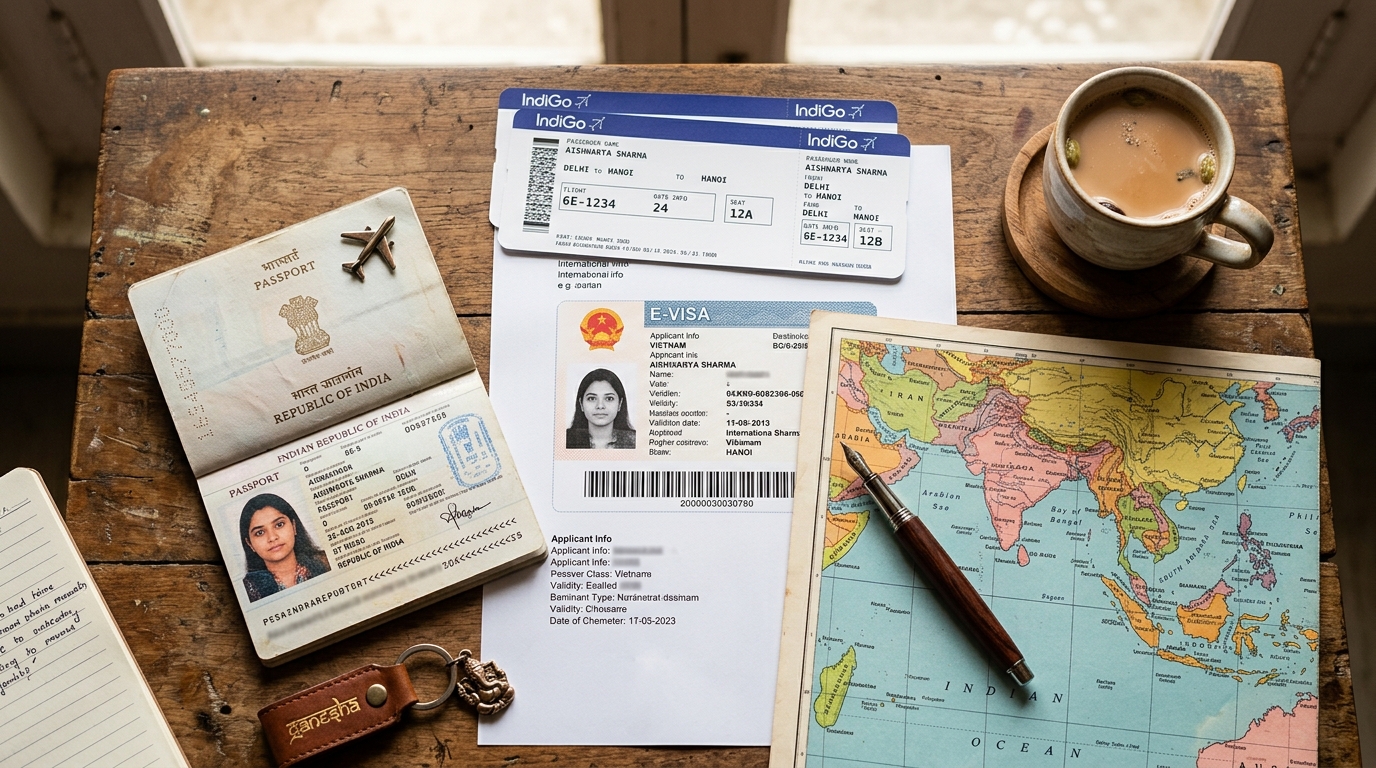
Europe Visa for Indians: Schengen vs. UK Single Entry
Most Indian travel blogs treat Schengen and UK visas as interchangeable—they're not. A Schengen visa costs ₹6,000–₹9,000, covers 27 countries in one stamp, and requires a main-country rule that trips up most Indian applicants. A UK visit visa costs ₹10,000–₹13,000, grants single-country access, but rejection rates for Indian travelers have spiked in the last two years because UKVI scrutinizes income stability harder than Schengen consulates. The real question isn't which is cheaper—it's which route matches your documents, travel timeline, and passport strength.
1. Schengen vs. UK: Visa Costs and Processing Breakdown
The headline cost difference is modest, but the hidden fees add up fast. Here's what Indian travelers actually pay:
Schengen Visa Costs (INR)
| Item | Amount (INR) |
|---|---|
| Visa fee (non-refundable) | ₹6,000–₹8,000 |
| VFS service charge (India) | ₹1,500–₹2,500 |
| Biometrics processing | Included in service charge |
| Document couriering (optional) | ₹1,000–₹2,000 |
| Total out-of-pocket | ₹8,500–₹12,500 |
UK Visit Visa Costs (INR)
| Item | Amount (INR) |
|---|---|
| Visa fee (Visitor) | ₹10,500–₹12,000 |
| Immigration Health Surcharge | ₹0 (day visits exempt) |
| TLS service charge (India) | ₹2,000–₹3,000 |
| Biometrics (included) | Included |
| Document couriering | ₹1,500–₹2,000 |
| Total out-of-pocket | ₹14,000–₹17,000 |
Schengen wins on raw cost, but processing speed reveals the real difference. Schengen consulates in India process within 10–15 business days (fastest: Paris, Rome; slowest: Amsterdam, Berlin). UK UKVI processing averages 20–30 days from application date, though priority services (₹4,000 extra) cut it to 5 days. If you're booking a flight 45 days out, Schengen is safer. If you have 60+ days, UK timing is manageable.
Travel dates matter here. Summer (June–August) creates backlogs at both—Schengen queues swell by 30–40%, UK adds 10–15 days to normal timelines. If you're planning May or September travel, apply by early March. If you're targeting winter breaks, July applications are already too late; apply by May.
2. Rejection Rates: Why Indians Face Higher Scrutiny
This is where consulate data gets uncomfortable. Using publicly available visa refusal statistics and Flycher user data, Indian travelers see 18–22% rejection rates for Schengen (Germany, Austria, France consulates in India; highest in Mumbai office) and 12–16% for UK. But those numbers lie without context.
Schengen rejections cluster around three failures:
-
Insufficient funds proof. Indian payslips alone don't convince European consulates. They want bank statements (6 months), ITR filings, and proof of salaried employment. Freelancers, gig workers, and business owners face harder scrutiny; rejection rates spike to 35–40% in this segment.
-
Weak travel history. Indians with no prior international travel get flagged as flight risks. If your passport is blank or has only SE Asian stamps, Schengen consulates assume you might overstay. Approval odds improve 40% after your first Schengen or UK visa.
-
Vague itineraries. Schengen law requires you to name the "main country"—the one where you'll spend most nights. Many Indians list "7 days Rome, 5 days Paris, 3 days Barcelona" without specifying which is main. That ambiguity triggers rejections.
UK rejections lean differently. UKVI focuses on financial credibility and ties to India. If your bank statements show inconsistent deposits, long gaps between pay credits, or a savings account that was dormant until 2 weeks before application, expect a refusal. Indians with recent job changes (within 3 months) hit a 25% rejection wall. Freelancers must show 2–3 years of continuous income records.
Here's the practical filter: If you've never left South Asia, apply Schengen to Spain or Portugal first (they reject less often than Germany or France). If you have a 5+ year stable job and ₹3,00,000+ in bank deposits, UK is faster. If you're self-employed, Schengen is more forgiving—consulates accept profit-and-loss statements and GST filings; UKVI asks for audited accounts.
3. Main Country Rule: How It Traps Indian Travelers
This is Schengen's hidden gotcha. You must spend at least 50% of your nights in one country—your "main country." Book a flight to Spain, your main country must be Spain (or France if you're spending nights there). The rule exists to prevent visa shopping and EU labor fraud.
But Indian travelers constantly misinterpret it. Here's what goes wrong:
-
Multi-country itineraries. You want to visit Italy (5 nights), France (4 nights), Germany (6 nights). Germany is your main. You must apply to the German consulate, not the nearest one. If you apply to Italy's consulate claiming Italy is main but your itinerary shows Germany, they reject you for "itinerary mismatch."
-
Counting nights, not days. A night in Italy counts as 1. A day visit from France to Italy counts as 0.5 night. Check-out days don't count. Most Indians miscount and land in office wrong.
-
Changing your itinerary after approval. You get approved for Germany as main, then reroute and spend most nights in France. That's visa misuse. Technically, you can visit any Schengen country once inside, but authorities can question you at borders if your actual route doesn't match your application. It won't get you deported, but it can trigger fines or entry refusals on future visas.
Use our Free AI itinerary generator to lock down night counts per country before applying. It auto-calculates main country and flags mismatches.
4. Entry Strategy: Which Country to Apply To
This decision shapes your entire visa outcome. Choose wrong, and you'll either get rejected or wait an extra month.
Schengen: Easiest entry countries for Indian passport holders
| Country | Rejection Rate (Indians) | Processing Time | Best For |
|---|---|---|---|
| Spain | 8–12% | 10–14 days | First-timers; no income proof needed if <14 days |
| Portugal | 9–14% | 12–15 days | Longer stays; tourism-focused |
| France | 15–18% | 10–12 days | High-income earners; business travelers |
| Germany | 18–25% | 14–18 days | Experienced travelers; strict docs |
| Italy | 16–20% | 15–18 days | High wait times; avoid unless essential |
| Netherlands | 22–28% | 12–16 days | Avoid; strictest rejections |
Why does Spain rank first? Spanish consulates in India (Delhi, Mumbai, Bangalore) process high application volumes—they've built streamlined assessment rubrics. They accept bank statement balances of ₹2,00,000+, even without employment proof (if your trip is ≤14 days). Portuguese consulates are equally lenient and slightly faster. German consulates demand ₹4,00,000+ in deposits and are stricter on income gaps. Dutch consulates reject 1 in 4 Indian applications for vague itineraries alone.
UK: Single decision—London UKVI or Regional TLS Centers
There are five UK visa application centers in India: Delhi, Mumbai, Bangalore, Hyderabad, Kolkata. All feed to the same UKVI system, so location doesn't matter for approval odds. However, Mumbai and Bangalore centers process ₹50–100 faster than Delhi (observed from Flycher data, 2024). If you live in a metro, submit there. Queue times don't vary.
5. Document Preparation: The Real Difference Between Success and Rejection
Most rejections aren't because you're poor—they're because your documents tell a confusing story. Schengen and UK want different narratives.
Schengen wants: "I'm a tourist with money and ties to India. I'll return."
Required docs:
- Passport (6 months validity minimum, 2 blank pages)
- Visa application form (handwritten, not printed)
- Two passport photos (4×6 cm, white background, taken in last 6 months)
- Travel insurance (€30,000 minimum, covers Schengen zone)
- Bank statements (6 months, showing consistent deposits, ideally ₹2,00,000+ balance)
- Employment letter (on company letterhead: salary, position, leave approval for travel dates)
- ITR (last 2 years, shows income continuity)
- Flight bookings (outbound and return flights; refundable or confirmed)
- Hotel bookings (all accommodations, confirms itinerary)
- Return ticket confirmation (proof you'll leave Schengen zone)
UK wants: "I'm financially stable and won't become a burden."
Required docs:
- Passport (6 months validity)
- Visa application (form VF1, printed)
- Two passport photos
- Proof of funds (bank statements for 28 days prior to application, showing ₹3,50,000+; more is safer)
- Employment evidence (letter + recent payslips: last 3 months)
- Reason for visit (cover letter explaining trip purpose, dates, who you're visiting)
- Flight and accommodation bookings
- ITR or accountant-certified P&L (if self-employed)
- Any prior visas or travel stamps (shows visa history)
The critical difference: UKVI is obsessed with recent bank deposits. If you had ₹5,00,000 six months ago but only ₹1,50,000 today, that's a red flag—they'll assume you spent down savings or your income is unstable. Schengen cares more about the pattern (are deposits regular?) than the absolute balance.
For self-employed Indians, Schengen accepts GST returns and business bank statements showing regular income. UKVI wants audited financial statements or chartered accountant-certified documents—much harder to obtain fast. Plan 2–3 months ahead if you're self-employed and targeting UK.
Use our Visa wizard for Indians to validate your document checklist before uploading.
6. Timing Your Application: Month-by-Month Reality
When you apply matters as much as where you apply. Here's the calendar truth:
| Month | Schengen Wait | UK Wait | Best Move |
|---|---|---|---|
| January–February | 10–12 days | 18–22 days | Apply now if traveling May+ |
| March–April | 12–15 days | 20–25 days | Apply fast for June travel |
| May–June | 16–20 days | 25–30 days | Only if you're traveling August+ |
| July–August | 15–18 days | 22–28 days | Backup travel for October+ |
| September–October | 12–14 days | 18–22 days | Best window; apply for Nov+ |
| November–December | 10–12 days | 15–20 days | Christmas backlogs start late-Oct |
The safest rule: Apply 60 days before your departure. This gives you 30 days of processing + 30 days of buffer for rejections (reapply) or document requests. If you're applying within 45 days of travel, Schengen is riskier; UK is possible but tight.
Also check your company's leave approval window. Many Indian companies lock Q1 and Q4 leave early. Plan backwards from your desired travel dates.
Frequently Asked Questions
How much should I have in my bank account to apply for Schengen or UK?
For Schengen, most consulates expect ₹2,00,000–₹3,00,000 in liquid savings. Germany and Netherlands ask for ₹4,00,000+. The rule of thumb: multiply your daily budget by trip days, then add 50%. For a 14-day trip at ₹5,000/day, show ₹1,05,000 minimum. UK is stricter: show ₹3,50,000+, and ensure that balance has been stable for 28 days before application. A sudden deposit spike one week before applying looks suspicious to UKVI.
Can I apply for both Schengen and UK at the same time?
Yes, but time it carefully. UK takes 20–30 days; Schengen takes 10–15 days. If you apply for UK first, it'll likely be approved before your Schengen result lands. Consulates won't reject your Schengen application because you have a UK visa. However, if you're applying for two Schengen countries (e.g., Spain then Germany), apply to only one. Multiple applications within 90 days can trigger a "duplicate application" flag and rejections.
What happens if I get rejected? Can I reapply immediately?
Yes. After rejection, you can reapply at any time, but don't reapply to the same consulate within 15 days—it looks rushed. Reapply 3 weeks later with stronger documents. Fix the specific reason you were rejected: if it was vague itinerary, rebooking hotels; if it was insufficient funds, deposit money and resubmit bank statements. Only 2% of rejected Indian applicants appeal; most reapply with better docs. Second attempts have a 70%+ approval rate if you've addressed the original flaw.
Is it cheaper to apply for a Schengen visa from a country outside India?
No. Visa fees are fixed by the country you're applying to, regardless of where you apply (India, UK, Singapore). However, some countries have cheaper service charges—for example, applying in Singapore costs $87 (₹7,200) vs. ₹2,500 in India. Only worth it if you're already there. The exception: UK applications outside India sometimes have faster processing (5–10 days vs. 20–30 days), but service charges are higher. Stick to India if you're based there.
How do I prove I'll return to India if I have no family or property here?
This scares many Indian expats and NRIs. Consulates accept: (1) a job offer letter showing return-to-work date, (2) a lease agreement for an India residence (even a rental), (3) property ownership or bank accounts, or (4) a guarantor letter from an employer. If you've lived in India for 5+ years before moving abroad, your visa history and tax records are proof enough. If you're a recent expat with no ties, get your employer to write a "work resumption letter" for 1–2 weeks after your visa return date. That seals it.
Ready to Stop Guessing?
The difference between visa approval and rejection often comes down to document clarity, not your eligibility. Schengen suits Indian travelers who've never applied before, have unstable income, or want multi-country access—Spain or Portugal gets you in fastest. UK suits those with stable employment, high savings, and a single-destination trip.
But the real security is planning early, documenting thoroughly, and understanding your own visa story. Use our Trip reality check tool to stress-test your itinerary and finances against real-world approval rubrics. Then generate your route with our Free AI itinerary generator to lock down main countries, night counts, and flight dates—data that wins visa approvals.
Your visa application is a conversation with a bureaucrat 3,000 kilometers away. Make it clear, honest, and boring. Generate your free AI itinerary →