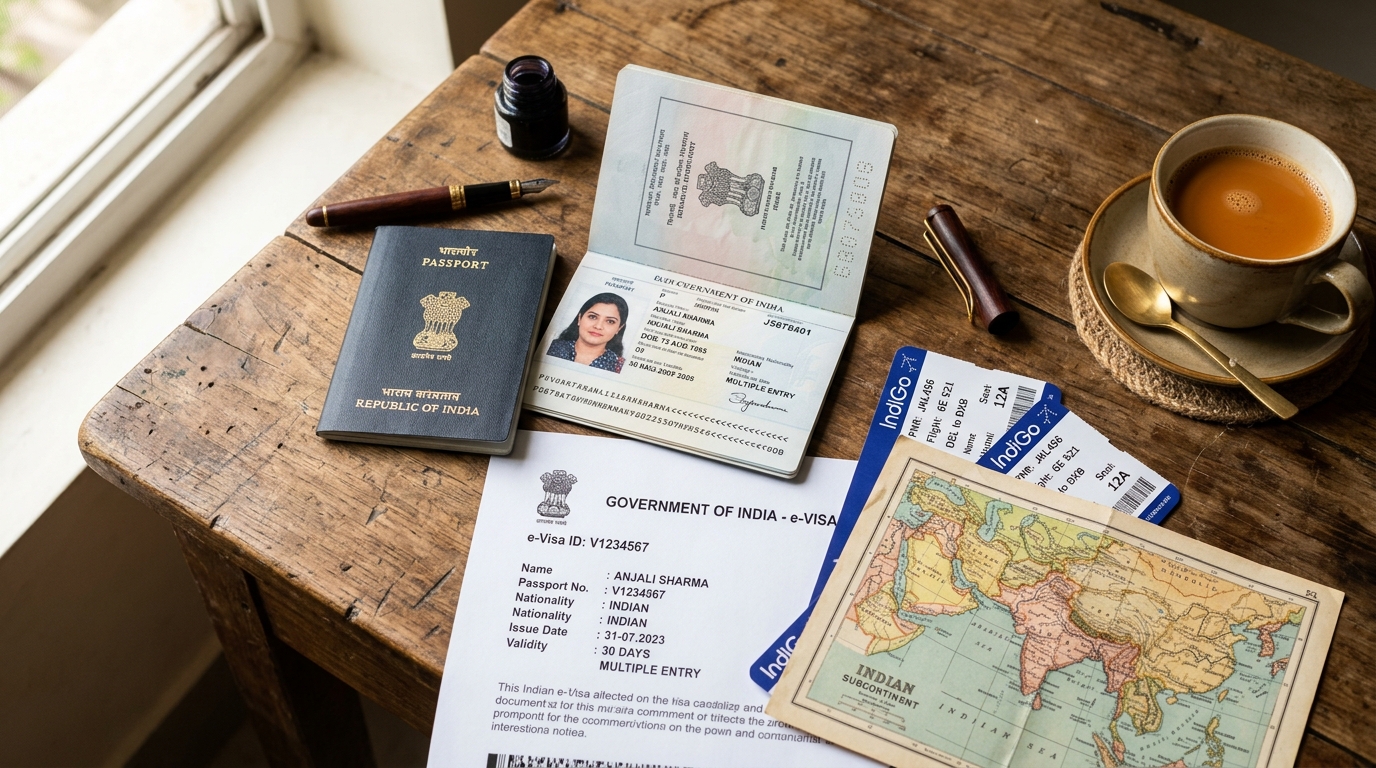
Indonesia Visa for Indians: E-Visa vs. VOA Logic
Most guides tell Indians the e-visa is always faster and safer—but that's not true for tourism under 30 days. The VOA (Visa on Arrival) is genuinely free, processed in minutes at the airport, and works perfectly for most Indian travelers. The real question isn't which one exists; it's which one saves you time, money, and rejection risk for your specific trip.
1. Cost Breakdown: Where Your Money Actually Goes
The e-visa costs ₹1,050–₹1,200 (depending on your agent or official portal), but that's not the full story. When you add convenience surcharges, failed applications, and visa agent markup, many Indians end up paying ₹2,000–₹3,500 before they even land.
The VOA is literally free—you pay nothing upfront. You walk off the plane at Jakarta, Denpasar, or Medan, and immigration issues you a 30-day single-entry permit on the spot. No agent. No waiting. No rejection email at 2 a.m.
Here's the actual cost comparison:
| Expense | E-Visa (Official) | E-Visa (Agent) | VOA (Airport) |
|---|---|---|---|
| Visa fee | ₹1,050 | ₹1,500–₹2,000 | Free |
| Processing time | 1–2 days | 2–4 days | 5–10 mins (on arrival) |
| Failed app re-submit | +₹1,050 | +₹2,000 | Zero re-submit cost |
| Agent markup | None | Built-in | None |
| Total realistic cost | ₹1,050 | ₹2,500–₹3,500 | Free |
The VOA wins on pure cost if you're not using an agent. The e-visa only makes sense if you have specific concerns (see Section 4 below).
2. Processing Time & Rejection Risk: When Each Works
The e-visa looks faster (1–2 days online) but carries a hidden rejection tax. A visa officer in Delhi—operating under unclear documentation rules—may reject your application without detailed explanation. Then you reapply. Then you pay again. Suddenly your "fast" e-visa took two weeks and ₹3,000.
The VOA has zero rejection risk for Indian passport holders. You arrive, you show your passport, return ticket, and a completed arrival form (TIM card, provided free). You're approved in 10 minutes. No embassy involved. No documentation scrutiny from a distant visa officer.
Processing timelines in reality:
- E-visa (official portal, first attempt): 1–2 days
- E-visa (agent, first attempt): 2–4 days
- E-visa (with rejection + reapply): 10–15 days total, ₹2,100+ spent
- VOA (airport arrival): 5–10 minutes, zero failure rate for Indian tourists
The caveat: VOA is only for single-entry tourism stays up to 30 days. If you're staying longer, entering for work, or arriving by land, the e-visa or a more formal visa becomes necessary.
3. Document Requirements: What Immigration Actually Checks
This is where most Indians get blindsided. The Delhi mission has published requirements, but inconsistent enforcement means rejections happen on technicalities.
For e-visa, you'll need:
- Scanned Indian passport (bio page, valid for at least 6 months)
- Recent color photo (4×6 cm, white background—yes, this matters)
- Return flight proof
- Accommodation proof (hotel booking or hotel invite letter)
- Proof of funds (bank statement showing ₹20,000–₹50,000)
Common rejection reasons from Delhi:
- Photo too small or not white background (causes ~15% of rejections)
- Hotel booking shows checkout after visa expiry
- Return flight is flexible / not confirmed
- Bank statement is too old or doesn't show recent deposits
- Passport scans are low resolution or cut off
Use our Visa wizard for Indians to validate your documents before submission—it catches these errors before they hit the application portal.
For VOA, you need:
- Passport (6+ months valid)
- Return flight proof
- Filled TIM card (issued at airport, no advance prep needed)
- ₹0
That's it. No photo requirements. No bank statements. No hotel pre-booking. You book accommodation after arrival if you want.
4. When to Choose E-Visa Over VOA
Despite the VOA's simplicity, the e-visa makes sense in specific scenarios:
Choose e-visa if:
- You're arriving during peak season (July–August, December–January) and want to skip airport queues—even 10 minutes becomes 45+ when 500 Indians arrive in the same window
- You have a work letter or business invitation (e-visa is the only legal entry for non-tourist purposes)
- You're traveling with elderly family members or small children and want paperwork done in advance
- You're entering by land (VOA is not available at land borders; you must have e-visa or a formal visa)
- You want to extend your stay beyond 30 days (apply for extension after arrival, but e-visa holders have easier extension pathways)
Choose VOA if:
- You're a standard tourist, staying ≤30 days
- You want zero upfront cost
- You're willing to spend 10 minutes at the airport
- You haven't pre-booked accommodation (VOA doesn't require it)
A quick reality check: if you're flying into Jakarta during December, arriving with 400 other passengers on a Delhi–Jakarta flight, and you need immigration processed in the next hour—that's when e-visa saves you, not money, but time during crunch.
Use our Trip reality check tool to see if your specific dates and circumstances favor e-visa convenience.
5. How to Apply for E-Visa (And Avoid Rejection)
The official portal is immi.imigrasi.go.id (Indonesian immigration). You can also use approved agents, but they markup 100%–150%.
Step-by-step (official portal):
- Visit immi.imigrasi.go.id → select "B211A Visa" (tourist e-visa)
- Fill in personal details, passport number, and intended entry date (leave at least 3 days buffer)
- Upload documents in exact order: passport bio page, photo, return ticket, hotel booking, bank statement
- Pay ₹1,050 via card
- Receive approval email with reference number within 1–2 days
- Print approval and carry it to immigration
Document upload checklist:
- Passport scan: 300 dpi minimum, color, all four corners visible
- Photo: 4×6 cm, white background, recent (within 3 months), no glasses
- Return flight: must show departure date within visa validity
- Hotel booking: agoda/booking.com screenshot works, but ensure checkout date before visa expiry
- Bank statement: last 30 days, clearly showing your name and account balance ₹20,000+
Rejected? Reapply to a different slot (e.g., different intended entry date) and ensure your hotel checkout aligns with visa end date. That single mistake causes ~20% of rejections.
6. VOA Process: Arrive, Complete, Get Stamp
The VOA is genuinely frictionless if you know the sequence:
At the airport:
- Land. Follow signs to immigration.
- Find the "Visa on Arrival" counter (separate from e-visa/passport control).
- Fill out TIM card (immigration provides it free; it's a one-page form asking name, passport number, address, purpose).
- Provide: passport, return ticket, and filled TIM card.
- Pay nothing (VOA is free for Indians).
- Get 30-day single-entry stamp in 5–10 minutes.
- Leave immigration.
That's the process. You do not need to book a hotel in advance. You do not need bank statements. You do not need photos. TIM card is the only paperwork, and immigration staff help you fill it.
Cost in rupees: ₹0.
One caveat: if you look extremely scruffy or your return ticket is vague, the immigration officer can ask questions. But as an Indian tourist with a clear passport and return date, rejection is rare (estimated <1% for Indian nationals at major airports).
Frequently Asked Questions
Can I extend my VOA visa after arrival if I want to stay longer?
Yes, but it's bureaucratic. You visit the immigration office in Bali (Denpasar), Jakarta, or Surabaya within 7 days of entry and apply for a B211A extension (30-day extension). Fee is about ₹350,000 IDR (~₹1,600). Processing takes 1 day. You'll need your passport, completed form, and a photo. Many travelers skip this and just re-enter the country on a new VOA, but that's technically immigration rule-bending. The extension is the official route.
What if my return flight is flexible (e.g., open-ended ticket)?
For e-visa, rejection risk increases—immigration wants a confirmed return date. For VOA, flexibility is fine as long as you have some return ticket (even if the exact date isn't locked in). Most airlines let you modify return dates up to 2 weeks before departure, so print your flight itinerary before applying for the e-visa, then modify later if needed.
Is the e-visa valid for multiple entries, or just one?
The standard B211A e-visa for Indians is single-entry only. You enter Indonesia once, and it expires 30 days later. If you leave and re-enter during that 30 days, you'll need a new visa (e-visa again or VOA). If you need multiple entries in 60 days, apply for a B211B multiple-entry visa, but that requires a sponsor letter and is rare for tourism; most Indians just reapply or do visa runs.
If I use an agent to apply for the e-visa, what's the actual turnaround time?
Agents typically charge ₹1,500–₹2,500 and promise "24–48 hour processing." In reality, add 1–2 days for your documents to reach them and another 1–2 days if anything needs correction. Total: 3–5 days. Plus, if rejected, you might not hear back immediately, and reapplication adds another 3–5 days. Compare that to 5 minutes for VOA, and the agent markup feels expensive unless you're avoiding the airport queue during peak season.
What if my Indian passport has a different name than my flight booking (e.g., initials vs. full name)?
This is a common Indian issue. For e-visa, name mismatches often trigger rejection or manual review delays—immigration systems are strict about matching. For VOA, the immigration officer has discretion and will usually ask verbal questions ("Is this you?") before stamping. If your passport shows "A. Sharma" but your flight shows "Aman Sharma," carry a second ID (Aadhaar, PAN) to the airport. VOA officer will cross-check and proceed; e-visa portal will reject immediately. Check your flight booking name against your passport right now if this applies to you.
Your visa choice is simpler than you think. If you're a standard Indian tourist staying under 30 days, VOA is free and instant. If you're entering during peak season, have work travel, or prefer pre-approval paperwork, the e-visa costs ₹1,050–₹3,500 and takes 1–5 days—but saves you immigration-line time.
Use our Trip budget calculator to factor visa costs into your total Indonesia spend, and our Forex & bargain check to lock in the best INR-to-IDR rates before you leave India. Then decide: queue for free, or pay for peace of mind.
The visa is the smallest part of your trip. The bigger question is what to do when you arrive. Use our tools to plan your 30 days in Bali, Jakarta, or Yogyakarta without the stress. Generate your free AI itinerary →