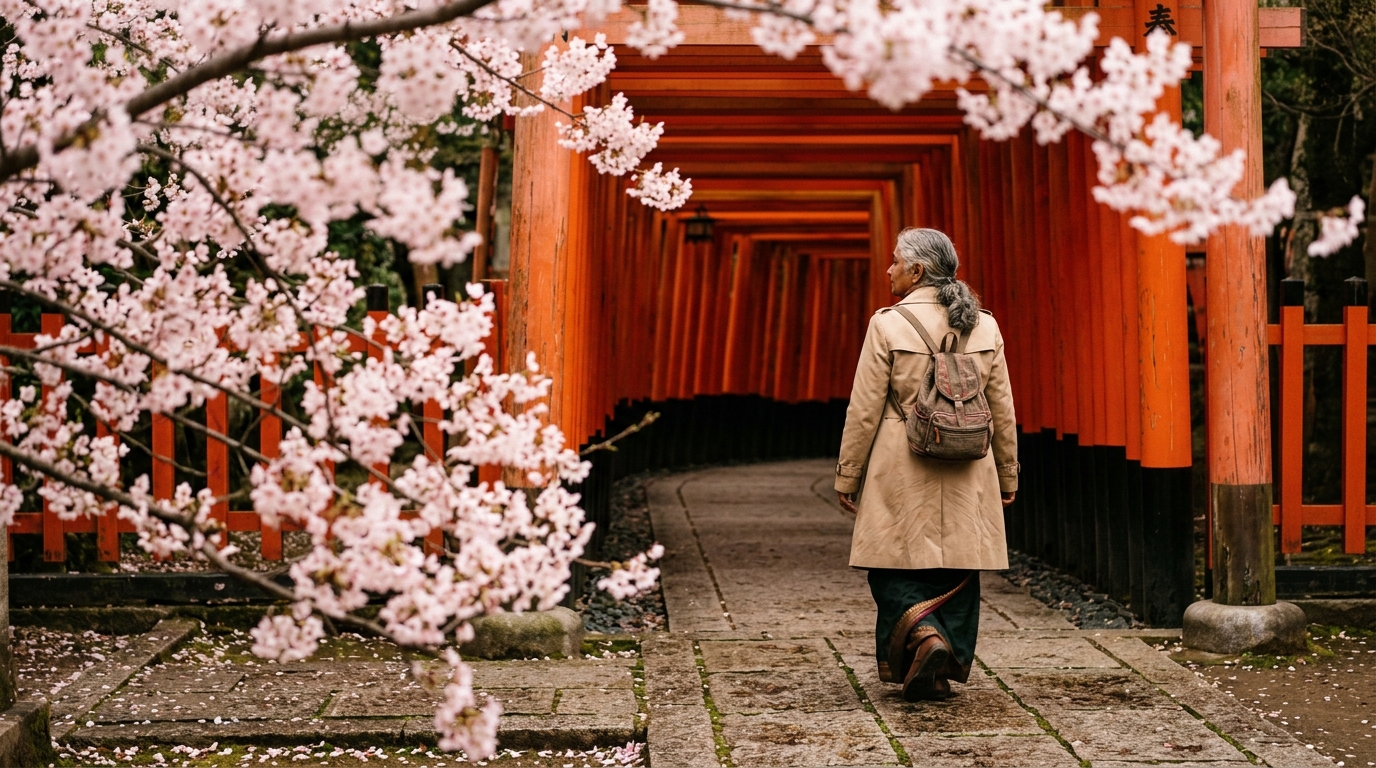
Japan Budget Itinerary: Tokyo-Kyoto-Osaka on ₹1.2L
Most travel guides pretend you need ₹2.5L+ to experience Japan, and AI itinerary tools rarely break down rupee-by-rupee spending for Indian first-timers. The truth: you can do Tokyo, Kyoto, and Osaka in 7 days on ₹1.2L if you skip the Instagram temples, stay in guesthouses, and eat like locals do. The math works—but only if you plan the JR Pass, convenience store meals, and onsen towns before you book.
1. The ₹1.2L Budget: What Actually Fits
This budget assumes you're already flying from Delhi, Mumbai, or Bangalore. The ₹1.2L covers only ground costs: accommodation, trains, food, and activities inside Japan. Flights from India typically add ₹35,000–₹55,000 return, depending on your city and season.
Here's how ₹1.2L breaks down over 7 days:
| Cost Head | Days | INR Total | Notes |
|---|---|---|---|
| Accommodation | 7 | ₹42,000 | Capsule/dorm: ₹6k/night |
| JR Pass (7-day) | 1 | ₹20,000 | Unlimited trains Tokyo–Osaka corridor |
| Food (local) | 7 | ₹28,000 | ₹4k/day (convenience stores, ramen, lunch sets) |
| Activities & entry fees | 7 | ₹22,000 | Temples, museums, onsen |
| Local transport (IC card) | 7 | ₹10,000 | Metro, buses, taxis within cities |
| Contingency | — | ₹8,000 | Emergency buffer |
| TOTAL | ₹1,20,000 | Tight but doable |
The secret: convenience stores (konbini) replace restaurants. A FamilyMart bento, onigiri, and coffee cost ₹250–₹400. Lunch-set menus (teishoku) at local spots run ₹600–₹900. You're not starving—you're eating what office workers eat.
The Trip budget calculator will auto-adjust for your dates and city choices, but this framework holds for April–May or September–October (shoulder seasons, cheapest airfares).
2. JR Pass: The Make-or-Break Decision
A 7-day JR Pass costs ₹20,000–₹22,000 when booked in India (via agents like Indiagold or Japan Experience). A single Tokyo-Kyoto return = ₹8,000. Kyoto-Osaka-back to Tokyo = ₹6,000. The math is brutal: three intercity trips pay for the pass.
But here's what changes: without a JR Pass, you'll waste 2–3 days figuring out IC cards, train apps, and platform numbers. With one, you walk up, tap, and go. For your first Japan trip, that's cognitive energy you need elsewhere.
What the 7-day JR Pass covers:
- Tokyo-Kyoto shinkansen (bullet train), 2 hours 15 minutes.
- Osaka loop line and all trains in Tokyo (JR lines only, not subways).
- Nara and Koyasan day trips (included in pass radius).
- Local trains in Kyoto City (JR West only).
What it doesn't cover:
- Tokyo Metro or Toei Subway (you need a separate Suica/Pasmo IC card, ₹2,000).
- Kintetsu lines (Nara, Yoshino).
- Private railways in Kyoto (Randen, Eizan).
Trick: Activate the JR Pass only on Day 3 (the day you leave Tokyo for Kyoto). Use Suica for Tokyo's first 2 days (metro, local shinkansen to Nikko if you want). Reactivate the pass for Kyoto–Osaka–return, and you've stretched it across your intercity moves.
Use the Visa wizard for Indians to check your passport validity while you're planning; some JR Pass agents want 6 months+ remaining.
3. The 7-Day Route: Why Tokyo–Kyoto–Osaka Works
Seven days is exactly enough for a first-timer, not because you'll see everything, but because 3 cities + 1 onsen escape = you'll understand what Japan is. More days = repetition; fewer days = Tokyo-only.
Day 1 (Tokyo arrival): Arrive morning (most India–Japan flights land 6–8am). Skip the hotel. Grab Suica card (₹2,000, ₹1,500 usable balance). Luggage-forward your bags via takkyubin (luggage service) to your Osaka hotel for ₹3,000—you'll meet them there. Explore Shibuya, Shinjuku walking streets. Stay near Ikebukuro or Uguisudani (budget guesthouse zones). Eat convenience store or small ramen shop. Sleep.
Days 2–3 (Tokyo): Day 2 = Asakusa (temple), Tsukiji market walk, Ginza window shopping. Day 3 = teamLab Borderless (₹2,500 entry, pre-book online) or Imperial Palace East Gardens (free). Activate your 7-day JR Pass at Tokyo Station on the evening of Day 3.
Days 4–5 (Kyoto): Take the 7:30am Nozomi shinkansen from Tokyo (reserved seat included in pass). Arrive Kyoto 9:45am. Rent a bicycle (₹800/day; saves you metro costs). Day 4 = Eastern temples loop (Kiyomizu, Sanjusangendo, Gion district). Day 5 = Arashiyama (bamboo grove, Tenryu-ji temple). Eat at lunch-set spots (Ippudo ramen chain = ₹700 nationwide). Stay in a guesthouse in Nakano or Shimogyo ward (₹5,500–₹6,500/night, includes free tea and WiFi).
Days 6–7 (Osaka + onsen day trip): Shinkansen to Osaka (30 min). Day 6 = Osaka Castle walk, Dotonbori food alley (okonomiyaki, takoyaki street food = ₹400–₹600 each). Day 7 = Day trip to Kurama or Arima onsen (hot spring town, 45 min from Osaka via JR). Soak in onsen (₹1,000–₹2,000 entry, towel rental included), eat kaiseki dinner at a budget ryokan, return to Osaka by evening. Fly out the next morning.
Why this sequence works:
- Logical geography (no backtracking).
- JR Pass activated only when you're intercity (no waste).
- One "slow" day (onsen town) resets jet lag and budget.
- Mix temples, food, and nature—three different Japan experiences.
This beats the generic "hit 8 cities in 10 days" trap that leaves you on trains, not in places.
4. Convenience Store Dining: The Math Behind ₹4,000/Day
Indian travelers assume eating out in Japan = expensive. False. Convenience stores (7-Eleven, FamilyMart, Lawson) are how Japan eats, and a day's full meals costs ₹3,500–₹4,500.
Here's a realistic day:
| Meal | Item | Cost | Notes |
|---|---|---|---|
| Breakfast | Onigiri (2) + coffee | ₹350 | Konbini, 7–9am |
| Lunch | Teishoku (set meal, local restaurant) | ₹800 | Fish, rice, miso soup, pickles |
| Snack | Matcha ice cream + drink | ₹400 | Konbini 3–5pm |
| Dinner | Ramen or udon | ₹700 | Small bowl, local shop |
| Drinks (day) | Water (free refill) + tea | ₹200 | Vending machines ₹150/bottle |
| DAILY TOTAL | — | ₹2,450 | Below budget. |
But let's be honest: you'll splurge on 2–3 sit-down meals (kaiseki, sushi counter) = add ₹3,000–₹4,000. Over 7 days, that's ₹28,000 total food. The budget holds.
Survival hacks:
- Download the Tabelog app (Japan's food guide). Filter by cost, rating, and "teishoku" (set menu).
- Breakfast = always konbini. Lunch = set menu at small spots. Dinner = rotate between cheap ramen/udon and one splurge meal per city.
- Drink tap water; it's safe and free. Vending machines are everywhere (₹150 for canned drink).
- Suica card gives you access to konbini self-checkouts (no language barrier).
If you want meal flexibility, use the Trip reality check tool to adjust for restaurant spending vs. street food.
5. Onsen Towns: Why You Need One, Not Just Hot Springs in Hotels
Most India-origin travel guides lump "onsen" with "ryokan dinner experience" and charge ₹8,000+. Skip that. A day trip to a dedicated onsen town (Kurama, Arima, Kawaguchiko) costs ₹2,000–₹3,000 total, including entry, towels, and a light meal.
Three onsen towns, ranked for first-timers:
| Town | Travel from Osaka | Cost (onsen entry) | Why Go | Best For |
|---|---|---|---|---|
| Kurama | 45 min JR | ₹1,200 | Mountain village, cable car, hiking | Peaceful, walkable |
| Arima | 60 min JR | ₹1,500 | Hot spring + viewpoint, urban vibe | Culture mix, less touristy |
| Kawaguchiko | 2 hrs + bus | ₹1,000 | Mt. Fuji views, lake scenery | Photo spot, day trip |
How a ₹2,500 onsen day works:
- Train ticket: ₹600–₹800 (within JR Pass radius).
- Onsen entry + towel rental: ₹1,200–₹1,500.
- Soba/udon lunch near onsen: ₹700.
- Snack + drinks: ₹300.
- Total: ₹2,700–₹2,900.
Kurama is your safest bet: it's on the JR line (your pass covers it), it's 45 minutes from Osaka, and the onsen is nestled in a small valley village. You'll feel the difference after 6 days of walking temples. It's not luxury; it's reset.
Generate your free AI itinerary → will auto-suggest onsen day trips based on your confirmed dates and which cities you're visiting.
6. Visa, Forex, and Pre-Trip Logistics
Indian passport holders get 90 days visa-free for tourism in Japan. No application needed. Just show a return ticket at immigration, and you're in.
Forex math:
- 1 INR = 1.6–1.8 JPY (rates shift; check XE.com before you go).
- ₹1.2L = ~19,200–21,600 JPY.
- ATM cash withdrawal in Japan (7-Eleven) = 216 INR flat fee per withdrawal. Withdraw once, get ₹100,000 JPY (~₹62,000), and use that for the trip.
Credit cards? Most convenience stores and temples accept Visa/Mastercard, but rural onsen towns and small ramen shops are cash-only. Carry ₹80,000–₹90,000 in JPY and use your card for big hotels/online bookings.
Check the Forex & bargain check tool to lock in today's rates and estimate your daily spending in JPY before departure.
Luggage forwarding (takkyubin):
- Ship your suitcase from Tokyo airport to your Osaka hotel: ₹3,000.
- Saves you carrying 20kg through shinkansen, subways, and narrow guesthouse stairs.
- Arrives next day, guaranteed.
- Book at the tourist info desk at Narita/Haneda, or use Ninja luggage app.
Frequently Asked Questions
Is 7 days actually enough, or should I extend to 10?
Seven days is enough if you accept that you're visiting three cities, not "experiencing all of Japan." You'll hit major temples, eat well, and understand why Japan is worth a second trip. Ten days gives you breathing room—maybe a second onsen town or a Hiroshima day trip. But 7 days on ₹1.2L is mathematically tight; 10 days pushes you to ₹1.6L+ unless you cut accommodation quality. Stick to 7 for your first trip and return later.
Can I skip Kyoto and save money by staying in Tokyo-Osaka only?
Not really. Kyoto is only 2 hours by shinkansen, and the JR Pass covers it. Skipping Kyoto means you miss temples, gardens, and the non-urban side of Japan—which is half the point. If budget is the constraint, cut a day from Tokyo or Osaka instead (reduce Days 2–3 to one day), not Kyoto.
Should I buy the JR Pass in India or in Japan?
Buy in India if your travel dates are fixed. Booking through Indian agents (Indiagold, Japan Experience) costs ₹20,000–₹22,000 and is locked in. Buying in Japan costs ¥29,000 (~₹18,000), but it's cheaper only if the rupee has weakened further by your travel date—and exchange-rate gambling isn't worth ₹2,000. Pre-buy in India, activate on Day 3.
What if I have a dietary restriction (vegetarian, halal, allergies)?
Vegetarian is easy; tell any ramen shop "buta nashi" (no pork) and they'll adapt. Convenience stores have egg/vegetable bento. Halal is harder—most meat dishes are pork or chicken, and few restaurants label clearly. Download the Halal Gourmet app and pre-identify 2–3 spots per city. Allergies (nut, shellfish, gluten) require the Survival phrasebook card with kanji written clearly; show it at every meal.
Can I do this itinerary in a different season, and will prices change much?
Yes. April–May (cherry blossoms) and September–October (autumn) are ideal and are the shoulder seasons I've priced above. July–August is humid and expensive (flights +₹10,000); December–February is cheap (flights −₹10,000, but cold and grey). Winter adds onsen appeal but cuts temple-walking comfort. Monsoon (June–July) is muddy and warm. Pick April or October if you can; the ₹1.2L budget assumes shoulder season.
Final Thought
Japan on ₹1.2L works because you're optimizing for experience, not Instagram. You'll stay in guesthouses where you meet other backpackers. You'll eat what locals eat (and it's delicious). You'll take the shinkansen and watch rice fields blur past. You'll soak in an onsen and forget your flight home for a moment.
The mistake most Indian travelers make is spending ₹2L+ on hotels and tours, then rushing through three temples in a day because they're trying to "make the trip worth it." Spend less, stay longer in each place, and you'll actually remember Japan.
Start planning now. Lock in your dates, calculate the exact flight + ground cost for your city, and build a day-by-day itinerary with real timings. Generate your free AI itinerary →