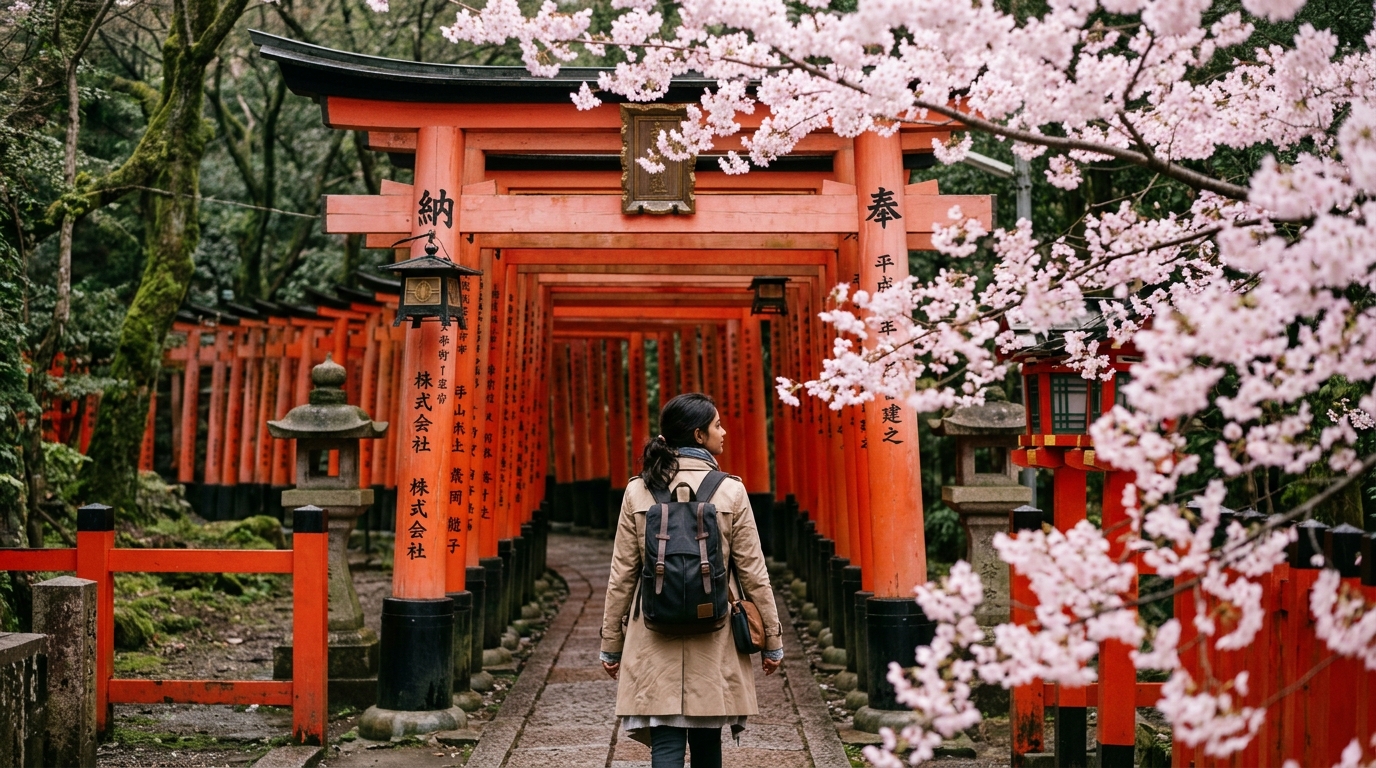
Japan Itinerary 14 Days: Tokyo-Kyoto-Osaka on ₹2L for Indians
Most travel blogs sell you a glossy Tokyo-only fantasy or a backpacker crash-course that leaves you burned out. The truth: a 14-day 3-city India-to-Japan trip costs ₹1.8–2.2L per person all-in, and the JR Pass makes it genuinely cheaper than flying between cities. This guide breaks down every route, every meal, and every hidden cost in rupees—so you land in Narita with clarity, not confusion.
1. Breakdown of Total Trip Cost: What ₹2L Actually Covers
The ₹2L budget splits like this:
- Flight (Delhi/Mumbai to Tokyo): ₹45,000–60,000 (economy, booked 6–8 weeks ahead)
- Accommodation (14 nights): ₹35,000–55,000 (mix of mid-range hotels and stays)
- JR Pass + local transit: ₹22,000–28,000
- Food: ₹28,000–42,000 (mix of budget ramen, convenient store, mid-range restaurants)
- Activities & entry fees: ₹20,000–30,000
- Visa (if needed): ₹3,500–5,000
- Contingency (5%): ₹8,000–10,000
| Category | Budget (₹) | Mid-range (₹) | Comfortable (₹) |
|---|---|---|---|
| Flight | 45,000 | 52,000 | 65,000 |
| Stay (14 nights) | 35,000 | 45,000 | 65,000 |
| JR Pass + transit | 22,000 | 25,000 | 28,000 |
| Food | 28,000 | 35,000 | 50,000 |
| Activities | 12,000 | 18,000 | 30,000 |
| Visa | 3,500 | 3,500 | 3,500 |
| Total | 145,500 | 178,500 | 241,500 |
Most Indian travelers land in the mid-range ₹1.75–2L zone. Flying from Delhi in shoulder season (April–May or September–October) locks in the best rate. Check Trip budget calculator to customize your spend by travel date and accommodation style.
Your visa depends on your passport's Henkel index—most Indians get a 90-day visa-free entry to Japan. Confirm via the Visa wizard for Indians.
2. The JR Pass: Should You Buy It?
The JR Pass is the backbone of this itinerary. It covers Tokyo metro, the Shinkansen (bullet train) between Tokyo–Kyoto–Osaka, and local trains in all three cities. A 14-day pass costs ₹24,000–26,000 (₹31,280–33,280 as of 2024 exchange rates). Without it, Tokyo→Kyoto alone costs ₹12,500 one-way.
Buy or not? For this 14-day route, buy it.
| Journey | Without Pass | With Pass (amortized) |
|---|---|---|
| Tokyo metro (5 days) | ₹3,500 | ₹1,400 |
| Tokyo→Kyoto Shinkansen | ₹12,500 | ₹2,600 |
| Kyoto local trains (5 days) | ₹2,800 | ₹560 |
| Kyoto→Osaka trains | ₹1,200 | ₹240 |
| Osaka metro (3 days) | ₹2,100 | ₹420 |
| Total | ₹22,100 | ₹5,220 |
Purchase your JR Pass before you leave India—rates are locked in INR via authorized agents, and redemption in Japan takes only 15 minutes. Activate it on day 2 in Tokyo (not day 1; you only have 14 days of validity). This alone saves ₹16,880.
3. City-by-City Itinerary & Daily Breakdown
Tokyo (Days 1–5)
Arrive: Morning flight lands at Narita or Haneda; take the Keisei Express (₹3,000) or Haneda Express (₹3,500) to Shinjuku or Tokyo Station.
Stay: Shinjuku or Shibuya neighborhoods. Mid-range capsule hotel or 2-star business hotel: ₹2,500–4,000/night. Budget: ₹12,500–20,000 for 5 nights.
Daily itinerary:
- Day 1: Arrive, rest, walk Shibuya Crossing, dinner in Shinjuku. Spend: ₹2,500 (food + metro).
- Day 2: Imperial Palace East Gardens (free), Ginza shopping, teamLab Borderless (₹3,200). Spend: ₹5,500.
- Day 3: Meiji Shrine (free), Omotesando shopping, Harajuku street food. Spend: ₹4,000.
- Day 4: Senso-ji Temple + Asakusa (free entry), Tokyo Skytree observation deck (₹2,200) or skip it. Spend: ₹3,500.
- Day 5: Tsukiji Outer Market (breakfast sushi set ₹800–1,200), teamLab Planets (₹3,500), last shopping. Spend: ₹5,000.
Tokyo subtotal: ₹12,500–20,000 stay + ₹20,500 activities & food = ₹33–40.5K for 5 days.
Kyoto (Days 6–10)
Travel: Day 5 evening, catch the Shinkansen (9 PM departure, 2.5 hours). Arrive Kyoto 11:30 PM. Taxi to hotel ₹2,500–3,500.
Stay: Gojo or Kawaramachi districts (central, walkable). 2-star hotel or ryokan: ₹2,200–3,500/night. Budget: ₹11,000–17,500 for 5 nights.
Daily itinerary:
- Day 6: Arrive late. Rest, light dinner Pontocho alley. Spend: ₹2,000.
- Day 7: Arashiyama Bamboo Grove (free), Tenryu-ji Temple (₹800), Togetsukyo Bridge (free). Spend: ₹4,500.
- Day 8: Fushimi Inari (free, 2 hours), Tofuku-ji Temple (₹600), train back to Kyoto. Spend: ₹3,500.
- Day 9: Kinkaku-ji Golden Pavilion (₹400), Ryoan-ji Temple (₹500), Philosopher's Path walk (free). Spend: ₹4,000.
- Day 10: Gion geisha district walk (free), Yasaka Pagoda (free), Kiyomizu-dera Temple (₹1,200), souvenir shopping. Spend: ₹5,500.
Kyoto subtotal: ₹11–17.5K stay + ₹20K activities & food = ₹31–37.5K for 5 days.
Osaka (Days 11–13)
Travel: Day 10 evening, local train Kyoto→Osaka (₹1,200, covered by JR Pass).
Stay: Dotonbori or Umeda districts (party hubs, late-night food). 2-star hotel: ₹1,800–2,800/night. Budget: ₹5,400–8,400 for 3 nights.
Daily itinerary:
- Day 11: Osaka Castle grounds (₹600 entry), Okonomiaki lunch at Fugetsu (₹1,500), street food exploration. Spend: ₹4,500.
- Day 12: Day trip to Nara from Osaka (₹1,500 by train, not covered by JR Pass—use Kintetsu line). Nara Deer Park (free), Todai-ji Temple (₹600). Return evening. Spend: ₹4,500.
- Day 13: Dotonbori canal walk & street food (takoyaki, okonomiyaki ₹400–800 each), Osaka Museum of History (₹600). Spend: ₹3,500.
Osaka subtotal: ₹5.4–8.4K stay + ₹12.5K activities & food = ₹17.9–20.9K for 3 nights.
Days 13–14 buffer: Depart evening of Day 13 or morning of Day 14. Kansai airport is 75 minutes from Osaka (₹3,500 Haruka Express). Budget final meal and airport tax shopping: ₹2,500.
4. Money, Cards & Hidden Costs
Currency exchange: Book INR→JPY before you leave India via ICICI or HDFC forex desk. Rates lock in at ₹0.48–0.52 per ¥1. Avoid airport exchanges (they shave 3–5%). Use a Forex & bargain check to lock in the day's best rate.
Cards vs. cash: Japan runs on cash for small vendors, temples, and street food. ATMs accept Indian VISA/Mastercard at 7-Eleven or post offices (₹150–200 withdrawal fee). Withdraw ¥200,000 (≈₹96,000) on day 2 in Tokyo.
Hidden costs to budget:
- Luggage storage at stations (₹600–1,000/day). Skip if you stay 3+ nights per city.
- Tourist SIM card (4G, 2GB for 14 days): ₹1,500–2,500. Easier than roaming.
- Temple/museum entry—temples charge ₹300–1,200; museums ₹600–1,500. Budget ₹6,000 total.
- Drinks at convenience stores: ₹100–200 per bottle (cheaper than hotels).
- Laundry: use coin laundromats at hotels (₹400–600) or pack light.
Meals reality check:
- Convenience store (ramen, udon, bento): ₹400–800
- Ramen shop lunch set: ₹800–1,200
- Sushi omakase or kaiseki: ₹3,000–6,000
- Mid-range restaurant dinner: ₹1,500–2,500
Most Indians average ₹2,000–2,500/day on food if eating 1 sit-down meal + 2 cheap meals daily. Run a Trip reality check on daily meal budgets for your dates.
5. Seasonality: When to Go (and Why It Matters to Cost)
| Month | Highlights | Price | Crowds | Best for |
|---|---|---|---|---|
| March–April | Cherry blossoms (late March, peak early April) | ₹55–62K flights | Very high | First-time, photography |
| May–June | Pleasant weather, fewer crowds, early rainy season late-June | ₹48–52K flights | Low-medium | Budget travelers, comfort |
| July–August | Hot, humid; many Japanese on holiday | ₹45–50K flights | Medium | Budget flyers (late August is cheapest) |
| September–October | Mild weather, typhoon risk (Sept); fall colors start (Oct) | ₹50–56K flights | Low-medium | Comfort + budget balance |
| November–December | Fall foliage peak (Nov), holiday season (Dec) | ₹52–60K flights | High | Foliage hunters, New Year prep |
| January–February | Cold, snow in Kyoto, lowest crowds | ₹42–48K flights | Lowest | Budget, solitude |
Recommendation for ₹2L budget: Fly in late May or early September. Flights are ₹48–52K, hotels drop ₹500–1,000/night, and you miss peak crowds. Cherry blossoms (March–April) and fall foliage (November) add ₹8–12K to your flight cost—doable, but tighter.
6. Logistics: Trains, Phones & Survival Phrases
Getting around:
- Inside Tokyo: IC card (Suica/Pasmo, rechargeable). Tap at metro gates. JR Pass covers JR lines + some private lines.
- Tokyo to Kyoto: Shinkansen (bullet train), 2 hours 15 minutes, departs every 10 minutes. Covered by JR Pass. Reserve seat at station.
- Kyoto local transport: Buses and local trains. Most temples are 20–30 minutes from Kawaramachi by bus. One-day bus pass: ₹900.
- Kyoto to Osaka: JR Special Rapid, 75 minutes. ₹1,200. Covered by JR Pass.
- Osaka to Nara: Kintetsu Railway (NOT covered by JR). ₹900 one-way.
Phones & internet:
- Rent a pocket WiFi (₹1,200–1,500/week) at airport, or buy a 2-week SIM (₹1,500–2,000, 4G unlimited throttled after 3GB).
- Free WiFi at hotels, Starbucks, and airports.
- Download Google Translate offline + Google Maps offline for areas with spotty signal.
Survival phrases: Bookmark the Survival phrasebook for:
- "Sumimasen, eigono menu onegai shimasu" (Excuse me, English menu please)
- "Oishii" (Delicious)
- "Arigatou gozaimasu" (Thank you very much)
- "Yubinkyoku wa doko desu ka?" (Where is the post office?)
Most signage in major cities has English. Convenience stores have picture menus. You will not starve.
Frequently Asked Questions
Is a 14-day JR Pass worth it, or should I buy single tickets?
For this Tokyo-Kyoto-Osaka route, yes, the JR Pass saves you ₹16,880. The Shinkansen alone (Tokyo→Kyoto, ₹12,500 each way) justifies the ₹24,000 pass. However, if you're staying in Tokyo only, skip it and buy metro IC card (Suica). The pass is cost-effective only if you travel between cities.
What's the cheapest time to fly India to Japan for ₹45,000?
Late August to early September, January to February, and May to mid-June offer the lowest fares—typically ₹42–50K from Delhi. Book 6–8 weeks ahead. Avoid March–April (cherry blossom season, ₹55–65K) and November–December (foliage + holidays, ₹50–62K). Mid-week flights (Tuesday–Thursday) are ₹2–4K cheaper than weekend departures.
How much should I spend per day on food in Japan to eat well?
Budget ₹2,000–2,500/day if you eat one sit-down meal (₹1,200–1,800) and two cheap meals from convenience stores or ramen shops (₹400–800 each). If you want multiple sit-down restaurants daily, add ₹1,500–2,500/day. Most Indian travelers average ₹2,200/day food costs. Convenience stores like 7-Eleven and Family Mart offer high-quality, cheap meals—not tourist traps.
Do I need to exchange cash in India, or use ATMs in Japan?
Exchange ₹80,000–100,000 in India before departure via ICICI or HDFC forex desks to lock in rates (₹0.48–0.52 per ¥1). Use ATMs for top-ups once in Japan—you'll get slightly worse rates, but avoid overstocking cash and commission fees. 7-Eleven and post office ATMs accept Indian cards with no surcharge beyond your bank's fee (usually ₹150–200 per withdrawal).
Can I skip Kyoto and stay Tokyo-Osaka only to save money?
You can, but you shouldn't. Kyoto adds only ₹8,000–12,000 to the total trip cost (one Shinkansen ride covered by JR Pass + cheaper hotels than Tokyo). In return, you get 1,200+ temples, geisha culture, and Gion's food scene—worth every rupee. Osaka alone (shopping, castles, street food) does not replace Kyoto's cultural depth. Budget the extra nights.
Ready to Lock in Your Japan Trip?
A 14-day Japan itinerary hitting three cities on ₹2L is achievable, practical, and leaves room for meals you'll remember and temples you won't forget. The JR Pass is your financial backbone. Fly in shoulder season (May or September) to undercut peak pricing. Eat at convenience stores and ramen shops without guilt—they're good. And book your accommodation and flights 6–8 weeks out for the best rates.
Start planning right now with real costs, real routes, and real Indian-traveler insights. Generate your free AI itinerary →