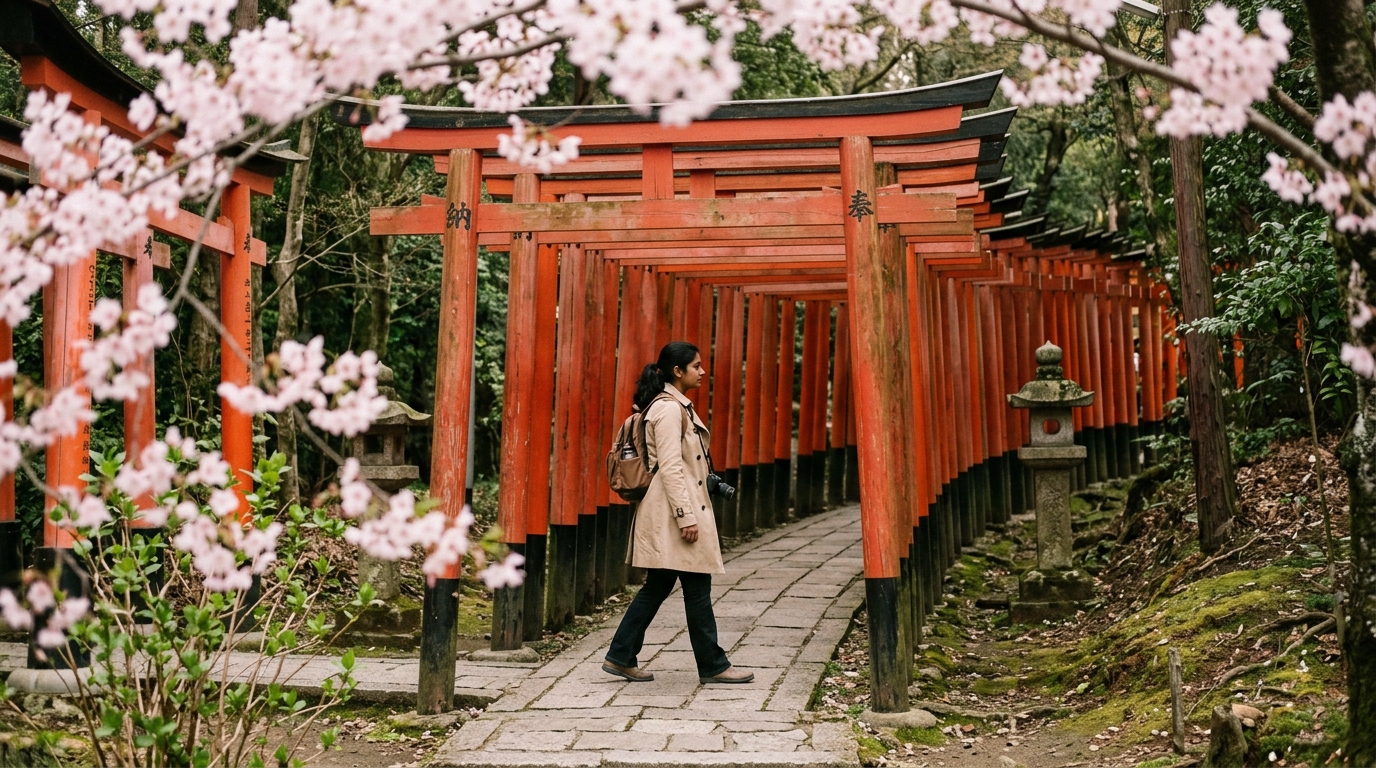
Japan on ₹1.6L: Tokyo-Kyoto-Osaka 10-Day Plan
Most travel blogs tell you Japan is expensive for Indians, then recommend skipping it. What they miss: a 10-day Tokyo-Kyoto-Osaka loop costs ₹1.6L—less than many Maldives holidays—if you buy the right JR Pass, eat like a local, and skip the tourist traps. This breakdown shows exactly how to split that budget across flights, accommodation, food, activities, and whether the JR Pass actually saves you money.
1. Flight & Entry: ₹30,000–₹40,000
Delhi, Mumbai, and Bangalore flights to Tokyo dominate the market. You'll pay less during shoulder season (April–May, September–October) and more during cherry blossom season (late March–early April).
Book 45–60 days ahead. Round-trip economy fares from India typically fall in this range:
| Route | Shoulder Season | Peak Season | Booking Window |
|---|---|---|---|
| DEL → NRT (Tokyo) | ₹28,000–₹35,000 | ₹40,000–₹55,000 | 45–60 days |
| BOM → KIX (Osaka) | ₹32,000–₹38,000 | ₹42,000–₹58,000 | 45–60 days |
| BLR → NRT | ₹30,000–₹36,000 | ₹38,000–₹50,000 | 45–60 days |
Use Skyscanner, Google Flights, or Kayak and set price alerts. One-way flights to Tokyo then return from Osaka save ₹2,000–₹3,000 vs. round-trip to the same city.
Indians on a regular passport need no visa for 90 days in Japan—you get a free Temporary Visitor stamp on arrival. No visa costs. No embassy queues. Just fill the disembarkation card on the plane and clear immigration.
Budget: ₹30,000–₹40,000 (flight only; visa is free).
2. JR Pass: Should You Buy It?
This is where most travelers get it wrong. The 7-day JR Pass costs ₹18,500 (approximately ¥29,650), but it only makes sense if you take the Shinkansen twice—once Tokyo to Kyoto, once Kyoto to Osaka.
Here's the math:
| Journey | Single One-Way Ticket | JR Pass Cost (7-day) | Payoff Point |
|---|---|---|---|
| Tokyo → Kyoto (Shinkansen) | ₹10,500 | ₹18,500 | Need 2+ trips |
| Kyoto → Osaka (local) | ₹800 | Included | Automatic value |
| Osaka → Tokyo return (Shinkansen) | ₹10,500 | Included | Major savings |
| Tokyo metro + trains (5 days) | ₹3,500–₹4,500 | Included | Minor value |
Buy the 7-day JR Pass if your itinerary includes: Tokyo → Kyoto → Osaka → Tokyo. Skip it if you stay in one city or fly between destinations.
For a 10-day trip: buy one 7-day pass (₹18,500) for days 2–8 (covering both Shinkansen rides and 5 days of metro use), then buy a separate Suica/Pasmo card (₹2,000, reloadable) for individual metro journeys in your first and final days. Total transport: ₹20,500.
Avoid airport express trains; use highway buses (₹1,200–₹1,500 one-way) from Narita or Kansai airport to city center instead.
Budget: ₹18,500–₹22,000 (JR Pass + local transport).
3. Accommodation: ₹18,000–₹28,000 for 9 Nights
Tokyo and Osaka drive accommodation costs. Kyoto is slightly cheaper. Never book five-star hotels; capsule hotels, guesthouses, and budget business hotels work.
Split your 10 days across three cities:
- Tokyo: 3 nights (days 1–3)
- Kyoto: 3 nights (days 4–6)
- Osaka: 3 nights (days 7–9)
- Tokyo or airport night: 1 night (day 10, optional)
| City | Capsule Hotel | Budget Guesthouse | Business Hotel | ₹ per Night |
|---|---|---|---|---|
| Tokyo | ₹1,800–₹2,200 | ₹2,500–₹3,500 | ₹3,500–₹4,500 | 3 nights = ₹7,500–₹13,500 |
| Kyoto | ₹1,600–₹2,000 | ₹2,200–₹3,200 | ₹3,000–₹4,000 | 3 nights = ₹6,400–₹11,500 |
| Osaka | ₹1,700–₹2,100 | ₹2,300–₹3,300 | ₹3,200–₹4,200 | 3 nights = ₹6,900–₹12,300 |
Capsule hotels are clean, social, and come with slippers and a locker. Guesthouses often offer a kitchen; cook one meal a day to cut food costs.
Budget: ₹20,800–₹37,300 for 9 nights. Use ₹25,000 as the midpoint.
4. Food: ₹24,000–₹32,000 for 10 Days
Japan's food is cheap if you eat where Japanese people eat. Skip restaurants in Shibuya, Shinjuku, and near temples; eat at konbini (convenience stores), ramen shops, soba stands, and chain restaurants.
Daily spend by meal type:
| Meal | Location | Cost in ₹ |
|---|---|---|
| Ramen or udon | Small shop | ₹400–₹600 |
| Convenience store bento | 7-Eleven, FamilyMart | ₹300–₹500 |
| Curry rice | Chain restaurant | ₹500–₹700 |
| Sushi lunch set | Kaiten-zushi (conveyor) | ₹800–₹1,200 |
| Tempura or tonkatsu | Local joint | ₹700–₹1,000 |
| Okonomiyaki | Osaka specialty | ₹600–₹900 |
| Breakfast (onigiri, miso soup) | Konbini | ₹250–₹400 |
Aim for ₹2,400–₹3,200 per day for three meals:
- Breakfast: ₹300–₹400 (convenience store onigiri + coffee)
- Lunch: ₹800–₹1,200 (ramen or curry set)
- Dinner: ₹1,200–₹1,600 (local restaurant, conveyor sushi, or street food)
Pro move: Buy a Suica card, load it with ₹10,000, and use it at konbini, vending machines, and restaurants. Most places accept it; no language barrier.
Budget: ₹24,000–₹32,000 (₹2,400–₹3,200 × 10 days). Use ₹28,000.
5. Activities & Sightseeing: ₹10,000–₹15,000
Most of Japan's best sights are free or ₹300–₹1,500 per entry. Temples, shrines, and gardens cost almost nothing; museums and paid experiences are optional.
| Activity | City | Cost in ₹ | Skip or Visit? |
|---|---|---|---|
| Fushimi Inari shrine | Kyoto | FREE | Must visit |
| Arashiyama bamboo grove | Kyoto | FREE | Must visit |
| Senso-ji temple | Tokyo | FREE | Must visit |
| Meiji Shrine | Tokyo | FREE | Must visit |
| Tokyo Skytree | Tokyo | ₹2,000–₹2,500 | Optional (skip) |
| Kinkaku-ji (Golden Pavilion) | Kyoto | ₹600 | Worth it |
| Kiyomizu-dera temple | Kyoto | ₹1,000 | Worth it |
| Dotonbori street food walk | Osaka | ₹1,500–₹2,500 | Included in food budget |
| Ghibli Museum | Tokyo | ₹1,500 | Book 1 month ahead; reserve online |
| Osaka Castle | Osaka | ₹1,000 | Worth it |
Cheap itinerary (₹8,000):
- 2 temple entries: ₹1,500–₹2,000
- Ghibli Museum (if interested): ₹1,500
- Local walking tours (free meetups): ₹0
- Parks, shrines, and riverside walks: ₹0
- Convenience store costs (soft drinks, snacks): ₹3,000
Mid-range itinerary (₹12,000):
- Above + Osaka Castle: ₹1,000
- Tokyo Skytree or teamLab Borderless: ₹2,000–₹2,500
- Bike rental for a day: ₹800–₹1,200
- Occasional paid museum: ₹800–₹1,200
Budget: ₹8,000–₹15,000 (activities + misc purchases). Use ₹12,000.
6. Sample 10-Day Daily Itinerary
| Day | City | Transport | Highlights | Approx. Cost |
|---|---|---|---|---|
| 1 | Narita → Tokyo | Airport bus (₹1,200) | Arrive, explore Shibuya, sleep early | ₹3,500 |
| 2 | Tokyo | JR Pass Day 1 | Senso-ji, teamLab Borderless, Shinjuku | ₹5,500 |
| 3 | Tokyo | JR Pass Day 2 | Meiji Shrine, Harajuku, Yoyogi Park | ₹5,000 |
| 4 | Tokyo → Kyoto | Shinkansen (JR Pass) | Arrive, walk Gion district, Higashiyama temples | ₹5,500 |
| 5 | Kyoto | JR Pass Day 4 | Fushimi Inari, Kinkaku-ji, evening temples | ₹5,500 |
| 6 | Kyoto | JR Pass Day 5 | Arashiyama bamboo grove, Kiyomizu-dera, tea ceremony (paid, optional) | ₹6,000 |
| 7 | Kyoto → Osaka | Local train (₹800) | Arrive, explore Dotonbori | ₹5,500 |
| 8 | Osaka | JR Pass Day 7 | Osaka Castle, local streets, nightlife | ₹5,500 |
| 9 | Osaka | Local transport | Namba, street food, museums (optional) | ₹5,000 |
| 10 | Osaka → Tokyo → Airport | Shinkansen + airport express (₹1,500) | Return flight or final night in Tokyo | ₹4,000 |
Total: ₹1,56,000–₹1,67,000.
Frequently Asked Questions
When is the best time to visit Japan on a budget?
September–October and April–May are ideal. Cherry blossom season (late March–early April) doubles hotel costs and attracts crowds; summer (July–August) is humid and pricey. Winter (November–February) offers the cheapest flights and hotels, though some mountain areas close. Avoid national holidays (Golden Week in early May, Obon in mid-August).
Is the 7-day JR Pass worth it if I fly between cities instead?
No. If you fly Tokyo to Osaka (₹4,000–₹6,000 with budget airlines), skip the JR Pass entirely. Use the Trip reality check to calculate whether domestic flights or trains save money and time. For this itinerary, the Shinkansen route (two trips) justifies the pass; flying doesn't.
How much should I budget for pocket change and unforeseen costs?
Add ₹8,000–₹10,000 for phone SIM cards (₹1,500), gifts, lost items, emergency meals, or activities you discover last-minute. Use the Trip budget calculator to adjust for your actual planned activities and swap out expensive ones.
Do I need to book activities and restaurants in advance?
Free temples and shrines need no booking. Popular paid experiences (Ghibli Museum, teamLab, restaurants in Michelin guides) should be booked 1–4 weeks ahead via Klook, Viator, or official websites. Local ramen shops and konbini always have walk-in capacity. Use Trip reality check to flag which activities to reserve before arrival.
What's the fastest way to move money to Japan for an Indian traveler?
Carry an international Visa/Mastercard (debit or credit) issued by HDFC, ICICI, or Axis. Japanese ATMs (especially 7-Eleven) accept Indian cards with zero fees. Avoid airport currency exchanges (₹1 = ¥1.65 official rate vs. ₹1 = ¥1.58 at tourist counters). Load a Suica card at the airport and use it everywhere—no currency conversion per transaction. Check the Forex & bargain check tool for real-time INR-JPY rates before you leave.
Your ₹1.6L Japan Trip Starts Here
You now have the exact cost breakdown, the JR Pass ROI, and a daily itinerary that fits ₹1.6L. The key moves: fly 45–60 days ahead, buy one 7-day JR Pass, eat at ramen shops and konbini, and visit free temples. Don't overthink it.
Use our Free AI itinerary generator to build a day-by-day plan tailored to your exact dates, interests, and budget. Flycher will auto-calculate which activities fit your spend, flag visa requirements, and resurface this breakdown at every step.
Japan isn't expensive—generic travel advice is. This plan proves you can see Tokyo, Kyoto, and Osaka in 10 days for ₹1.6L. Stop waiting. Generate your free AI itinerary →