Japan on ₹1.8L: Tokyo-Kyoto-Osaka Itinerary & JR Pass
Most travel guides pitch the JR Pass as a no-brainer for every Japan trip, and generic AI planners assume you'll book luxury hotels in central Tokyo. The truth: a JR Pass makes sense only if you're moving between cities multiple times, and the real savings come from eating where locals eat and staying in business hotels outside the Yamanote Line. This itinerary—split across three cities, 10 days, ₹1.8L—works because it swaps expensive tourism for intentional movement and regional food.
1. JR Pass Math: When It Actually Saves You Money
A 7-day JR Pass costs ₹18,500 (approximately ¥28,300 at current conversion). A single round-trip from Tokyo to Kyoto on a Shinkansen costs ₹12,000–₹15,000 per person each way. If you're making three intercity moves (Delhi→Tokyo, Tokyo→Kyoto, Kyoto→Osaka, Osaka→Tokyo), the JR Pass pays for itself in those round-trips alone—but only if you use it within the window.
The real calculation:
- Tokyo to Kyoto (Shinkansen): ₹13,500 per person (reserved, standard class)
- Kyoto to Osaka (limited express): ₹2,800 per person
- Osaka to Tokyo (Shinkansen): ₹13,500 per person
- Subtotal without JR Pass: ₹29,800 per person
- 7-day JR Pass: ₹18,500 (covers all three moves plus unlimited local trains)
- Saving per person: ₹11,300
However, the JR Pass does not cover Tokyo's Metro, Kyoto's buses, or Osaka's subway in full. You need a prepaid IC card (Suica or Pasmo) for those, which costs ₹2,000 for a ₹1,500 deposit + ₹500 balance.
| Route | Single Ticket (₹) | JR Pass Cost per Move (₹) | Winner |
|---|---|---|---|
| Tokyo–Kyoto Shinkansen | 13,500 | Covered | JR Pass |
| Kyoto–Osaka Limited Express | 2,800 | Covered | JR Pass |
| Osaka–Tokyo Shinkansen | 13,500 | Covered | JR Pass |
| Total for 3 moves | 29,800 | JR Pass: ₹18,500 | Save ₹11,300 |
Book the JR Pass in India before you depart—exchange rates are tighter, and it's delivered to your hotel. Use Trip reality check to validate your intercity plan before committing.
2. 10-Day Tokyo–Kyoto–Osaka Breakdown (₹1.8L for 1 Person)
This itinerary assumes mid-November to mid-December travel (autumn temple season, no peak pricing). Flights from Delhi or Mumbai are ₹38,000–₹48,000 return at low-demand dates; we'll budget ₹43,000.
Day-by-day cost snapshot:
| Category | Cost (₹) | Notes |
|---|---|---|
| Flight (DEL/BOM–NRT–DEL) | 43,000 | Book 45 days ahead |
| JR Pass (7 days) | 18,500 | Covers Tokyo→Kyoto→Osaka→Tokyo |
| Hotel (10 nights) | 48,000 | ₹4,800/night avg (business hotels, local areas) |
| Food (10 days) | 19,000 | ₹1,900/day (ramen, set lunches, convenience stores) |
| Activities & entry fees | 16,000 | Temples, museums, gardens |
| IC card (Suica) + local transit | 4,500 | Tokyo Metro, Kyoto buses, Osaka subway top-ups |
| Domestic flights/transfers | 8,000 | Airport to city shuttle, misc moves |
| Total | ₹1,56,500 | ₹1.8L budget leaves ₹23,500 buffer |
Days 1–3: Tokyo (Chiyoda Ward) Stay in Akasaka or Kanda (one Metro stop from Shinjuku, ₹3,500–₹4,500/night for a business hotel). Use your Suica card to move: Sensoji Temple (free), Meiji Shrine (free), teamLab Borderless in Odaiba (₹3,500). Eat conveyor-belt sushi lunch (₹600–₹800), ramen dinner (₹800), convenience-store onigiri for breakfast (₹200).
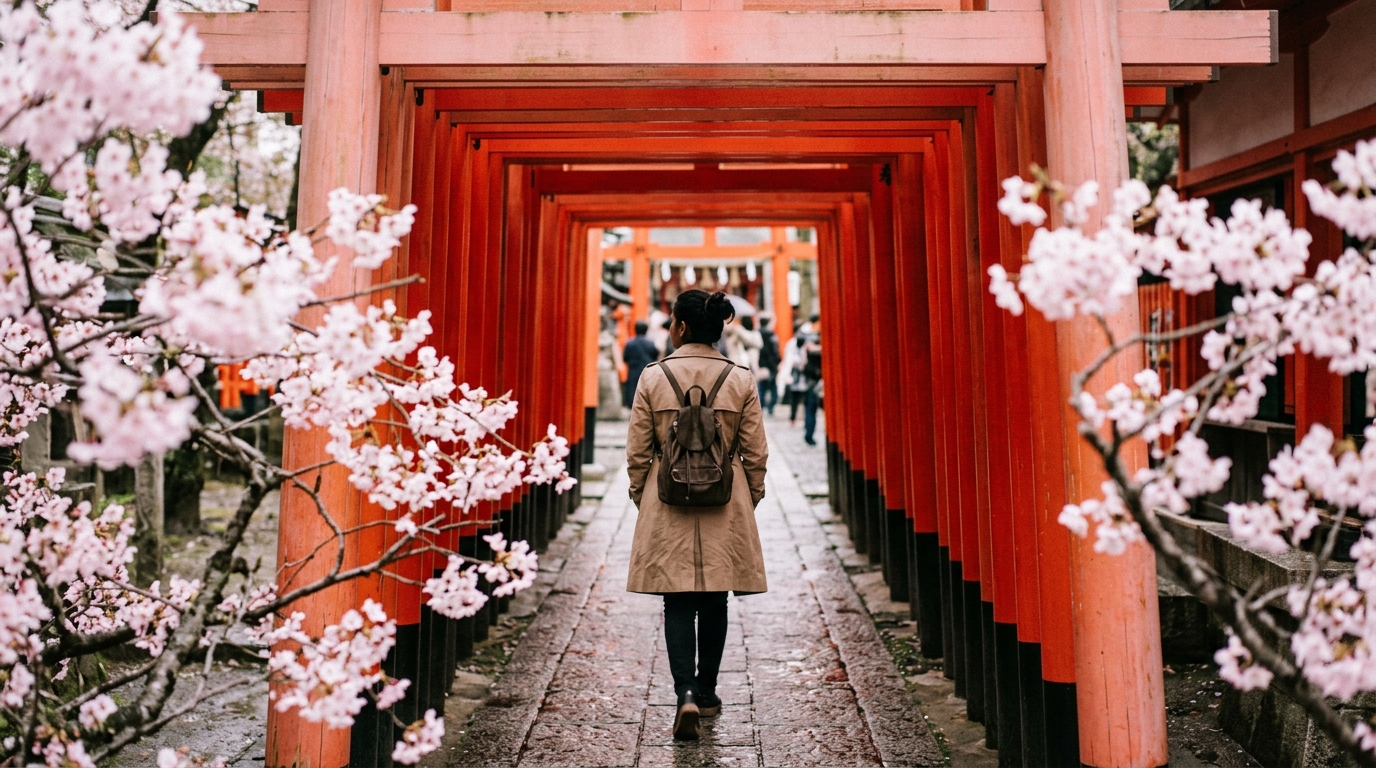
Days 4–7: Kyoto (Shimogyo Ward) Take the Shinkansen on Day 4 (9 AM, ₹13,500 covered by JR Pass). Stay in Kawaramachi area (₹3,000–₹3,800/night). Day trips to Fushimi Inari (free, arrive 6 AM to avoid crowds), Arashiyama Bamboo Grove (free), Ginkakuji temple (₹500). Eat at Yudofu restaurants (tofu hot pot, ₹1,200) and standing soba shops (₹700). Skip the tourist food courts; eat lunch at department-store basements (set meals, ₹900).
Days 8–9: Osaka (Chuo Ward) Limited Express to Osaka Day 7 evening (₹2,800 covered). Stay near Shinsaibashi (₹4,000/night). Osaka is about food, not temples: takoyaki from street vendors (₹400 per plate), okonomiyaki in Dotonbori (₹1,200), ramen alleys. Hike to Osaka Castle (entry ₹700). One afternoon to Kobe by local train (₹900)—Arima Onsen village is ₹3,200 for a 2-hour soak.
Day 10: Tokyo (return flight) Shinkansen back to Tokyo (Day 9 evening, ₹13,500 covered). Sleep at airport hotel (₹2,500) or early flight. Depart.
Use our Free AI itinerary generator to lock this down day-by-day, including local train schedules and restaurant reservations.
3. Hotel Strategy: Business Hotels Beat Hostels for Solo Travelers
Budget chains like APA Hotel, Daiwa Roynet, and Hotel MyStays cost ₹3,500–₹4,800/night and include private bathroom, clean sheets, and breakfast (some locations). Hostels sound cheaper (₹2,000/night) but often have shared bathrooms, thin walls, and no breakfast—the per-night savings evaporates when you add convenience-store lunches.
Chain hotel vs. hostel comparison:
| Factor | Business Hotel (₹4,200) | Hostel (₹2,200) |
|---|---|---|
| Private room/bathroom | Yes | No |
| Breakfast | Often included | No |
| Quiet after 10 PM | Yes | Rare |
| Check-in flexibility | 2 PM / 11 PM check-out | Strict |
| True cost per night | ₹4,200 | ₹2,200 + ₹800 (external breakfast) = ₹3,000 |
| Productivity (work/rest) | High | Low |
Book via Booking.com (Indians can use Rupee pricing) or Agoda 30 days ahead—last-minute rates spike 40%. Avoid central Chiyoda, Minato, and Shimogyo wards unless budget allows; one Metro stop east is a 70% price drop.
4. Food Without Guessing—What ₹1,900/Day Actually Buys
This is where solo travelers in Japan win. India has no equivalent—meal quality at ₹200–₹800 is simply unmatched at home.
Daily food breakdown:
- Breakfast (₹250): Convenience-store set (onigiri + coffee + egg sandwich from 7-Eleven, Family Mart, or Lawson)
- Lunch (₹700): Ramen specialty shop (Tonkotsu, Miso, or Shoyu ramen with gyoza), or teishoku (set meal at a salaryman restaurant—rice, miso soup, pickles, grilled fish, ₹800)
- Dinner (₹900): Okonomiyaki in Osaka (₹1,200), or standing soba/udon in any city (₹700), or conveyor sushi (₹1,000 for 10 plates = ₹100 per plate)
- Snacks/drinks (₹100–₹200): Vending machines (tea, coffee, soft drinks ₹150)
- One "splurge" meal per city (₹2,500): Kaiseki in Kyoto, Fugu in Osaka, Wagyu in Tokyo
You will not starve or eat badly. Japan's affordability comes from scale: restaurants achieve margins at ₹800 with volume, not markup.
Apps to use: Tabelog is Japan's Zomato (ratings, photos, hours, no reservation fee). Google Translate's camera mode works on menus. Suica card = tap and pay at restaurants, no cash needed (avoids tipping confusion).
Check our Forex & bargain check for real-time yen rates before you depart—a 2% swing in exchange rates changes your effective budget by ₹3,000.
5. Entry Fees, Activities & the IC Card Ecosystem
Many temples and gardens charge ₹300–₹700 entry; museums ₹1,000–₹1,500. A "Japan Pass" (Kyoto sightseeing pass, regional transit pass) often sounds like a deal but—do the math first. Most Indian travelers overpay for passes they don't fully use.
Real activity costs (Nov–Dec):
- Sensoji Temple (Tokyo): Free
- Meiji Shrine (Tokyo): Free
- teamLab Borderless (Odaiba, Tokyo): ₹3,500
- Fushimi Inari (Kyoto): Free
- Arashiyama Bamboo Grove (Kyoto): Free
- Kinkakuji, the Golden Temple (Kyoto): ₹500
- Ginkakuji, the Silver Temple (Kyoto): ₹500
- Osaka Castle: ₹700
- Arima Onsen (Kobe day trip): ₹3,200 (2-hour soak)
IC card (Suica/Pasmo) hacks:
- Buy at any airport convenience store (₹2,000 deposit + ₹500 balance, or ₹1,500 if refunding later)
- Tap for Metro, bus, local trains, and vending machines, convenience stores, and restaurants (no contact-less issues like India)
- One card works across Tokyo, Kyoto, Osaka—no need to buy separate cards per city
- Refund unused balance at airport on departure (deposit is non-refundable, but balance is)
Skip "tourist combo passes"—they sound good but lock you to specific routes. Buy single journeys as you go; the IC card abstracts the friction away.
6. Visa, Insurance & Pre-Departure Setup (India-Specific)
Indian passport holders get a 90-day tourist visa on arrival at Narita or Kansai airports—no embassy visit needed. Carry a return flight booking confirmation and ₹1,000 cash minimum (officers rarely check, but do).
Pre-trip checklist:
- Activate roaming or buy a SIM: SoftBank/docomo/au prepaid at airport costs ₹800–₹1,500 for 7 days unlimited 4G
- Travel insurance: Earn-In-Travel or Acko (India-based, cover medical + flight delay, ₹2,200 for 10 days) is cheaper than international brokers
- Notify your bank of travel dates (no surprise card blocks in Japan)
- Book your JR Pass in India via an agent (KKday, Klook) or your airline—exchange in Japan at exchange offices in airports or city centers
- Download Google Translate, Tabelog, Hyperdia (train schedules), Maps.me (offline maps)
Use our Visa wizard for Indians to confirm your passport timeline before booking flights.
Frequently Asked Questions
Is a JR Pass worth it if I only stay in Tokyo?
No. A 7-day JR Pass costs ₹18,500 but only saves money if you're taking intercity Shinkansen trains (Tokyo–Kyoto, Kyoto–Osaka, etc.). If you're staying in one city, buy a Suica IC card (₹2,000) and pay per journey. A week of daily Metro rides in Tokyo costs ₹3,500–₹4,500 total—cheaper than a JR Pass.
When is the cheapest time to visit Japan from India?
June (early rainy season), September (post-summer), and January–February (cold winter) have the lowest flight prices (₹35,000–₹40,000 return from Delhi/Mumbai). Avoid March–April (cherry blossoms, ₹55,000+), July–August (peak heat and tourism), and November–December (autumn leaves, ₹48,000+). Our itinerary targets November, which is higher-priced but worth it for weather and crowds.
Can I visit Japan if I'm a vegetarian?
Yes, but with planning. Convenience stores have vegetable onigiri, salads, and edamame. Temples in Kyoto serve shojin ryori (Buddhist vegetarian cuisine, ₹3,000–₹5,000 per meal). Tell restaurants "vegetarian" using Google Translate's camera on the menu, or use Tabelog's filter. Avoid dashi (fish stock)—it's in most soups. Eat more ramen, udon, and tsukemen (dipping noodles) made with vegetable broth.
How much cash should I carry in Japan?
₹5,000–₹10,000 equivalent (¥8,000–₹15,000) in cash. Major cities accept Visa/Mastercard at hotels, restaurants, and department stores, but smaller shops and taxis want cash. ATMs at 7-Eleven and post offices accept Indian debit cards with no surcharge. Don't exchange money in India (rates are poor); withdraw at airport or use ATMs in-country.
Do I need to book hotels and activities in advance?
Hotels: Yes, 30 days ahead (prices jump 40% last-minute). Activities: No. Temples and museums have no reservations; just show up (arrive early, before 10 AM, to avoid crowds). Restaurants: Casual ramen and udon shops accept walk-ins; high-end kaiseki requires 3–7 days notice. Use Tabelog to check hours before visiting.
This ₹1.8L budget works because it stops chasing Instagram moments and starts moving intentionally between regions. Japan rewards travelers who eat where salarymen eat, sleep in clean business hotels outside the tourist zones, and move on a schedule. Generate your free AI itinerary →