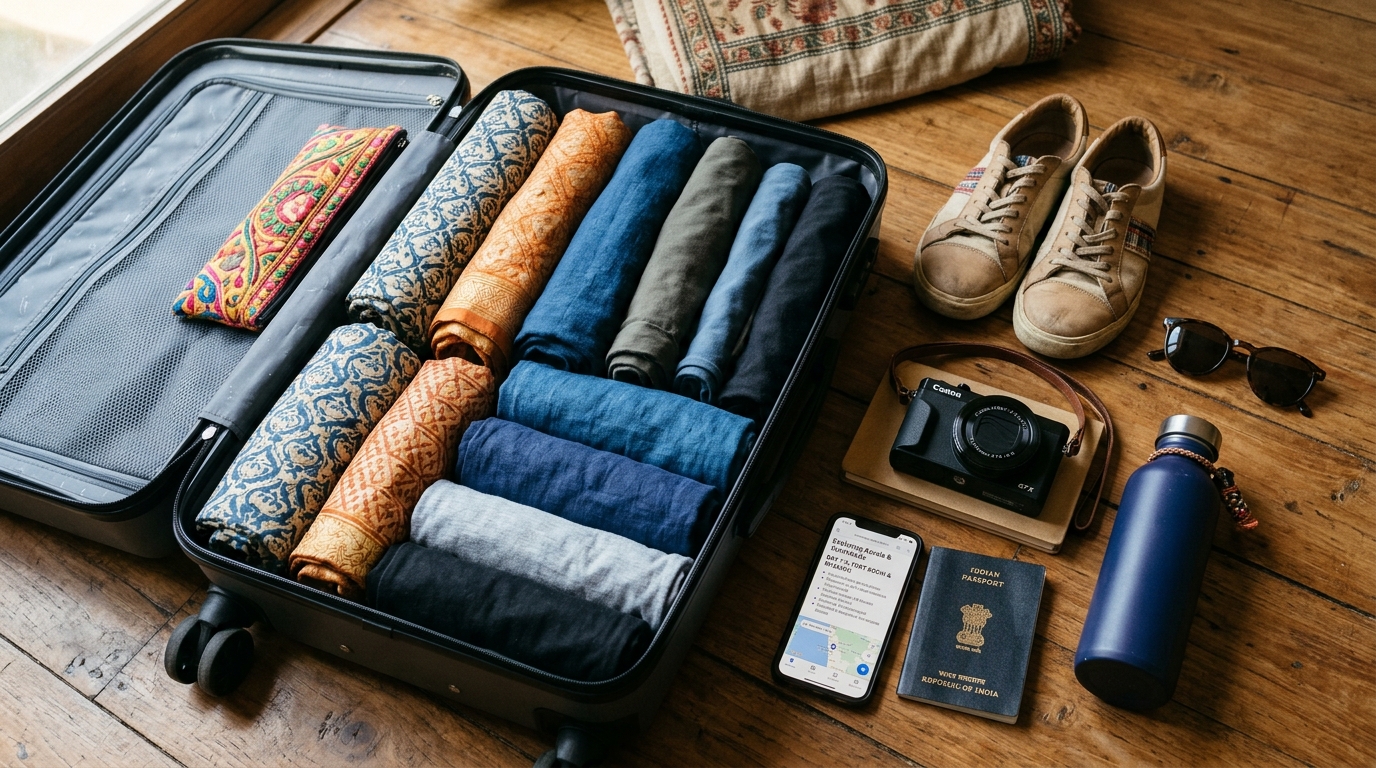
Packing Shoes for Asia: Heat, Humidity & Blister Hacks
Most packing guides tell Indian travelers to stuff a suitcase with sneakers and sandals without distinguishing between the brutal humidity of Bangkok in July and the dry heat of Rajasthan in May. The truth? Your shoes will either be your best ally or your worst enemy in tropical Asia—and the difference comes down to breathability, sole grip, and three forgotten antiperspirant tactics that cost under ₹500. This guide cuts through generic advice and shows you exactly what to pack for monsoon climates, when to wear what, and how to avoid the blistered feet that derail 40% of solo travelers by day three.
1. The Right Shoe Categories for Tropical Asia
Tropical Asia demands a footwear rotation, not a one-shoe solution. Different activities and weather patterns require different protective strategies. Most travelers pack one pair of good shoes and rotate the same trainers for trekking, temple visits, and dinner outings—a mistake that guarantees soggy socks and fungal risk by week two.
Your shoe arsenal for a typical 10–14 day Asia trip should include:
- Lightweight canvas sneakers (travel weight, fast-dry): Vans, Converse, Decathlon canvas shoes. Best for: daily walking, casual days, transitional weather.
- Strappy sandals with grip (not flip-flops): Merrell, Decathlon trekking sandals, or Clarks. Best for: humid evenings, temple visits (easy on/off), hostel common areas.
- Waterproof trail shoes or hiking shoes (if trekking): Salomon, Decathlon Quechua, or local brands like Vector. Best for: jungle hikes, monsoon rain, uneven terrain.
- Moisture-wicking slip-ons or loafers (dressy fallback): for restaurants, evening outings where flip-flops feel wrong.
| Shoe Type | Breathability | Moisture Resistance | Price (INR) | Best Months | Best Terrain |
|---|---|---|---|---|---|
| Canvas sneakers | High | Low | ₹1,500–3,500 | Apr–May, Oct–Nov | Urban, flat |
| Trekking sandals | Very High | Medium | ₹2,000–4,500 | Jun–Aug, Mar–May | Rivers, temple steps |
| Waterproof trail shoes | Medium | Very High | ₹3,500–7,000 | Jun–Sep | Jungle, wet ground |
| Breathable slip-ons | High | Low | ₹2,000–3,500 | Nov–Feb | Indoors, light activity |
Start with 3 pairs maximum. Pack two pairs in your checked luggage, one in carry-on. Rotate daily to allow moisture evaporation—the #1 blister prevention tactic most guides skip.
2. Breathability Standards: What "Ventilation" Actually Means
Most travelers confuse breathability with ventilation. A shoe with mesh on top but a rubber base that traps sweat is worse than no mesh at all. Real breathability in tropical heat means moisture escaping from inside the shoe to the environment—and that requires specific construction standards.
Look for these fabric markers:
- Hydrophobic mesh (mesh that repels water but lets air through) vs. cotton mesh (absorbs sweat, stays wet)
- Perforated insoles (small holes throughout the footbed, not just edges)
- Quick-dry lining (nylon or synthetic, not cotton)—Decathlon and Merrell use this in their tropical shoe lines
- Separate toe box design (toes don't compress together; reduces humidity pockets)
Here's the practical test before you buy: hold the shoe up to a light source. If light passes through the lining and bottom, it has real breathability. If the inside is dark and solid, it's a moisture trap.
The moisture-wicking hierarchy for tropical Asia, from best to worst:
- Specialized trekking sandals (Merrell Women's/Men's Hydro Moc) – ₹3,500–5,000
- Canvas sneakers with perforated insoles (Decathlon's Newfeel range) – ₹1,500–2,500
- Lightweight trail shoes with hydrophobic mesh (Salomon, Quechua) – ₹4,000–6,500
- Regular mesh sneakers (Nike Air Max, Adidas Ultraboost) – ₹4,500–8,000
- Solid rubber or leather shoes – ₹2,000–10,000 (avoid entirely)
Brands recommended for Indian travelers heading to Southeast Asia: Decathlon Quechua (affordable, tested for monsoon), Merrell (available at major Indian retailers), Salomon (premium but resale value holds in India), and Vans canvas (simple, fast-dry, widely available).
3. Antiperspirant Tactics: The Three-Step Foot Drying Protocol
This is where most travel guides go silent, and where your feet start to fail. Antiperspirant isn't just for armpits—it's the most effective blister prevention tool for humid Asia, and it costs under ₹500 for a trip's worth.
The three-step protocol:
Step 1: Antiperspirant spray or stick (day before travel, and every evening)
- Use a regular underarm antiperspirant (₹200–400 for the trip) or powder spray on clean, dry feet before bed
- This reduces sweat volume by 30–50% the next day—a significant reduction in tropical climates
- Apply between toes, on heels, and across the ball of the foot
- Dr. Neem or local Indian brands work fine; you're not paying for fragrance
Step 2: Moisture-wicking socks with antimicrobial treatment
- Pack 4–5 pairs of merino wool or synthetic blend socks (Decathlon ₹300–600 per pair)
- Wear one pair, wash one pair daily in your hotel sink (takes 20 minutes to dry if wrung properly)
- Antimicrobial socks dry faster and resist fungal growth—critical in 28°C+ humidity
- Change socks if they get damp; do not push through a wet sock
Step 3: Evening foot soak and air rotation
- Soak feet in room-temperature water with a pinch of salt for 10 minutes each evening (₹0–50)
- Dry thoroughly with a microfiber towel (pack one, they compress to credit-card size)
- Place shoes on a windowsill or fan-facing surface overnight—never a closed cupboard
- Spray the inside of shoes with the same antiperspirant (yes, inside the shoe) every 2–3 days
Combined cost of this protocol for 14 days: ₹500–800. Prevented blister cost: ₹3,000–5,000 in ortho visits and missed travel days.
4. Sole Grip & Traction for Wet Climates
The monsoon months (June–September across Asia) transform temple steps, jungle trails, and even sidewalks into slip hazards. Sole grip is non-negotiable—a blister you get from dragging your feet to prevent a slip is worse than the original problem.
Look for these sole specifications:
- Treaded, not smooth: Even canvas sneakers come in versions with raised treads vs. flat rubber. Buy the treaded version.
- Deep grooves in the heel (impact absorption and traction): prevents the "shuffle-walk" that causes heel blisters
- Flexible forefoot with rigid heel counter: allows your foot to roll naturally, reducing friction points
Test traction at the store by pressing the sole against a smooth floor tile at a 45-degree angle. If your thumb slides easily, the grip isn't strong enough for wet ground.
Worst shoes for monsoon Asia:
- Smooth-soled leather dress shoes (tourist temples + rain = falls)
- Cheap flip-flops with thin rubber (no arch support, maximum slip risk)
- Canvas shoes without tread patterns (Converse-style; fine for dry weather, dangerous when wet)
Best shoes for monsoon grip:
- Merrell Moab or Moab 2 (₹5,000–7,000): aggressive tread, ankle support option
- Decathlon Quechua MH100 (₹2,500–3,500): solid tread, tested in tropical conditions
- Salomon XA Pro or similar trail shoes (₹5,000–7,000): designed for mud and wet rock
Pack one pair with aggressive tread if you're traveling June–September. Use canvas sneakers April–May or October–November.
5. Packing Strategy: Weight, Space & Rotation
Shoes consume luggage space fast—a mistake that forces travelers to wear the same pair for 10 days straight, guaranteeing foot breakdown.
For a 14-day Asia trip, use this packing formula:
- Pair 1 (in carry-on): lightweight canvas sneaker or slip-on you'll wear on the flight. Reason: checked luggage sometimes doesn't arrive on Day 1, and you need walkable shoes immediately.
- Pair 2 (in checked): trekking sandal or strappy sandal for humid/casual days.
- Pair 3 (in checked): trail shoe or waterproof shoe if your itinerary includes trekking or monsoon exposure.
- Pair 4 (optional, in checked): dressier slip-on loafer for fine dining or temple visits where sandals aren't appropriate.
Pack using this compression method:
- Stuff each shoe's interior with quick-dry socks or microfiber towels (saves space, keeps shoes shaped)
- Place shoes in individual drawstring bags or packing cubes (protects other clothes from dirt)
- Position heaviest/bulkiest shoe at the bottom of your luggage; lighter shoes on top
- Total weight for 3 pairs: ~1.5–2 kg (negligible in a 20 kg allowance)
Between-city transport logistics: wear your "travel pair" (most broken-in, most comfortable) during flights and long bus rides. Pack the other two. If you're staying in one city for 4+ days, hand-wash your travel pair in the hotel sink and let it dry overnight. This rotation extends the life of each shoe and drastically reduces blister risk.
Use the Trip budget calculator to factor in shoe replacement costs if you're a heavy walker or trekker.
6. Climate-Month Matching: When to Pack What
The same shoe that works brilliantly in February becomes a sweat trap in August. Shoe selection is seasonal, and misjudging this costs comfort and money.
| Season | Avg Humidity | Best Shoe Category | Moisture Risk | Fungal Risk | Notes |
|---|---|---|---|---|---|
| Feb–Mar (Dry) | 40–60% | Canvas, leather possible | Low | Very Low | Pack light, breathable only. No need for waterproof. |
| Apr–May (Pre-monsoon heat) | 60–80% | Canvas, lightweight trail | Medium | Low | Heat peaks. Antiperspirant becomes essential. Canvas only. |
| Jun–Sep (Monsoon) | 75–95% | Waterproof trail, trekking sandals | Very High | High | Leather will mold. Waterproof essential. Change socks daily. |
| Oct–Nov (Transition) | 50–70% | Canvas, trail shoes mix | Medium | Medium | Sweet spot for shoe variety. Any breathable shoe works. |
| Dec–Jan (Cool dry) | 35–55% | All categories | Low | Very Low | Cold northern regions: leather acceptable. Thermal socks if needed. |
If you're flying into Bangkok in July, pack only open-toed sandals with tread and one pair of waterproof trail shoes. Leather is wasted luggage weight. If you're in Goa in February, a single pair of canvas sneakers suffices for the entire trip, plus one dress shoe.
Consult the climate and timing section of your Free AI itinerary generator to match your shoes to your destination month.
Frequently Asked Questions
How do I prevent blisters without buying expensive specialty shoes?
Blisters form from three causes: moisture, friction, and repeated pressure on the same spot. Even ₹1,500 canvas sneakers prevent 80% of blisters if you (1) rotate shoes daily, (2) apply antiperspirant every evening, and (3) change socks the moment they feel damp. The ₹5,000 specialty shoe becomes redundant once these habits are in place. Most travelers blame the shoe when the real problem was wearing the same pair for six days straight.
Can I wear the same shoes from India to Asia, or do I need new ones?
If your shoes are already 18+ months old or show wear on the sole, they've lost grip and cushioning—replace them. If they're newer and already broken in, they're fine. The risk isn't the shoe; it's comfort after 8+ hours of daily walking in humid conditions. New shoes in hot weather are dangerous (blisters). Well-worn shoes that fit are ideal. Test them on a 5 km walk before packing for a month-long trip.
What's the difference between waterproof and water-resistant shoes?
Water-resistant shoes have treated surfaces that repel water for 15–30 minutes; waterproof shoes are sealed and will keep your feet dry in rain for hours. For monsoon Asia, waterproof is necessary only if you're hiking in rain or crossing flooded streets; water-resistant is sufficient if you're visiting cities and temples where you can wait out a downpour or take a tuk-tuk. Waterproof shoes are heavier, less breathable, and trap heat—avoid unless trekking is part of your plan.
How often should I wash my shoes while traveling?
Wash shoes every 3–4 days if you're in hot, humid conditions (Jun–Sep) and every 5–7 days if the climate is drier (Oct–May). Rinse the outside gently with cool water and an old toothbrush to remove dirt and bacteria. Do not use soap inside; instead, wipe the insole with a damp cloth and spray the interior with antiperspirant. Stuff with dry socks or newspaper and let dry overnight on a windowsill or near a fan—never in direct sun (causes shrinkage) or a warm cupboard (spreads moisture).
Should I buy shoes in Asia or bring them from India?
Bring them. Indian shoe sizes are available in Bangkok and Bali, but prices are 20–30% higher than in India, and selection is geared toward local fit (narrower than Indian sizes on average). More importantly, shoes purchased abroad have no return option if they don't fit after a day of walking. The exception: if your shoe breaks mid-trip, Decathlon has stores across Southeast Asia (Bangkok, Ho Chi Minh, Jakarta, Hanoi) where you can buy a replacement quickly and cheaply (₹1,500–3,000). Always bring a basic repair kit: electrical tape, needle, thread, blister plasters.
Ready to Build Your Shoe-Smart Itinerary?
The shoes you pack aren't an afterthought—they're the foundation of every day you travel. Pair the right footwear with the right anti-blister protocol, and you'll walk 20+ km across Southeast Asia temples without pain. Get the month, activity level, and climate wrong, and you're limping by day four.
Use the Trip reality check to validate your itinerary's walking intensity, then adjust your shoe choices accordingly. Your feet will thank you on day 15.
Avoid the blister trap. Match your shoes to the climate, rotate daily, and nail the antiperspirant protocol. Generate your free AI itinerary →