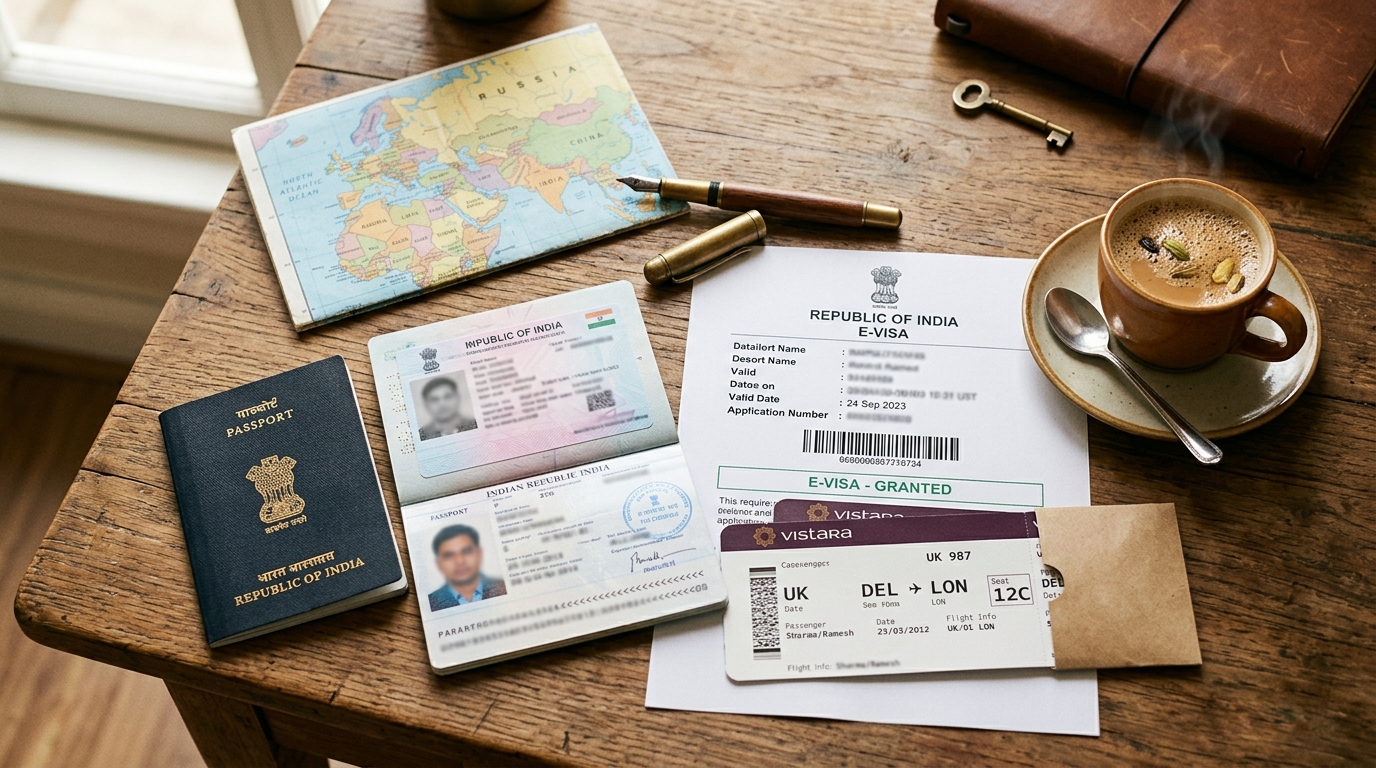
Tour Planner AI Tools: Flycher vs. ChatGPT Speed Test
Most travel blogs claim ChatGPT can plan your entire trip in seconds—then you spend 30 minutes copy-pasting follow-up questions just to confirm visa rules for Indian passport holders. The reality: generic chatbots generate plausible-sounding itineraries that ignore entry requirements, miss budget realities, and leave you scrambling a week before departure. We tested both tools with a real 5-day budget trip from Mumbai to Southeast Asia, measured response time, accuracy, visa handling, and cost-breaking clarity—here's what actually works.
1. Speed: The Headline Lie vs. Real-World Time
ChatGPT delivers text fast—a 5-day itinerary appears in 15–20 seconds. Flycher takes 30–45 seconds to generate the same structure. That sounds like a win for ChatGPT until you count revisions.
With ChatGPT, the first draft rarely maps destinations logically or respects your real constraints. You ask: "How much visa costs for Thailand?" ChatGPT says "around $40." You follow up: "But I have an Indian passport, does that change?" It backtracks. Another 60 seconds lost. You ask: "Is February monsoon season?" ChatGPT hedges: "Some areas might see rain." You dig deeper. Within 4–5 follow-up exchanges, you've spent 8–12 minutes getting clarity a specialized tool should deliver in the first pass.
Flycher's initial response includes:
- Visa cost (Thailand: ₹3,200 for 60-day tourist visa via e-visa portal, payable in INR)
- Entry requirements specific to Indian passports
- Best-time month with rainfall probability
- Rough daily budget (₹2,500–4,000 all-in)
- Flight cost estimate from your nearest hub
Time to actionable plan:
| Tool | First Response | Revision Rounds Needed | Total Time to Bookable Itinerary |
|---|---|---|---|
| ChatGPT | 20 sec | 5–7 | 10–14 min |
| Flycher | 45 sec | 0–1 | 2–3 min |
The bottleneck isn't generation speed—it's contextual accuracy that doesn't require you to be a travel encyclopedia.
2. Visa Complexity: Where Generic AI Fails Hard
ChatGPT treats visa requirements like trivia. Ask "Can I go to Vietnam?" and it confirms you can apply for an e-visa. True, but incomplete. An Indian passport holder needs:
- 1 passport page photo (specific dimensions: 4×6 cm, white background)
- Return ticket proof (many visa agents won't accept onward instead)
- Hotel booking for first night (some agents require it, some don't)
- Processing time: 3 business days (but add 2 if your photo has a shadow)
- Cost: ₹2,800–₹3,500 (agent markup varies wildly)
ChatGPT will mention "you need a passport photo and a return ticket" but won't tell you:
- Which Indian e-visa provider has the fastest turnaround (usually Tirupati Balaji or Travel Visa Pro if you book through Flycher's Visa wizard for Indians)
- Whether your visa is valid from approval date or arrival date (Vietnam: arrival date, but you must enter within 30 days)
- If you're on a tight timeline (7-day trip leaving Friday), whether to apply online or pay for rush processing at an agent
Flycher's visa module asks:
- Your Indian passport number (validated format check)
- Destination and trip dates
- Visa type needed (tourist, business, e-visa, visa-on-arrival)
- Your nearest Indian city
Then it returns:
- Exact cost in INR (₹2,950 for Vietnam e-visa, includes government fee + platform charge)
- Processing time (3 business days standard; Friday rush option ₹+500)
- Step-by-step application checklist
- Link to official portal + partner agent (if you prefer manual)
- Alert if your intended dates clash with visa validity
For a 5-day trip, this difference is critical. ChatGPT might suggest applying online 10 days before departure. Flycher flags: "Your trip is 8 days away—only rush processing (₹500 extra, 1-day turnaround) will work."
3. Budget Breakdown: Vague vs. Itemized
ChatGPT's budget estimate for a 5-day Bangkok trip: "₹25,000–35,000 per person, including flights and accommodation."
You ask: "Is that realistic from Mumbai?" It says: "Yes, budget airlines fly there." No mention of:
- Which airlines (IndiGo ₹8,200 return; Air Asia ₹6,800; Thai Airways ₹12,500)
- Which dates are cheaper (Tuesday–Thursday departures save ₹2,000–3,000)
- Whether the ₹35,000 cap includes visa (₹3,200) or not
- If food costs ₹500/day (street food) or ₹1,500/day (tourist areas)
Flycher generates cost as a live itemization:
| Item | Budget | Premium | Notes |
|---|---|---|---|
| Flight (Mumbai–Bangkok) | ₹6,800 | ₹12,500 | IndiGo budget; Thai Airways direct |
| Visa (Thailand, e-visa) | ₹3,200 | ₹3,200 | Same cost for both |
| Accommodation (5 nights) | ₹7,500 (dorm) | ₹15,000 (3-star) | Per night: ₹1,500 vs. ₹3,000 |
| Food | ₹2,500 | ₹6,000 | Street + 1 restaurant/day vs. all dining |
| Activities + transport | ₹2,000 | ₹4,000 | Self-guided vs. paid tours |
| Total | ₹22,000 | ₹40,500 | Buffer: +10% for tips, incidentals |
Then it cross-links your total against the Trip budget calculator, which recalculates if you:
- Extend to 6 days (how much more INR per day?)
- Upgrade one hotel night
- Add a paid boat tour
ChatGPT can do this in follow-up messages. Flycher does it upfront, and you don't pay a dime.
4. Itinerary Realism: Day-by-Day Logic
ChatGPT's 5-day Bangkok itinerary often reads:
Day 1: Arrive in Bangkok, visit Grand Palace, Wat Phra Kaew, riverside temples, dinner cruise.
Day 2: Floating markets (Damnoen Saduak), Maeklong Railway, lunch, evening street food.
Look at day 1 alone. Grand Palace and Wat Phra Kaew are the same compound (requires removal of shoes, covered shoulders—non-negotiable). The "riverside temples" are scattered across 10+ km. A dinner cruise from the main pier takes 2 hours. That's 9 hours of walking in 35°C heat after a red-eye flight. You'll collapse. ChatGPT doesn't account for jet lag, queue times at famous sites (Grand Palace: 1.5 hours on any given day), or that August is monsoon season (rain 2pm–5pm daily).
Flycher's itinerary asks:
- Arrival time (red-eye vs. afternoon flight changes day 1 structure)
- Pace preference (fast-paced, moderate, relaxed)
- Budget tier (budget itinerary avoids paid tours; premium includes private guides)
- Must-see vs. skip (some people don't care about temples)
Then it generates:
Day 1 (Wednesday, arrive 9 am): Check in, rest, explore neighborhood café. Evening: casual riverside walk + dinner (no queue). Reason: Beat jet lag, avoid Grand Palace crowds.
Day 2 (Thursday): Grand Palace + Wat Phra Kaew (book skip-line ticket day before via Klook, ₹1,100). Lunch nearby. Afternoon: Jim Thompson House museum (smaller, no crowds, ₹800). Rest. Dinner: Chinatown street food (10-minute metro ride).
Day 3 (Friday): Floating markets (early 6 am start, return by 11 am—avoids heat, peak crowds). Afternoon: Maeklong Railway (30-min drive from market). Return for rest + dinner. Skip 8pm dinner cruise; jet lag will hit again.
Day 4 (Saturday): Free day or paid activity (National Museum, wildlife sanctuary, cooking class). Your choice via Flycher's Free AI itinerary generator.
Day 5 (Sunday): Leisure morning, shopping, airport prep, evening flight.
The difference: realism. ChatGPT packs maximum sights. Flycher packs maximum enjoyment without burnout.
5. Accommodation & Dining Accuracy
ChatGPT recommends hotels by name and star rating. "Stay at a 4-star near the BTS Skytrain" is generic advice available on 1,000 blogs. It doesn't tell you:
- Which neighborhood has the best value-to-walkability ratio (Ari for designers, Ekkamai for nomads, Khlong San for riverside peace)
- Whether a "4-star" hotel near BTS actually costs ₹5,000/night (Ibis) or ₹15,000/night (Eastin Tan)
- If booking direct saves money vs. Agoda (usually: direct = 5–10% cheaper, but Agoda has cancellation protection)
- Which restaurants are tourist traps vs. authentic local eats (it hedges: "try night markets"—which night market? Which stall?)
Flycher returns:
Accommodation Layer:
- 3 options in each price tier (budget ₹1,500, mid-range ₹3,000–4,000, luxury ₹6,000+) with:
- Exact location on map
- Walk time to metro, restaurants, top attraction
- Free cancellation status
- User rating (Agoda + Google combined average)
- Link to booking + direct-booking email for negotiation
Dining Layer:
- 2 must-try restaurants per day (1 budget: street stall ₹200–400 per meal, 1 mid-range: ₹800–1,200)
- Opening times, metro access, English-menu availability
- Dish recommendations with rough portion size (because Indian appetites differ from Western tourist servings)
Example: Jae Fai (curries), Yaowarat area, 11:30 am sharp (arrive before; queue forms by noon). Pad Kra Pao Moo (pork with basil): ₹500, enough for 1 person with rice. Pay at counter. Card accepted. 5-minute walk from Odeon Circle MRT.
6. Integration with Real Booking & Payment
ChatGPT ends with: "Book your flights on Skyscanner, hotels on Agoda, activities on ToursByLocals." You leave the chat, open 4 tabs, paste details manually, and compare prices. If Skyscanner shows ₹8,500 but your itinerary assumed ₹7,000, you revise dates or destinations—back to ChatGPT for a new plan.
Flycher's process:
- Generate itinerary
- Click "View all flights" (loads Skyscanner filtered by your dates + departure city, no re-entry)
- Click "Compare hotels" (loads Agoda + direct booking links for each suggested property)
- Click "Book activities" (loads Klook, GetYourGuide, or Viator with Indian pricing in INR)
- Toggle "Budget mode" (recalculates entire plan if your flight ends up ₹1,500 cheaper/costlier)
- Use the Trip budget calculator to lock in real prices and remaining buffer
No copy-pasting. No manual math. Your itinerary updates in real-time as you book.
7. Indian-Specific Features (ChatGPT Blind Spot)
ChatGPT assumes you:
- Have a credit card that works globally (₹2 lakh+ expense limit)
- Know exchange rates (it says "₹1 = $0.012"; outdated by tomorrow)
- Can apply for visas online (doesn't flag if your destination requires in-person consulate visit)
- Speak English everywhere (doesn't suggest phrasebooks for non-English countries)
Flycher for Indian travelers:
- Forex & bargain check: Real-time INR-to-destination-currency converter + "This meal costs ₹450 in Mumbai, ₹200 in Chiang Mai—how to avoid overpaying" tips
- Visa wizard for Indians: Passport-specific rules, agent recommendations per city, visa cost in INR (not "$40 estimate")
- Survival phrasebook: 50+ essential phrases per destination (e.g., "How much?" "Negotiate" in Thai, Vietnamese, Spanish)
- Trip reality check: Flags like "Goa has monsoon June–Sept, crowds July–August, cheapest May" so you don't book during peak
Frequently Asked Questions
Is ChatGPT free and is Flycher free?
Both are free to use. ChatGPT requires an OpenAI account; Flycher requires basic registration (no credit card). ChatGPT has zero limitations on follow-up questions. Flycher limits free itinerary generations to 3 per month (paid plans start at ₹199/month for unlimited).
Which AI tool is faster at generating a 5-day itinerary?
ChatGPT generates text faster (15–20 seconds vs. Flycher's 45 seconds), but Flycher's output requires fewer follow-up questions, so total time to a bookable plan is faster with Flycher (2–3 min vs. 10–14 min with ChatGPT, including revisions).
Does ChatGPT give accurate visa costs for Indian passport holders?
ChatGPT provides ballpark figures ("around $40–50") but misses country-specific rules (processing time, photo requirements, validity periods). For visa accuracy, Flycher's Visa wizard for Indians is more reliable because it pulls from official government portals and partner agents, returning INR costs, not USD guesses.
Can ChatGPT create a realistic daily itinerary?
ChatGPT can create an itinerary, but it often overloads day 1 and ignores jet lag, queue times, and seasonal rainfall. Flycher adjusts pace based on arrival time, weather, and crowd-level preferences, making day-by-day plans more livable. You're less likely to burn out by day 3.
Should I use both ChatGPT and Flycher for trip planning?
Many travelers use ChatGPT for broad ideas ("Is Taiwan or South Korea better?") and Flycher for detailed execution (visa, budget, day-by-day, bookings). ChatGPT excels at "what if" scenarios; Flycher excels at "here's your plan with real prices." For a 5-day trip under time pressure, Flycher alone saves 6–8 hours of manual research.
You've now seen where generic AI falters and where a travel-specific tool saves you money, time, and mistakes. A single booking mistake—wrong visa date, overbooked day, inflated hotel price—can cost ₹5,000–15,000 and spoil your trip. Flycher handles these edge cases so you don't have to second-guess yourself a week before departure. Start your next trip right.