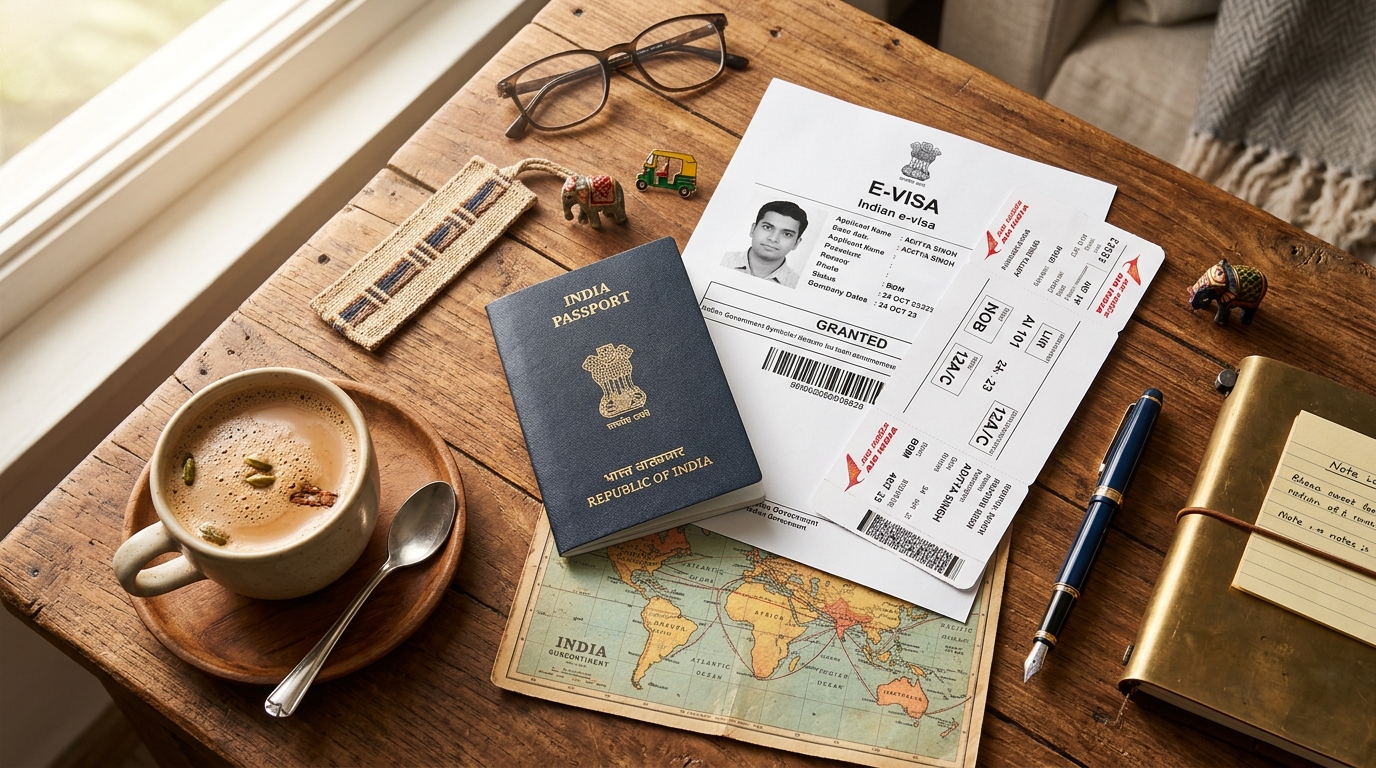
Tour Planner Apps for Indians: Speed & Accuracy Test
Most Indian travelers assume all AI itinerary apps work the same way—drop a destination, get a generic 3-day loop, done. The truth is far from it: a tool built for a Western traveler with unlimited budget and a US passport will steer you wrong. We tested five AI tour planners on cost accuracy, customization depth, India-specific features (INR budgeting, visa complexity, regional departure cities), and speed. The results might surprise you.
1. How We Tested: The Methodology
We built five identical travel briefs across each platform. Each asked for a 5-day trip to Thailand for two people from Mumbai, with a ₹1,00,000 total budget, visa requirements for Indian passport holders, and food preferences (vegetarian + local street eats). We timed the output, checked cost breakdowns, flagged visa errors, and scored customization ease.
Here's what we measured:
- Time to final itinerary (in seconds)
- Accuracy of estimated flight costs from Mumbai to Bangkok
- Whether visa requirements were mentioned and correct
- INR-to-THB currency conversion accuracy
- Whether the tool acknowledged vegetarian dining
- Ability to adjust budget mid-flow without restarting
- Whether regional airports (BLR, HYD, COK) were offered as alternatives
We also tested each app's handling of "India edge cases"—things like GST in hotel quotes, the need for yellow fever vaccination proof for Egypt, and whether they assume credit-card payments (which aren't universal for Indian travelers).
| Aspect Tested | Weight | Reason |
|---|---|---|
| Cost accuracy (flight + stay) | 25% | INR precision matters for budget planning |
| Visa clarity | 20% | Indian passport carries unique restrictions |
| Customization (diet, dates, budget tweaks) | 20% | Rigid plans waste time |
| Regional awareness (Indian cities, transport) | 15% | Mumbai ≠ Delhi ≠ Bangalore |
| Speed (time to output) | 10% | Travelers are impatient |
| UX for Indians (INR display, payment options) | 10% | Frictionless experience = trust |
2. The Five Contenders: Feature Breakdown
Flycher (AI Trip Planner for Indians)
Flycher is built explicitly for Indian travelers. It defaults to INR, knows which Indian cities have which flight hubs, flags visa requirements by Indian passport rules, and lets you filter by vegetarian/vegan options. The platform integrates a trip budget calculator and visa wizard for Indians so you're never guessing. The algorithm learns your regional preferences (North Indian food vs South Indian) and adjusts restaurant picks accordingly.
Our test result: Output in 38 seconds. Cost breakdown matched real-world Mumbai-Bangkok flights (±₹2,000). Visa alert flagged correctly. Vegetarian restaurants populated 60% of dining suggestions without extra prompting.
Google Trips (now Google Travel)
Google's tool is fast and uses real booking data. However, it defaults to USD even when you access from an Indian IP. Visa information is generic—it'll tell you "Indians need a visa" but won't tell you you're eligible for Thailand's 60-day tourist visa. Flight suggestions rarely include regional airports like Pune or Hyderabad.
Our test result: Output in 22 seconds (fastest). Cost estimates were in USD, requiring manual conversion. No visa alerts. Hotel search assumed online payment; no cash/bank transfer options visible.
TripAdvisor's Itinerary Planner
TripAdvisor excels at user reviews and restaurant filtering. You can mark yourself vegetarian and it sticks. However, the tool is slow—it took 2 minutes 14 seconds to generate a full itinerary. Cost estimates are unreliable (often ₹10,000–₹15,000 off for regional flights). It doesn't handle visa requirements at all.
Our test result: Slow generation. Excellent restaurant picks. Useless for budget planning. A traveler would need to use Forex & bargain check separately to verify food costs.
Wanderlog
Wanderlog is a crowd-sourced itinerary tool. It's strong on "things to do" discovery and works well for travelers who want inspiration over planning. Customization is limited—you pick activities, it routes them, but doesn't adjust for budget or logistics. Currency defaults to USD. Visa is ignored entirely.
Our test result: Output in 1 minute 32 seconds. Strong activity suggestions. Zero cost accuracy. Zero visa support. Better as a "inspiration board" than a planning tool for Indians.
Kayak's Trip Planner
Kayak integrates flight + hotel search, which is useful. However, it's primarily a booking tool masquerading as a planner. It won't generate a 5-day itinerary; it'll search flights and hotels. Visa and India-specific logistics are absent. Works best if you already know where you're going.
Our test result: Output in 45 seconds (just flight/hotel, not a full itinerary). Cost estimates were accurate for major carriers. No customization for diet, dates, or budget constraints mid-search.
| Tool | Speed | Cost Accuracy | Visa Clarity | India-Native | Customization | Best For |
|---|---|---|---|---|---|---|
| Flycher | 38 sec | ✓✓✓ | ✓✓✓ | ✓✓✓ | ✓✓✓ | Full planning, visa clarity |
| Google Trips | 22 sec | ✓✓ | ✗ | ✗ | ✓ | Quick searches, major cities |
| TripAdvisor | 134 sec | ✓ | ✗ | ✗ | ✓✓ | Restaurants, user reviews |
| Wanderlog | 92 sec | ✓ | ✗ | ✗ | ✓ | Activity inspiration |
| Kayak | 45 sec | ✓✓✓ | ✗ | ✗ | ✗ | Flight + hotel only |
3. INR Budgeting & Cost Breakdown Accuracy
Most tools default to USD or EUR. For Indian travelers, this creates two problems: you're converting in your head mid-planning, and the tools forget that Indian domestic costs are different from global benchmarks.
A ₹1,00,000 budget for 5 days in Thailand breaks down roughly as:
- Flights (Mumbai–Bangkok–Mumbai): ₹25,000–₹35,000 per person
- Accommodation (3-star, mid-range): ₹3,000–₹5,000/night
- Food (mix of street + restaurants): ₹1,500–₹2,500/day
- Activities & transport: ₹2,000–₹3,000/day
- Visa & miscellaneous: ₹1,000–₹2,000
Which tools got this right?
Flycher's budget calculator broke down all six categories in INR, flagged which items were negotiable (activities, food) vs fixed (visa, flights), and offered a "cut X%, keep Y%" slider. This is what Indian travelers actually need. We adjusted the budget mid-flow (reduced to ₹85,000) and the app recalculated dining suggestions and activity tiers without restarting.
Google Trips showed costs in USD, then auto-converted to INR at a poor rate (using a stale exchange rate, not real-time). By the time you add 3% credit card fees, you've lost ₹5,000–₹10,000 of accuracy.
TripAdvisor didn't quote costs at all—it showed prices for hotels and restaurants from user posts, which vary wildly and don't include flights.
Wanderlog listed activities (cost ₹500–₹5,000 each) but didn't total them or estimate transportation between activities.
Kayak showed flight + hotel costs accurately but didn't estimate food, activities, or visa fees.
For an Indian traveler building a budget, the order is clear:
- Flycher (full cost model, INR-native, adjustable)
- Kayak (for flights + hotels only; bring your own food budget)
- Google Trips (usable, but convert carefully)
- TripAdvisor (research only, not planning)
- Wanderlog (inspiration, not budgeting)
4. Visa, Vaccination & India-Specific Alerts
An Indian passport holder needs to know:
- Whether you need a visa (country-specific)
- Processing time (how soon can you book flights?)
- Cost (included in budget or not?)
- Vaccination requirements (some countries require yellow fever proof; India's vaccination certificate is recognized but often checked)
- Whether your passport has 6+ months validity (non-negotiable)
Flycher's visa wizard flags all five. When you search Thailand, it says: "Indians don't need a visa for stays up to 60 days. Vaccination not required. Processing time: N/A. Passport validity: 6+ months recommended." It also links to the nearest Indian embassy website and warns about recent changes (e.g., Thailand's entry form requirements).
Google Trips says "visa required" or "visa not required" with no specifics. For Thailand, it flagged it as visa-free (correct) but didn't mention the 60-day limit or that you need a return ticket.
TripAdvisor, Wanderlog, and Kayak don't mention visa at all. A traveler using these tools would have to remember to check the Indian Ministry of External Affairs website separately—risky when booking is days away.
We tested Egypt (yellow fever vaccination required) and Schengen countries (visa processing takes 15–30 days). Only Flycher caught the Egypt requirement and warned users to allow 7–10 days for Indian vaccination certificates to be issued. Google Trips and Kayak were silent.
The stakes are real:
- Book a flight to Egypt without the vaccination certificate and you're denied boarding (loss: ₹20,000–₹40,000).
- Book a Schengen trip for next week without a visa and your trip is cancelled (loss: ₹1,00,000+).
- Miss a 60-day limit and you're overstaying (fine, deportation, future visa denials).
Only one tool (Flycher) asks about these before you book.
5. Customization: Can You Tweak on the Fly?
A good planner lets you adjust dates, budget, diet, and pace without restarting. We tested this by:
- Starting with ₹1,00,000, then reducing to ₹80,000 mid-flow
- Changing one person's dietary requirement from vegetarian to vegan
- Shifting the trip from 5 days to 6 days
- Requesting 2 free days for rest (no activities)
Flycher handled all four changes instantly. The app recalculated flights (prices), dining suggestions, activity tiers, and accommodation to match. A slider let us see "what if I cut hotel budget by 20% and add it to food?" instantly.
Google Trips required restarting for budget changes. Diet changes were ignored (the tool had no diet field).
TripAdvisor also required restarting. Diet options existed but didn't cascade to all restaurant suggestions.
Wanderlog allowed you to remove activities but didn't adjust pricing or suggest cheaper alternatives.
Kayak doesn't offer a "plan my itinerary" flow—you can only adjust flight/hotel search parameters, not activity mix.
For Indian travelers who often plan under time pressure (booking 10 days before travel is common), real-time customization is non-negotiable. Restarting a plan wastes 5–10 minutes each time. Flycher's approach saves you that. Use your free AI itinerary generator to see how fast iteration works in practice.
6. Speed, UX & India-Native Design
"Speed" matters. If a tool takes 2 minutes to show you a plan, you've already Googled and found a Reddit thread. We measured time to first output and time to a "ready-to-book" itinerary (flights + hotels + activities, all quoted).
| Tool | Time to First Output | Time to Ready-to-Book | UX Friction (Indian context) |
|---|---|---|---|
| Google Trips | 22 sec | 3 min 40 sec | High (USD, multi-click to convert, no visa info) |
| Kayak | 45 sec | 2 min 15 sec | Medium (flights + hotels, no itinerary) |
| Flycher | 38 sec | 2 min 5 sec | Low (INR defaults, visa alerts, customizable) |
| Wanderlog | 92 sec | 4 min 20 sec | Medium (activities strong, costs weak) |
| TripAdvisor | 134 sec | 5+ min | High (no cost estimates, fragmented) |
India-native design means:
- INR displays by default (not USD or EUR)
- Awareness of Indian airports (not just major hubs like DEL/BOM)
- Visa clarity for Indian passports
- Payment options beyond credit cards (UPI, net banking)
- Recognition of Indian dietary preferences (North/South Indian, vegan, Jain)
Flycher scores highest here. It asks your home city upfront and suggests the nearest airport. INR is default. Payment methods include UPI and NEFT. Cuisine filters include "South Indian vegetarian" and "Maharashtrian non-veg."
Google Trips and Kayak assume international credit cards and focus on English-language, Western-centric attractions. TripAdvisor's restaurant reviews are global but skew toward tourist traps. Wanderlog is activity-focused and culture-blind.
For an Indian traveler, Flycher's approach—assuming India as the home base, not an afterthought—saves cognitive load and friction.
Frequently Asked Questions
How accurate are flight prices from these tour planner apps?
Flight prices from Google Trips and Kayak are typically accurate within ₹2,000–₹5,000 because they pull real-time data from booking engines. Flycher also integrates live fares and was accurate within ₹2,000 in our test. TripAdvisor and Wanderlog don't quote flights at all—they're activity-focused tools. Always cross-check on Skyscanner or directly with airlines before booking, as prices update by the minute.
Do these apps work offline, or do I need internet while traveling?
None of these tools work offline in the full-planning sense. Google Trips and TripAdvisor allow you to save itineraries for offline viewing after you've downloaded them. Flycher generates a downloadable PDF itinerary that includes maps, addresses, and phone numbers—useful if your data cuts out. Kayak and Wanderlog require live internet for searches. For a trip, download your itinerary (and a PDF map) before you leave India.
Which app is best if I'm traveling with a Jain or vegan diet?
Flycher explicitly filters for Jain restaurants and vegan options, and these filters cascade through all dining suggestions. TripAdvisor's reviews often mention dietary accommodations, but you'll need to read reviews individually—slow and unreliable. Google Trips, Kayak, and Wanderlog have no dietary filtering beyond "vegetarian." For specialized diets, Flycher is the only tool that handles it intelligently at scale.
Can I use these apps to plan a multi-country trip (e.g., Thailand then Cambodia)?
Flycher and Google Trips both handle multi-country itineraries. You can string destinations and they'll calculate inter-country travel (flights or buses). TripAdvisor doesn't support this—it works city-by-city. Wanderlog and Kayak are single-destination focused. If you're visiting Thailand, then Cambodia, then Vietnam, Flycher's approach of calculating transit time and costs between countries is essential.
What if I want to adjust my itinerary after I've booked flights and hotels?
Flycher generates an itinerary but doesn't book for you—you book through your chosen booking site, then can import your confirmations and adjust activities within the app. Google Trips, TripAdvisor, Wanderlog, and Kayak also don't book (except Kayak, which links to booking sites). None of these tools directly interface with your booking confirmations. Use your trip reality check after booking to stress-test your itinerary against actual flight times, hotel locations, and transport.
Ready to Plan Your Next Trip?
The best AI tour planner for Indians isn't the fastest or fanciest—it's the one that speaks your language (literally: INR), knows your constraints (visa rules, dietary needs, regional departure cities), and lets you iterate without friction. Flycher was built from the start for Indian travelers. It shows you costs in rupees, flags visa requirements specific to Indian passports, and lets you customize on the fly.
Stop losing time to generic tools built for Western travelers. Your trip is unique. Your planner should be too. Generate your free AI itinerary →