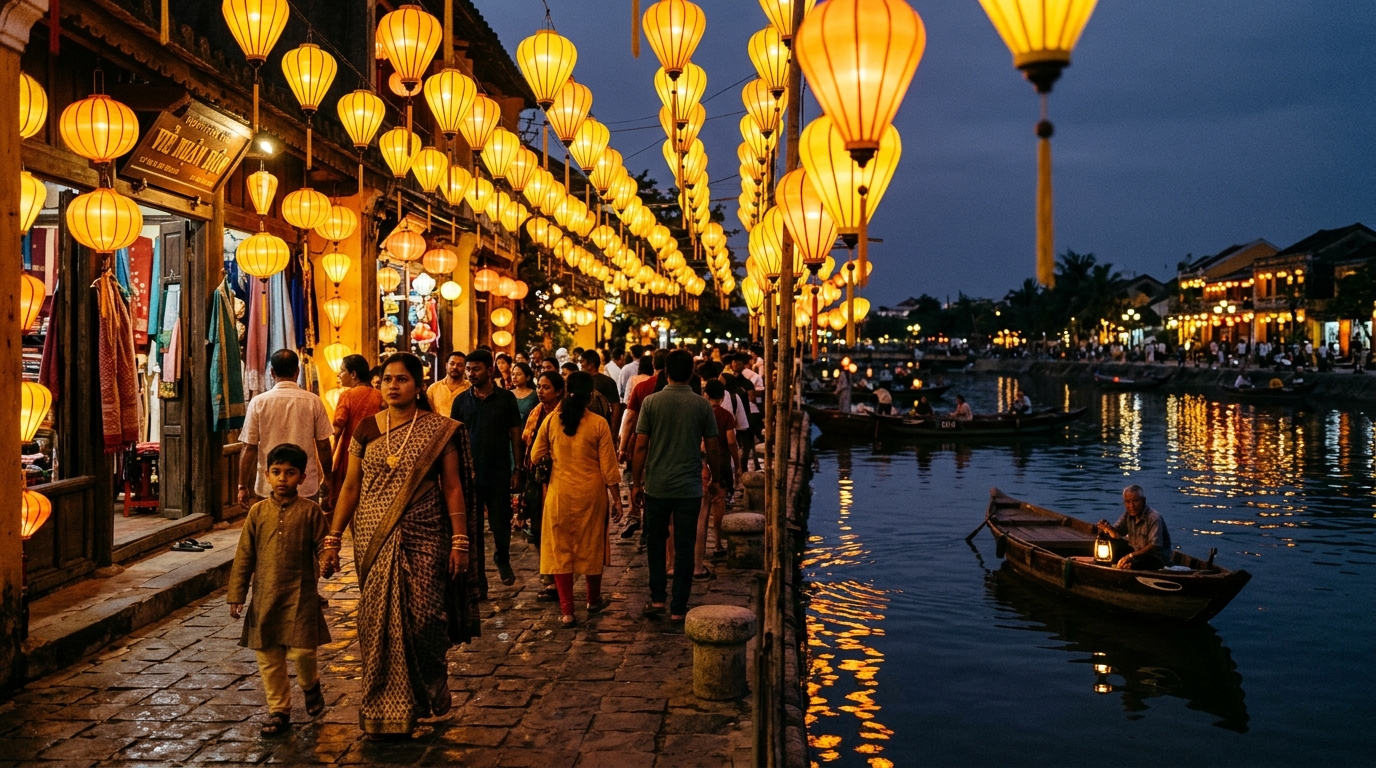
Vietnam 7-Day Itinerary: Hanoi-Halong-HCMC Budget
Most travel blogs tell Indians that Vietnam is "ultra-cheap," then leave you stranded in a 4-star hotel for ₹4000/night wondering where the bargain went. The reality: Vietnam is affordable—but only if you know exactly what train passes cost from Hanoi to HCMC, which street stalls beat restaurants by 70%, and whether the overnight ferry to Halong genuinely saves money. This breakdown moves you north to south in 7 days with real prices, real stops, and real daily spend—no fantasy numbers.
1. Flights & Transport to Vietnam: Delhi/Bombay to Hanoi
Your arrival sets the tone for your budget. A direct flight from Delhi or Mumbai to Hanoi costs ₹12,000–₹18,000 return (off-peak) and lands you at Noi Bai airport, 30km north. Most Indian travelers book in advance and expect chaos; the airport has a bus to central Hanoi for ₹150, a taxi for ₹600–₹900, or a ride-hail app for ₹400–₹600.
Skip tourist taxis outside the terminal. Download Grab (Southeast Asia's Uber), show your phone number in your hotel's Vietnamese name, and lock in a ride before stepping outside.
Getting to Hanoi Old Quarter from airport:
- Airport bus 17: ₹150, 45 mins, drops at city center
- Grab ride: ₹400–₹600, 30–40 mins depending on traffic
- Tourist taxi counter: ₹900–₹1200, avoid without a booked voucher
- Hotel pickup (pre-arranged): ₹500–₹800, most reliable
For onward transport to HCMC, the overnight train (Hanoi to HCMC) is iconic but takes 30 hours. A soft-sleeper berth runs ₹2500–₹3500 per person, includes breakfast, and beats flying (₹4000–₹6000) or a bus (₹2000–₹3000) if you value the experience. Book via Forex & bargain check before departure to lock rupee rates on international cards.
| Route | Cost (₹) | Duration | Why Pick It |
|---|---|---|---|
| Flight: Hanoi–HCMC | 4,500–6,500 | 2 hrs | Speed; daytime arrival |
| Train: Hanoi–HCMC (soft sleeper) | 2,500–3,500 | 30 hrs | Sleeper + experience + breakfast |
| Bus: Hanoi–HCMC | 2,000–3,000 | 30 hrs | Cheapest; no bed |
| Hanoi–Halong coach + ferry | 1,500–2,200 | 4 hrs | Combines transport + first tour |
2. Hanoi: 2 Days (Budget Breakdown)
Hanoi is a wall of motorbikes, coffee stalls, and alleyway temples. Two days gives you the Old Quarter's chaos, Hoan Kiem Lake's calm, and enough street-food stops to understand why Vietnamese food costs ₹100–₹200 per meal.
Budget per day in Hanoi:
- Bed (hostel dorm): ₹400–₹700
- Street breakfast (pho, banh mi, coffee): ₹100–₹150
- Lunch (local stall): ₹150–₹200
- Dinner (family-run restaurant): ₹200–₹300
- Temple entry, lake walk, cyclo tour: ₹300–₹500
- Beer, snacks, buffer: ₹200–₹300
Daily Hanoi cost: ₹1,350–₹2,150 (~$16–26 USD)
Stay in the Old Quarter (Hoan Kiem area) in a budget hostel—chains like Old Quarter View or Hanoi Backpackers run ₹500–₹800 for a dorm and include free breakfast. This saves your lunch budget.
Must-eat Hanoi stops (street only, no restaurant markup):
- Pho at dawn (Pho Bat Dan lane): ₹80–₹120 per bowl
- Banh mi at a cart in Old Quarter: ₹60–₹100
- Egg coffee (cà phê trứng) at Giang's: ₹80–₹130
- Grilled fish at night market (Hang Dieu): ₹150–₹250
- Cha ca (Hanoi fish cake specialty): ₹100–₹180
Use Survival phrasebook to order without fumbling—a single word, "ngon" (delicious), gets you respect and often a bonus portion. Temples (Tran Quoc, One Pillar) are free or ask for a small donation (₹50–₹100). Walk the Red River dike loop for no cost.
3. Halong Bay: Overnight Ferry (1.5 Days)
The overnight junk or ferry is where budget travelers split: some pay ₹4000–₹5500 per person, others throw ₹10,000+. The difference is cabin placement, food tier, and marketing.
A budget cruise company (Viet Hai, Red Dragon, or Pelican) charges ₹3,500–₹4,500 all-in: departure at 8am from Halong City (2.5-hour coach from Hanoi, ₹300–₹500), lunch, dinner, breakfast, one night in a shared or twin cabin, plus cave tours and swimming stops. It's sardine-tin packed and runs with 30–60 tourists, not boutique. You'll love it or rage; most love it.
Halong overnight junk cost breakdown (per person):
- Coach: Hanoi to Halong City: ₹400
- Junk deposit + booking: ₹200–₹300
- Junk ticket (2 days, 1 night): ₹3,200–₹4,200
- Meals: included (breakfast, lunch, dinner)
- Cave / Floating village tour: included
- Total: ₹3,500–₹5,000
Skip the "luxury" junk at ₹8000–₹12,000—you'll have a nicer cabin but the same cave, same water, same tour groups. Halong's magic is geological, not textile-thread-count.
Stay in Halong City if you want a second night (₹500–₹1000 for basic guesthouse), then take the coach back to Hanoi or onward to Cat Ba Island. Most tours include coffee and a "tai chi at sunrise" photo op; join it or skip—won't change your day.
A comparison of Halong options:
| Cruise Type | Cost (₹/person) | Cabin | Group Size | Best For |
|---|---|---|---|---|
| Budget junk (shared) | 3,500–4,500 | 6–8 bed dorm | 40–60 | First-time, backpackers |
| Mid-range junk (twin) | 5,000–7,000 | Private, A/C | 25–40 | Couples, less chaos |
| Luxury cruise | 9,000–15,000 | Suite, balcony | <20 | Honeymoon, business travelers |
| Day trip (no overnight) | 1,500–2,500 | N/A | 50+ | Time-short, budget absolute minimum |
Book online via Klook or GetYourGuide from India—your rupee conversion locks in before you land.
4. Train to HCMC: 30 Hours, One Night (1.5 Days Travel)
The Hanoi–HCMC train is the spine of this itinerary. Depart Hanoi at 8pm, roll through Vietnam's belly for 30 hours, arrive HCMC at 2pm next day. You'll sleep once and eat two mediocre meals (included); the real magic is the passing rice fields, tunnel squawks, and midnight stops in towns you can't name.
Soft-sleeper berth (your option for budget comfort):
- 4-bed cabin, curtained berth, fan, shared bathroom: ₹2,500–₹3,500
- Includes pillow, blanket, basic breakfast
- Best trains: SE1, SE5 (Hanoi Railway Booking Office, or use 12GoAsia to book 2–3 weeks prior)
Booking the train:
- Visit Trip reality check to lock your dates 2–3 weeks ahead
- Use 12GoAsia or Klook to book with credit card (rupee conversion locks in)
- Screenshot or print your e-ticket
- Arrive Hanoi Station 1 hour early; no assigned seats on soft sleepers
- Find your berth number on your ticket, climb aboard
Overnight on the train is NOT an adventure; it's a rest stop. Your cabin-mates will be a mix of Indian, French, and German travelers. Someone will snore. The bathroom will be squat. Breakfast (instant noodles, bread, cucumber) will arrive at 6am. This is fine. Embrace it.
Once you board at 8pm Hanoi, you're done navigating for 30 hours—the best budget move of the trip.
5. Ho Chi Minh City: 2 Days (Budget Breakdown)
HCMC is faster, hotter, and more capitalist than Hanoi. Two days lets you tour the War Remnants Museum, eat banh mi in District 1, and sweat through Ben Thanh Market without rushing.
Budget per day in HCMC:
- Bed (hostel dorm, District 1): ₹450–₹800
- Street breakfast: ₹100–₹150
- Lunch (local canteen): ₹150–₹250
- Dinner (restaurant, not stall): ₹250–₹400
- Museum entry (War Remnants, Reunification Palace): ₹150–₹200
- Market, cyclo, coffee, buffer: ₹300–₹400
Daily HCMC cost: ₹1,400–₹2,200 (~$17–27 USD)
Stay in District 1 (Pham Ngu Lao or Ben Thanh area)—these backpacker zones are walkable, safe, and packed with ₹500–₹900 dorm beds. Avoid D3 (hipster, expensive, isolating).
Must-visit in HCMC (no-negotiation list):
- War Remnants Museum: ₹150, confronting, 2 hours
- Reunification Palace: ₹100, colonial, 1 hour
- Ben Thanh Market: Free entry, sticky, 1 hour
- Local temple (Jade Emperor Pagoda): ₹50, calm, 45 mins
- Saigon River sunset: Free, packed, 30 mins
Eat banh mi at Banh Mi Hoa Ma (District 1): ₹60–₹100. Eat pho at a stall at 7am: ₹80–₹120. Drink egg coffee at Cafe Giang's HCMC branch: ₹100–₹150. A cyclo ride (motorized tuk-tuk) costs ₹200–₹400 for 30 mins; haggle, but not under ₹150.
6. Total 7-Day Vietnam Budget: Real Math
Here's the unpadded total for one person, mid-range budget (not ultra-cheap, not splurging):
| Category | Cost (₹) |
|---|---|
| Flights: Delhi/Mumbai–Hanoi return | 15,000–18,000 |
| Hanoi: 2 days (bed, food, entry) | 2,700–4,300 |
| Hanoi to Halong: coach + 1-night junk | 3,900–5,200 |
| Halong to Hanoi: return coach | 300–500 |
| Hanoi to HCMC: train soft sleeper (30 hrs) | 2,500–3,500 |
| HCMC: 2 days (bed, food, entry) | 2,800–4,400 |
| Visa (if required): e-visa | 1,500–2,000 |
| SIM card + data (Viettel, 7 days) | 200–300 |
| Buffer & tips | 1,000–1,500 |
| TOTAL | 30,300–40,300 ₹ |
| Per day (average) | 4,328–5,757 ₹ (~$52–70 USD) |
Real-world range: ₹35,000–₹45,000 for most Indian travelers.
If you fly Delhi–HCMC instead of Hanoi, drop ₹2000–₹3000 (no northern loop), but lose Halong. If you book a ₹800 dorm in Hanoi instead of ₹500, add ₹600 to total. If you eat one nice dinner per city, add ₹1000. If you visit Ho Tay (West Lake) or take a cooking class, add ₹1500–₹3000.
The numbers stay tight because Vietnam's prices are genuinely low. A local meal is ₹100–₹200. A bed is ₹400–₹800. A train is cheaper than flying. Alcohol (Tiger beer) is ₹80–₹120 per can at a bar. This isn't a con; it's the economy.
Use Trip budget calculator to model your exact departure city, dates, and accommodation tier before booking.
7. Visa & Cards: Indian Passport Clarity
Indian passports get a 90-day e-visa for Vietnam via the online portal (evisa.xuatnhapcanh.gov.vn). Cost: ₹1,500–₹2,000. Processing: 3 business days. You'll need:
- Passport scan (data page)
- Passport photo (digital, 4x6cm)
- Return flight booking or proof of onward travel
- Email address
No physical embassy visit. No delays. Print the PDF and carry it (plus a photocopy). Vietnamese immigration never asks for it on entry, but carry it anyway.
Cards in Vietnam:
- Visa / Mastercard: accepted in big hotels, malls, Grab; NOT in street stalls
- ATM withdrawal: ₹200–₹300 fee per withdrawal (Vietcombank, VietinBank, ACB are friendliest)
- Cash handling: Keep USD 20–50 at the airport as backup; Vietnam's VND (Vietnamese Dong) won't convert well in Delhi
Rupee to VND rate (as of now): 1 INR ≈ 340–350 VND. Avoid airport money changers (poor rate). Hit an ATM at Noi Bai (no fee) or Tan Son Nhat (small fee).
For real-time card rates and forex locks, check Forex & bargain check before you leave India.
Frequently Asked Questions
When is the best time to visit Vietnam for 7 days?
October to November and March to April are ideal for a Hanoi-Halong-HCMC loop. October–November: dry, cool, ₹15,000–₹25,000 hotels peak but weather is perfect. March–April: mild, less rain, prices mid-range. Avoid May–September (monsoon + heat) and December–January (cooler but crowded with Western tourists). June–August is cheapest for accommodation (₹400–₹600 dorms) but you'll sweat through your clothes and face sudden rain.
Do I need any vaccinations to go to Vietnam as an Indian?
Consult your doctor 4–6 weeks before travel. The CDC recommends Hepatitis A, Typhoid, and Japanese Encephalitis for most travelers; Malaria prophylaxis if you're venturing rural. Dengue is common in HCMC during monsoon; use repellent. No yellow fever or Covid proof required. Most Indian travelers skip the shots and rely on food/water caution; your choice, but the vaccines are cheap insurance.
Is the overnight ferry to Halong really worth it, or should I fly Hanoi to HCMC instead?
The ferry is worth it if you have 7+ days and value the experience. You'll see Karst formations, swim in limestone water, and say you took an overnight junk—this matters to travel journals. If you have 4–5 days total, skip Halong, fly Hanoi–HCMC (₹4500–₹6500 for 2 hours), and use the saved time in HCMC or Cat Ba. The ferry costs ₹3500–₹4500 plus transport; a flight costs ₹4500–₹6500 but saves 36 hours.
How much Indian Rupees should I carry vs. withdraw from ATMs?
Carry ₹50–₹100 in INR as psychological comfort only; Vietnam won't accept rupees. Withdraw VND at ATMs in Vietnam in ₹20,000–₹30,000 chunks (₹200–₹300 fee per withdrawal). This means 2–3 withdrawals for a 7-day trip. If you hit an ATM on Day 1 at Noi Bai airport, you'll have enough VND for food, transport, and entry fees until Day 5 or 6. Debit cards (no foreign transaction fee) beat credit cards; check with your Indian bank before departure.
What's the difference between a soft-sleeper and hard-sleeper on the Hanoi–HCMC train?
Soft sleeper: 4 berths per cabin, A/C, pillow, blanket, curtain for privacy, small side table, ₹2500–₹3500. Hard sleeper: 6 berths per cabin, no A/C (fan only), no curtain, no pillow, packed like a dorm, ₹1500–₹2000. If you're traveling with a partner or want to sleep decently, soft sleeper is non-negotiable for the money saved (vs. a flight). If you're already exhausted or want to meet backpackers, hard sleeper is fine and saves ₹1000–₹1500.
This itinerary is built on train schedules, actual street-stall prices, and the calendar—no fantasy. You'll eat well, sleep safely, and move north to south without rushing. Your 7 days become a story, not a checklist.
If you're wrestling with exact dates, accommodation tiers, or alternate routing (Hanoi–Cat Ba–Da Nang instead of Halong), Generate your free AI itinerary → to lock your personal budget and day-by-day plan before you book a single ticket.