Vietnam 7-Day Route: Hanoi-Da Nang-HCMC Alternate
Most India travel blogs recommend the classic Hanoi → Halong Bay → HCMC triangle and then wonder why you're queuing with 500 tourists at limestone cliffs. The real question isn't what Vietnam's famous spots are—it's how to see the country's soul without inflated pricing or bottleneck crowds. This 7-day alternate route runs Hanoi to Da Nang (with Hoi An as the gem) to HCMC overland, keeps you under ₹20,000 all-in, and uses street food + buses to stay lean.
1. Why Hoi An Beats Halong Bay for Indian Travelers
Halong Bay costs extra (₹3,500–5,000 per person for a day cruise), forces you onto crowded boats, and eats a full day. Hoi An sits on the Da Nang–HCMC corridor, costs nothing to explore, feeds you for ₹150–200 per meal, and lets you stay 2 nights without derailing your schedule. The 15th-century lantern town rewards slow walking, not rushing.
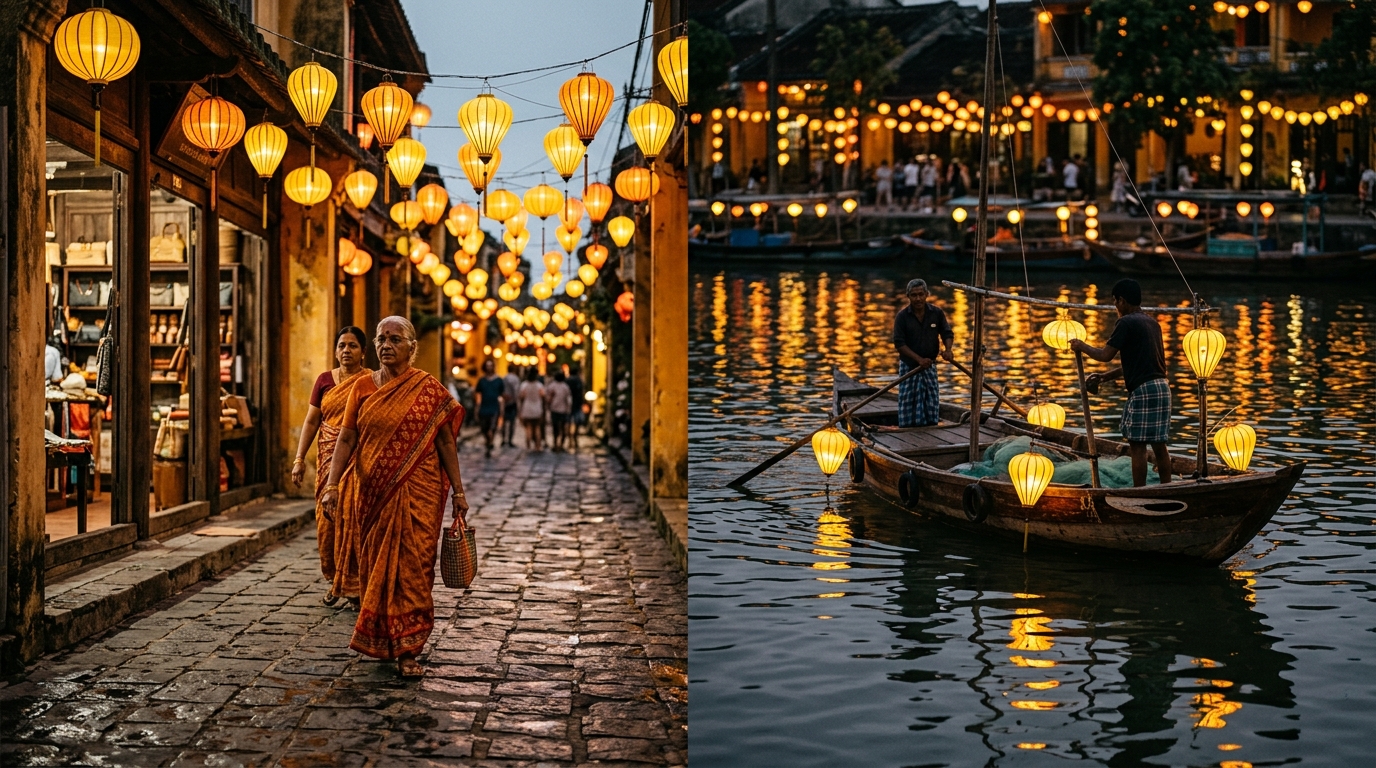
Skip the marketing. Halong appeals to Instagram feeds; Hoi An teaches you how Vietnamese people actually live. You'll wander yellow-walled French colonial streets, watch silk weavers at looms, sit in a tailor shop while a master stitches a shirt in 24 hours (₹800–1,200), and eat banh mi from a cart for ₹40. The old town is car-free and human-scaled. You can cover it on foot in 4 hours; the real experience happens when you return at dusk, buy a paper lantern from a street vendor (₹60–100), and float it on the Thu Bon River with 50 locals, not 500 tourists.
Why Indian travelers overlook it: guidebooks fixate on Halong, and most paid tour operators skip Hoi An because margins are lower. But Hoi An is where solo travelers, couples, and families all find rhythm. UNESCO listed it in 1999 for a reason—the architecture, culture, and affordability align perfectly for a 48-hour stop.
Accommodation comparison:
| City | Budget Hotel (₹/night) | Mid-range (₹/night) | Local experience |
|---|---|---|---|
| Hanoi | 800–1,200 | 1,800–2,500 | Chaotic, motorbikes |
| Hoi An | 600–900 | 1,200–1,800 | Quiet, walkable, atmospheric |
| Da Nang | 700–1,100 | 1,500–2,200 | Beach town, laid-back |
| HCMC | 900–1,300 | 2,000–3,000 | Frenetic, traffic, food |
2. 7-Day Day-by-Day Route with Transport Costs
This route assumes you fly into Hanoi and out of HCMC, staying on overnight buses or short flights to save time and accommodation costs.
Day 1: Arrival in Hanoi (free) Fly into Noi Bai International Airport (DEL/BOM/BLR to HAN flights: ₹12,000–18,000 return). Take a shared minibus to Old Quarter (₹200). Check into a hostel (₹700). Walk the Hoan Kiem Lake circuit (free) and eat pho for ₹80. Crash early; you have a long transit day ahead.
Day 2: Hanoi to Da Nang (₹1,200–1,800) Buses depart Hanoi's My Dinh station at 7 am; the 18–20 hour journey lands you in Da Nang by late evening. Book with Sleeping Bus (air-con, flat beds, worth it: ₹1,500) or Kumho Samco (₹1,200). Sleep on the bus; eat a packed lunch you bought in Hanoi. Arrive Da Nang, grab a room in the backpacker quarter (₹800), and rest. You've crossed the country horizontally.
Day 3: Day trip to Hoi An from Da Nang (₹150 transport) Take a local bus or minibus from Da Nang bus station to Hoi An (35 km, 1 hour, ₹150). Arrive early. Spend the day walking the old town—no entrance fee (they ask for donations at the temple, ₹50–100). Eat com tam (broken rice) at a street stall for ₹60. Visit the Tan Ky House (museum, ₹50). Float the paper lantern at sunset (₹100 for lantern). Sleep in Hoi An (₹650–900).
Day 4: Hoi An exploration and crafts (₹300) Morning: tailoring demo or cooking class (₹600–1,000, skip if tight on budget). Afternoon: bike rental (₹100 for the day) and explore villages 5 km outside town—rice paddies, silk workshops, local homes. Eat lunch from a pushcart (₹100). Return at dusk. Evening: riverside walk and dinner at a family restaurant (₹200).
Day 5: Hoi An to HCMC (₹1,500–2,000) Take a minibus or overnight bus from Da Nang to Ho Chi Minh City (HCMC, 960 km, 16–18 hours). Kumho or a similar operator: ₹1,500–2,000 with a mid-tier sleeper. Depart late afternoon, sleep on the bus, arrive early morning HCMC. Check into a hostel in District 1 or Backpacker Area (₹700–900). Rest and shower. Wander Ben Thanh Market (free browsing, ₹100–200 for snacks).
Day 6: HCMC full day (₹400) The city hits harder than Hanoi. Walk District 1: War Remnants Museum (₹50), Reunification Palace (₹50), Bitexco Financial Tower's observation deck (₹150, skip if budget-tight). Lunch: hu tieu (tapioca noodles) at a stall (₹80). Afternoon: Jade Emperor Pagoda (₹20). Evening: beer on Nguyễn Huế street (₹50 for a local bia—Tiger or Saigon). Dinner: street banh mi (₹40) or pho (₹80).
Day 7: HCMC loose end and departure Morning market (Ben Thanh, Binh Tay), final shopping (souvenirs, coffee, silk). Lunch. Head to Tan Son Nhat Airport for evening/night flight home. (If you have an extra night, stay and fly Day 8.)
Transport breakdown:
- Hanoi → Da Nang bus: ₹1,500
- Da Nang ↔ Hoi An: ₹300 (return)
- Da Nang/Hoi An → HCMC bus: ₹1,800
- Total overland: ₹3,600
3. Food Budget: Eating Like Locals Costs ₹150–250/Day
Vietnamese street food is the cheapest high-quality eating on Earth. An Indian traveler accustomed to Delhi dhabas will feel right at home—same culture of sitting on plastic stools, eating fast, moving on.
Breakdown of typical daily food spend:
- Breakfast (banh mi, pho, or com tam): ₹60–100
- Lunch (com tam, bun cha, hu tieu, or a rice-with-sides plate): ₹100–150
- Snacks (spring rolls, sugar cane juice, sticky rice): ₹50–80
- Dinner (pho, banh mi, or a sit-down restaurant meal): ₹100–200
- Total per day: ₹180–250 (if you eat one sit-down restaurant meal; street food only = ₹150–180/day)
Key rules:
- Eat where locals eat (no signage in English = cheaper and fresher).
- Order pho by pointing at your bowl size (small = ₹60, large = ₹80).
- Banh mi shops (sandwich) stack meats, pâté, and herbs for ₹40–60. One banh mi + a coffee = lunch for ₹100.
- Sit-down "com" restaurants (rice + 3 sides) cost ₹120–180; tourist menus = 2–3× the price.
- Skip Western cafes; they target backpackers and cost ₹300–500.
Use the Forex & bargain check tool to lock in your daily rupee-to-dong rate before you land; Vietnam's dong inflates tourist prices fast.
Street food meals by city (average cost, one meal):
| Dish | Hanoi | Da Nang | Hoi An | HCMC |
|---|---|---|---|---|
| Pho | ₹70 | ₹80 | ₹100 | ₹90 |
| Banh mi | ₹40 | ₹50 | ₹60 | ₹50 |
| Com tam | ₹80 | ₹90 | ₹120 | ₹100 |
| Spring rolls (5) | ₹50 | ₹60 | ₹70 | ₹60 |
4. Accommodation: Stay in Hostels, Make Friends, Save ₹4,000+
A 7-night stay using mixed hostels and budget hotels costs ₹4,500–5,500. Private budget rooms cost ₹600–1,300/night; dorms run ₹300–600/night. For a solo traveler or couple, mixing dorms (save money) and private nights (recharge energy) balances cost and comfort.
Recommended hostels by city:
Hanoi (Old Quarter):
- Old Quarter View Hanoi (dorm: ₹400, private: ₹1,000) — rooftop, social
- Hanoi Backpackers Hostel (dorm: ₹350, private: ₹800) — cheap, loud, fun
Da Nang:
- Hue Backpacker (dorm: ₹300, private: ₹900) — beach-close
- An Bang Beach bungalows (private: ₹800) — quieter option outside town
Hoi An:
- Hoi An Backpackers (dorm: ₹350, private: ₹750) — walking distance to old town
- Local guesthouses (private: ₹600–900) — advertised on Airbnb, run by families
HCMC (District 1 / Backpacker Area):
- The Pham Ngu Lao strip has 30+ hostels; dorms range ₹300–500, privates ₹700–1,200
- Pink Panther Saigon (dorm: ₹350, private: ₹900) — friendly, clean
- Myst Saigon (dorm: ₹300, private: ₹800) — budget option, no-frills
Sample 7-night cost (mid-tier mix): 2 dorm nights (₹400 × 2) + 5 private nights (₹800 × 5) = ₹800 + ₹4,000 = ₹4,800 total.
Book via Agoda or direct; direct booking saves ₹50–100/night and builds rapport with owners (they often point you to the best street food).
5. Visa, Flight, and Hard Costs: Hitting the ₹20K Target
An Indian passport holder needs an e-visa for Vietnam (not visa-free). Use the Visa wizard for Indians to confirm rules before booking.
Vietnam e-visa cost: ₹600 (90-day single entry, DIY through Vietnam's immigration website). Processing time: 3 days (or instant if you pay ₹800 for rush). Single-entry suffices for this route.
Round-trip flight cost (assuming you book 6–8 weeks ahead):
- Delhi (DEL) / Mumbai (BOM) / Bangalore (BLR) to Hanoi (HAN): ₹13,000–16,000 return
- Budget carriers (GoAir, Indigo, Air Asia via Bangkok/Kuala Lumpur) are cheapest
- Return from HCMC (SGN) to India: same price bracket
- Book on Tuesday/Wednesday (cheaper) or use Trip budget calculator to lock best fares
7-day Vietnam cost breakdown (per person, INR):
| Category | Min | Max |
|---|---|---|
| Flight (return) | 13,000 | 16,000 |
| Visa | 600 | 800 |
| Accommodation (7 nights) | 4,500 | 5,500 |
| Food (7 days, street-focused) | 1,050 | 1,750 |
| Transport (buses, local) | 3,600 | 4,200 |
| Activities (museums, lantern) | 400 | 800 |
| Miscellaneous (tips, laundry, sim card) | 300 | 500 |
| TOTAL | ₹23,450 | ₹29,550 |
To stay under ₹20K, tighten here:
- Book a flight on sale (₹11,000–13,000 return, requires flexibility).
- Mix dorm nights (save ₹400–500/night).
- Eat 90% street food (saves ₹300–400 over 7 days).
- Skip paid activities (War Remnants Museum, observation decks). Museums cost ₹50–150 each; walk the city free.
- Skip the overnight bus upgrade (Kumho sleeper vs. standard bus = ₹300 difference).
Realistic target: ₹19,000–21,000 per person, all-in, if you book early and travel lean.
6. When to Go: Season Matters (Avoid April–May)
Vietnam's weather is not one size fits all. The country spans 1,600 km north to south; your route crosses two climates.
Best months for Hanoi → Da Nang → HCMC route:
- October–November: Cool, dry across all three cities. Perfect.
- December–January: Hanoi turns chilly (12–18°C), but Da Nang and HCMC stay warm. Rain is minimal.
- February–March: Hanoi warms up (15–20°C), still dry. Good for walking.
- Avoid April–May: Hanoi enters summer (30°C+, humid). HCMC monsoon starts. Buses sweat, hostels fill.
- June–September: Monsoon season. Rain, flooding in HCMC. Humidity unbearable.
Month-by-month at a glance:
| Month | Hanoi | Da Nang | HCMC | Flight prices | Crowds |
|---|---|---|---|---|---|
| Oct–Nov | 20–25°C, dry | 25–28°C, dry | 27–30°C, dry | Mid | Moderate |
| Dec–Jan | 12–18°C, dry | 24–27°C, dry | 25–28°C, dry | High | High |
| Feb–Mar | 15–22°C, dry | 25–28°C, dry | 27–30°C, dry | Mid | Moderate |
| Apr–May | 25–32°C, wet | 28–32°C, wet | 30–35°C, rain | Low | Low (reason: brutal) |
| Jun–Sep | 28–33°C, wet | 27–30°C, wet | 28–32°C, wet | Low | Low (floods) |
Book October or November for the sweet spot: cool weather, no rain, cheapest prices, and 30% fewer tourists than December.
Frequently Asked Questions
How much spending money should I carry in cash vs. card?
Carry ₹5,000–8,000 in USD or a portion of your budget in cash (ATMs charge ₹150–200 per withdrawal, and Vietnamese ATMs have ₹1M (~₹4,200) daily limits). Withdraw dong at arrival; use a card for mid-sized purchases (hotels, buses, restaurants). Hostels take cards. Street food, markets, and taxis demand cash (dong or sometimes USD).
Do I need travel insurance for Vietnam?
For a 7-day trip, travel insurance costs ₹800–1,500 and covers medical emergencies, flight cancellations, and theft. Vietnam's healthcare is cheap (₹500–2,000 for a doctor visit), but insurance saves stress if you fall ill or miss a flight. Recommended for peace of mind; not strictly mandatory unless you're pregnant or have pre-existing conditions.
Is it safe to take an overnight bus as a solo woman traveler?
Overnight buses are safe; thousands of backpackers use them annually. Choose reputable operators (Kumho, Samco, Sinh). Sit near the driver or front, keep your bag close, and wear earbuds to signal unavailability. Fellow travelers (mostly tourists) share the bus. Local Vietnamese women ride them too. Trust your gut; if a driver or bus feels off, book another one.
What's the real difference between a budget hotel and a hostel in Vietnam?
A ₹700–900 budget hotel gives you a private room, your own bathroom, and quiet sleep. A ₹350–500 hostel dorm gives you a bed (often clean) in a 6–8 person room, shared bathrooms, and a social atmosphere. Hostels often have common areas where you meet other travelers and swap route tips. Hotels suit families; hostels suit solo travelers and couples who want to minimize costs and meet people. Mix both.
Will I regret skipping Halong Bay if I only have 7 days?
No. Halong eats 2–3 days (1 day travel from Hanoi, 1 full-day cruise, 1 return). You'd trade Hoi An and half of HCMC for a boat ride. Hoi An teaches you about Vietnam's past and culture; HCMC shows you its future. If you return to Vietnam (many do), Halong works great on a second trip from Hanoi. For a 7-day first visit, this route is superior.
Close
Skip the tourism script. A 7-day Hanoi-Da Nang-HCMC loop with Hoi An as the anchor gives you Confucian temples, French architecture, silk workshops, street food, and speed. You'll move fast enough to see the country's breadth, slow enough to taste it. Under ₹20,000 if you book early, eat local, and sleep in dorms. Every Indian traveler finds their rhythm here—the question is whether you're ready to find yours.
Spend your next vacation moving through Vietnam like a local, not a tourist. Start planning your 7-day route today.